New York City Uninsured & Underinsured Motorist Lawyer
Learning that the driver who injured you has little or no insurance can leave you wondering how you will recover. At Pazer Epstein Jaffe Fein & Gozenput, P.C., we investigate available coverage, protect your claim, and explain your options. Whether you were driving, riding as a passenger, walking, or cycling, we can help you understand where compensation may be available.
- Motor Vehicle Accident Case Results
When someone comes to us after a serious car accident, our focus is on helping them recover the compensation they need to move forward.
$7,000,000
verdict for a client who sustained an injury to her neck requiring surgery due to an automobile accident.
$4,950,000
for a woman struck by a bus resulting in brain injury and disability.
$4,650,000
at trial for a client who was a back seat passenger in South Carolina when a bus driver fell asleep and pushed the plaintiff’s vehicle off of the road.
When the Other Driver Has No Insurance—or Not Enough
You may have access to injury coverage through an automobile policy even when the responsible driver cannot pay. The first step is identifying the coverage available to you and determining whether your accident qualifies.
An uninsured driver does not necessarily leave you without a claim. An underinsured driver—someone whose available insurance may be insufficient—can also leave you with options beyond that driver’s policy. Those options depend on the insurance in effect when the accident happened.
Two terms are particularly important:
- Uninsured Motorist coverage (UM) provides bodily injury protection for qualifying accidents involving an uninsured vehicle or an unidentified hit-and-run vehicle.
- Supplementary Uninsured/Underinsured Motorists coverage (SUM) includes uninsured protection and can provide additional protection when the responsible vehicle’s liability insurance meets New York’s underinsurance requirements.
You may also see “UIM,” an abbreviation for underinsured motorist coverage. In New York, SUM is the term you will commonly encounter in the policy.
We begin by checking the other vehicle’s insurance and the policies that may protect you. A driver’s statement that there is “no insurance,” or an insurer’s initial refusal to pay, is something to investigate.
Our work concerns compensation for personal injuries. Pazer Epstein Jaffe Fein & Gozenput, P.C. does not handle claims involving only vehicle damage or other property damage.
You May Have Coverage Even If You Do Not Own a Car
Depending on your circumstances, coverage may come from the vehicle you occupied, your own automobile policy, or a policy issued to a relative who lives with you. Pedestrians and cyclists should also have these possibilities reviewed.
Many New Yorkers get around without owning a vehicle. That does not automatically mean they lack uninsured or underinsured motorist protection.
We ask about the vehicle involved, your household, and any automobile policies that were in effect on the accident date. A policy issued to a resident relative may be relevant even when that relative’s car was nowhere near the collision. A passenger may have protection under the occupied vehicle’s policy as well as another potentially applicable policy.
The policy’s definition of an insured—a person entitled to its protection—matters. Household residency, family relationships, vehicle ownership, and policy exclusions can affect eligibility. Simply sharing an address with someone who owns a car does not establish coverage.
Bring any insurance documents you can find. The declarations page is the policy summary listing vehicles, coverages, and limits. An endorsement is a policy provision that adds to or changes the coverage. We review both because the summary alone does not explain every condition or exclusion.
If more than one policy applies, we also determine their order of payment. Multiple policies do not necessarily mean their limits can be added together.
What Determines Whether Underinsured Motorist Coverage Applies?
A claim being worth more than the other driver’s insurance does not automatically trigger SUM coverage. Eligibility involves comparing applicable liability limits, reviewing the SUM policy, and accounting for payments already received.
Liability insurance pays covered claims for injuries a person is legally responsible for causing. A policy limit is the maximum the policy will pay for a covered claim, subject to its terms.
For an underinsured motorist claim, New York generally compares the responsible vehicle’s bodily injury liability limits with the bodily injury liability limits of the policy under which SUM protection is sought. We then examine the SUM limit and the other requirements governing payment.
That distinction matters. Having substantial medical expenses does not, by itself, establish that the other vehicle qualifies as underinsured under your policy.
We also review whether payments to other injured people have reduced the coverage available after the collision. A crash involving several injured passengers may require a different analysis from a claim involving one injured person.
Your SUM Limit Is Not Necessarily an Additional Full Payment
SUM coverage ordinarily accounts for applicable payments received from the responsible parties’ automobile liability insurers. This reduction is called an offset. We calculate it before explaining how much SUM coverage may remain available.
We also check whether other responsible parties or additional liability policies exist. The goal is to establish the available recovery accurately, including the effect of policy limits, prior payments, and rules against combining coverage.
Medical Bills and Your Injury Claim Follow Different Paths
No-fault insurance can help pay qualifying medical expenses and lost earnings while a separate injury claim is investigated. UM and SUM claims require proof of the responsible driver’s fault and the losses caused by the accident.
Personal Injury Protection (PIP), commonly called no-fault insurance in New York, helps pay qualifying medical expenses, part of lost earnings, and certain other necessary expenses. Basic coverage provides up to $50,000 per person, subject to eligibility rules and individual benefit limits. It does not pay for pain and suffering.
The absence of insurance on the other vehicle does not necessarily eliminate access to no-fault benefits. We identify the appropriate insurer or other available benefits route separately from the claim for injury compensation.
A UM or SUM claim requires evidence that another driver was legally responsible for your injuries. We investigate the collision and document how the injuries have affected your treatment, work, and daily activities.
For pain-and-suffering recovery under the applicable New York automobile rules, you generally must establish a legally defined serious injury. A fracture is one qualifying category. Certain significant or permanent limitations can also qualify, but the medical evidence must support the legal requirements.
We review treatment records, diagnostic findings, physicians’ assessments, and evidence of lost income and future needs. The claim must connect those losses to the accident and account for benefits that cannot be recovered twice.
Our New York City car accident lawyer page explains the broader injury-claim process. Here, our focus is finding and protecting recovery when the responsible driver’s coverage is missing or inadequate.
Before You Accept the Other Driver’s Settlement
Have any settlement offer and release reviewed before you sign. Accepting the other driver’s payment without following the applicable SUM procedure can jeopardize your right to additional benefits.
When an insurer offers its policy limit, it may ask you to sign a release: a document giving up claims against the people or businesses it identifies. That decision can affect a separate SUM claim.
The SUM insurer may have a right to pursue the responsible party after paying you. This is called subrogation. A release that eliminates those rights can create a coverage problem.
New York’s prescribed SUM endorsement contains a procedure for certain settlements involving the available liability policy limit. It requires written notice to the SUM insurer and gives that insurer 30 calendar days after receipt to take the action specified in the endorsement, including advancing the proposed settlement amount to preserve its recovery rights.
That is a specific settlement procedure, not a general rule that any offer can be accepted after waiting 30 days.
We review the proposed payment, applicable policies, notice, and release together. We also address exhaustion requirements—the rules governing when liability insurance must be paid out before SUM benefits become payable.
If you already signed something, send us the document and related correspondence promptly. The wording, timing, insurer’s conduct, and surrounding circumstances need individual review.
Protecting Your Claim Starts Before Coverage Is Fully Resolved
Report the accident and potential claims promptly. No-fault notice, UM/SUM notice, hit-and-run reporting, and lawsuit deadlines are separate requirements; completing one does not necessarily satisfy the others.
You do not need to know every policy limit before seeking help. Waiting for the other insurer to finish its investigation can leave important notices or evidence unaddressed.
Written notice of a no-fault claim is generally due within 30 days of the accident, unless there is a qualifying written justification for delay. The prescribed SUM endorsement requires written notice of the claim as soon as practicable. That phrase calls for prompt action under the circumstances; it is not an invitation to wait until settlement negotiations end.
Unidentified-vehicle claims have additional reporting requirements. Report a hit-and-run to police immediately. The standard SUM endorsement calls for reporting within 24 hours or as soon as reasonably possible and requires additional information for the insurer.
The steps that help us protect a claim include:
- Obtaining the collision report, photographs, witness information, and available video.
- Identifying potential policies and giving appropriate written notice.
- Keeping denial letters, claim numbers, adjuster communications, and settlement documents.
- Documenting treatment, work restrictions, and lost earnings.
- Responding appropriately to requests for records, statements, or examinations.
Keep copies and proof of submission. A conversation with an adjuster does not establish that every required notice has been completed.
If a deadline may have passed, contact us promptly. We need to review the actual requirement, the reason for delay, and any available exception before reaching a conclusion.
When No Applicable Automobile Policy Is Available
The Motor Vehicle Accident Indemnification Corporation, known as MVAIC, may provide benefits to eligible people injured by uninsured or unidentified vehicles in New York. Eligibility and filing requirements must be evaluated carefully.
MVAIC is the Motor Vehicle Accident Indemnification Corporation, an organization created under New York law to provide a potential recovery route for certain injured people who lack applicable automobile insurance protection.
It is not a general fund for every unpaid accident loss. We first investigate available insurance and then examine eligibility, including residency, the location of the accident, vehicle ownership, and the circumstances of the injury.
MVAIC’s published requirements include prompt police reporting and a Notice of Intention, a filing advising MVAIC that you intend to make a claim. Its general filing periods are:
- 90 days for an accident involving a hit-and-run or unidentified vehicle.
- 180 days for an accident involving an identified uninsured vehicle.
These filings do not replace separate no-fault requirements. Coverage disclaimers, delayed identification, and other circumstances can also affect the analysis. We review the applicable rules rather than treating those general periods as the answer to every case.
You can review MVAIC’s eligibility guidance, but you do not have to resolve eligibility on your own before contacting us.
For accidents involving a fleeing driver, our New York City hit-and-run accident page explains the investigation and evidence that may help identify the vehicle.
When an Insurer Disputes Coverage or the Value of Your Claim
An insurer may dispute whether its policy applies, who caused the accident, or how much compensation is owed. We identify the specific disagreement and pursue the appropriate process for resolving it.
Making a claim under a policy that protects you does not mean the insurer will agree with every part of the claim. It may question household residency, the other vehicle’s insurance status, notice, the cause of an injury, or the amount of damages.
We begin with the policy language and the insurer’s stated reason. A coverage denial means the insurer says the policy does not provide protection for the claim. A disagreement over fault or injury value raises different issues.
Some UM and SUM disputes proceed through arbitration, a process in which an arbitrator considers the evidence and decides the issues submitted. Questions about whether coverage exists may require a court’s determination. We explain which process applies and what evidence is needed.
Reasonable policy requests may include relevant medical records, an examination by a physician selected by the insurer, or an examination under oath—formal questioning answered under oath. We help clients understand and respond to those obligations while addressing requests or coverage positions that warrant challenge.
At Pazer Epstein Jaffe Fein & Gozenput, P.C., our review brings the coverage investigation and injury evidence together. We explain what is available, what remains disputed, and what the next step is intended to accomplish.
Why Injured New Yorkers Trust Us
1.
Decades of NYC Personal Injury Experience
For more than 70 years, our firm has represented injured New Yorkers in serious personal injury and motor vehicle accident cases. We understand how insurance companies evaluate claims and how to build cases that withstand scrutiny.
2.
Handling Complex NYC Car Accident Cases
Our attorneys represent victims injured in car accidents, truck collisions, rideshare crashes, pedestrian accidents, bicycle accidents, hit-and-run collisions, and other serious traffic-related incidents throughout New York City.
3.
Downtown Manhattan Office Serving All Five Boroughs
Located in Lower Manhattan, our office is easily accessible from throughout New York City. We represent clients across Manhattan, Brooklyn, Queens, the Bronx, and Staten Island and can move quickly to preserve evidence after a serious crash.
4.
Proven Results In Serious Injury Cases
Our attorneys have secured significant verdicts and settlements in cases involving automobile accidents, pedestrian injuries, truck collisions, bus crashes, and other catastrophic injury matters throughout New York.
5.
No Fee Unless We Recover Compensation
We handle car accident cases on a contingency fee basis. You pay no legal fees unless we recover compensation on your behalf.
Meet Our New York City Car Accident Attorneys
For decades, the attorneys at Pazer Epstein Jaffe Fein & Gozenput have represented individuals and families throughout New York City in serious personal injury and motor vehicle accident cases. Our legal team combines extensive courtroom experience, strategic case preparation, and a commitment to personalized client service to help accident victims pursue the compensation they deserve.
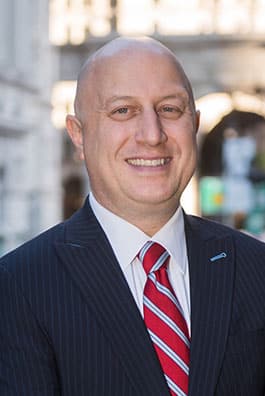
Michael Jaffe
Partner
MOTOR VEHICLE ACCIDENT LITIGATION
Representing injured car accident victims throughout New York City.

Matthew J. Fein
Partner
MOTOR VEHICLE ACCIDENT LITIGATION
Helping clients pursue compensation after serious motor vehicle accidents.

Eugene Gozenput
Partner
MOTOR VEHICLE ACCIDENT LITIGATION
Advocating for injury victims throughout Manhattan and the five boroughs.
Uninsured & Underinsured Motorist Claim Questions
You do not need to know which insurance provision applies before asking for help. These answers explain issues that often arise when the responsible driver has no insurance or limited coverage.
Does “full coverage” mean I have underinsured motorist protection?
Not necessarily. “Full coverage” is an informal expression, not a reliable description of your policy’s benefits or limits.
We need to review the declarations page and the actual coverage provisions. Look for “Supplementary Uninsured/Underinsured Motorists” or “SUM,” but send us the complete policy if available. The amount of liability insurance you carry does not, by itself, establish the SUM coverage you have.
Can I make a claim under a family member’s policy?
Possibly. A policy issued to a relative who lived in your household when the accident occurred may provide protection, depending on its terms and your circumstances.
We examine the family relationship, household residency, and applicable exclusions. A family member living elsewhere does not ordinarily qualify you for resident-relative coverage merely because you are related. We also check whether another policy, such as the policy on a vehicle you occupied, has priority.
Can uninsured motorist coverage protect me while I am walking or cycling?
It may. Protection under an applicable automobile policy can extend to an insured person injured by a motor vehicle while outside a car.
We review your own policy, potential household coverage, and the circumstances of the collision. If no applicable policy exists, MVAIC eligibility may need investigation. The fact that you were on foot or riding a bicycle should not end the coverage inquiry.
What if the other driver has insurance but the insurer refuses to pay?
We need to know why it refused. An insurer denying that its policy covers the vehicle or driver is different from an insurer disputing fault or the extent of your injuries.
Send us the written denial and related correspondence. We investigate whether the coverage position is valid and whether it creates a potential uninsured motorist claim under an applicable policy. A disputed liability claim does not automatically turn an insured vehicle into an uninsured one.
Can I use SUM coverage if several people were injured in the same accident?
Potentially. Payments to other injured people can reduce the liability coverage available to you and affect whether the vehicle qualifies as underinsured under the SUM endorsement.
We review both the per-person limit and the per-accident limit. The first limits payment for one person’s injuries; the second limits the total available for covered injuries in the accident. We also examine the actual payments and proposed allocation before evaluating the remaining coverage.
Can I combine the coverage on several cars or policies?
You generally cannot simply add together UM or SUM limits on several vehicles. New York’s standard endorsement contains rules against “stacking,” meaning combining limits to create a larger amount of coverage.
When more than one policy protects you, priority and excess-coverage rules determine how they apply. An umbrella policy requires a separate review: it provides additional UM or SUM protection only if it actually includes that coverage.
What if a hit-and-run driver caused me to crash without touching my vehicle?
Physical contact is generally required for an unidentified-vehicle claim under New York’s mandatory uninsured motorist protection and standard SUM endorsement. A crash caused solely by swerving away from an unknown vehicle can therefore present a coverage problem.
The full sequence matters, including whether contact occurred through another vehicle. We investigate the evidence and any other available claims rather than assuming that every accident caused by a fleeing driver qualifies for uninsured motorist benefits.
Can I still sue the uninsured driver personally?
A lack of insurance does not erase a negligent driver’s legal responsibility. Whether a lawsuit is a practical recovery route depends in part on available assets and whether a judgment could be collected.
We investigate other potentially responsible parties and available coverage alongside that question. Any lawsuit or settlement also needs to be coordinated with applicable UM or SUM requirements so that pursuing one source does not impair another.
Do I have to wait until treatment is finished before contacting a lawyer?
No. Insurance notices, evidence preservation, and coverage investigation can require attention while treatment is ongoing.
We can begin reviewing the accident and policies before the full extent of your recovery is known. Your medical progress remains important to evaluating the claim, but it should not delay protecting the right to pursue it.
What should I bring to a consultation about an uninsured or underinsured driver?
Bring whatever you have: the collision report, photographs, medical paperwork, insurance cards, declarations pages, complete policies, denial letters, and any settlement offer or release.
Tell us about automobile policies held by relatives in your household, even if their vehicles were not involved. If you cannot locate the documents or do not know the other driver’s coverage, we can begin with your account of the accident and identify what needs to be obtained.
Let Us Help You Understand the Coverage Available
You do not have to untangle several insurance policies while managing an injury. At Pazer Epstein Jaffe Fein & Gozenput, P.C., we can review the accident, investigate potential coverage, and explain the steps needed to protect your claim.
From our Manhattan office, we help injured people throughout Manhattan, Brooklyn, Queens, the Bronx, and Staten Island. If you have received a denial, a policy-limit offer, or a release to sign, let us review it promptly.
Contact us for a free consultation about your uninsured or underinsured motorist injury claim.
Talk To Us For FreeServing Accident Victims Throughout New York City From Our Lower Manhattan Office
Pazer Epstein Jaffe Fein & Gozenput represents injury victims throughout Manhattan, Brooklyn, Queens, the Bronx, and Staten Island from our office at 20 Vesey Street in Lower Manhattan. Conveniently located near multiple major subway lines and transportation hubs, our office is easily accessible to clients across New York City seeking experienced legal representation after a serious accident.
Our Downtown Manhattan Office
Pazer Epstein Jaffe Fein & Gozenput, P.C.
20 Vesey Street, Suite 700
New York, NY 10007
917-983-2343
Our firm is located in downtown Manhattan, just steps from major subway lines serving every borough of New York City. Being based in Lower Manhattan allows us to stay closely connected to the courts, agencies, and neighborhoods where serious personal injury cases are handled, while remaining easy to reach for clients traveling from throughout the city.
Getting to Our Manhattan Office by Subway
Our Lower Manhattan office at 20 Vesey Street is conveniently located near several major subway stations serving Manhattan, Brooklyn, Queens, and the Bronx. Clients visiting our office can easily reach us using the A, C, E, 2, 3, 4, 5, J, and Z lines, with multiple stations located just a short walk away.
Fulton Street Station
A
C
E
2
3
4
5
J
Z
Approx. 2–4 minute walk
Park Place Station
2
3
Approx. 3-5 minute walk
Wall Street Station
2
3
Approx. 5-7 minute walk
Chambers Street Station
J
Z
Approx. 5-7 minute walk