New York City T-Bone Accident Lawyer
A T-bone collision tells us where the vehicles met: the front of one vehicle struck the side of another.
It does not tell us which driver had the right of way, who entered the intersection first, whether someone violated a traffic signal, or whether one vehicle crossed unexpectedly into the other’s path.
Those answers come from reconstructing what happened before the impact.
- Motor Vehicle Accident Case Results
When someone comes to us after a serious car accident, our focus is on helping them recover the compensation they need to move forward.
$7,000,000
verdict for a client who sustained an injury to her neck requiring surgery due to an automobile accident.
$4,950,000
for a woman struck by a bus resulting in brain injury and disability.
$4,650,000
at trial for a client who was a back seat passenger in South Carolina when a bus driver fell asleep and pushed the plaintiff’s vehicle off of the road.
A T-Bone Describes the Impact. It Does Not Tell Us Who Caused It.
A T-bone or side-impact collision occurs when the front of one vehicle strikes the side of another. That impact pattern can provide important evidence about vehicle position and movement, but it does not establish which driver had the right of way. To determine how the crash happened, we have to work backward from the impact.
The damage after a T-bone accident can make the collision seem simpler than it was.
One vehicle has front-end damage. The other has damage along its side. It is natural to say that the first vehicle “hit” the second.
Physically, that may be exactly what happened. Legally and factually, it answers only one question.
Suppose you are traveling through an intersection with the right of way when another vehicle enters from a cross street directly into your path. You brake, but there is not enough room to stop before the front of your vehicle strikes the driver’s side of the other car.
Your vehicle made the physical impact.
The other vehicle may still have created the collision by entering your path when it was required to wait.
The reverse is also possible. A driver may lawfully enter an intersection before another vehicle disregards a signal or other traffic control and strikes the side of the first car.
That is why we separate three questions:
- Which vehicle physically struck the other? The damage can often answer that.
- How did the vehicles come to occupy the same space? That requires reconstructing their movements before impact.
- Which traffic rules governed those movements? That depends on the intersection, signals, signs, direction of travel and what each driver was doing.
The shape of the collision is evidence. It is not the liability conclusion.
Different Traffic Mistakes Can Produce the Same T-Bone Collision
Two T-bone crashes can look very similar afterward even though they happened for completely different reasons. A red-light violation, failure to stop or yield, unsafe left turn, uncontrolled-intersection conflict, or entry from a driveway or garage can all place one vehicle across another vehicle’s path.
“T-bone accident” describes a collision configuration, not a single driving mistake.
That distinction matters because New York applies different right-of-way rules to different movements.
Common paths to a side-impact collision include:
- A driver enters against a red signal. New York’s traffic-signal law governs what drivers may do when facing green, yellow and red indications.
- A driver proceeds from a stop or yield sign. Under Vehicle and Traffic Law § 1142, a driver entering from a stop sign must stop and then yield to qualifying traffic already in or approaching the intersection. The statute also establishes yielding requirements at yield signs.
- Two vehicles approach an intersection from different roads. VTL § 1140 addresses right of way when vehicles approach or enter an intersection from different highways, subject to the other rules governing through highways and traffic controls.
- A driver turns left across opposing traffic. The turning vehicle may cross directly through an approaching driver’s path, producing a side impact when the approaching vehicle cannot stop in time.
- A vehicle enters from a driveway, parking garage, alley or other location outside the roadway. VTL § 1143 requires a driver entering or crossing a roadway from a place other than another roadway to yield to vehicles approaching on the roadway being entered or crossed.
The vehicles may end up with almost identical damage in each of these situations.
The legal analysis will not be identical.
Before deciding who should have yielded, we first identify the movement each vehicle was making and the traffic control or right-of-way rule that applied to it.
The Point of Impact Can Help Us Understand the Sequence
Where the vehicles made contact can help establish their relative positions when they collided. A strike near the front quarter, center door area or rear quarter of the crossing vehicle may reflect different stages of its movement through the conflict area. Damage can help reconstruct the sequence without independently establishing who had the right of way.
A T-bone is not always a perfect 90-degree collision squarely into the center of a vehicle.
One vehicle may strike the front quarter of another. Contact may occur directly at a driver’s or passenger’s door. The impact may be farther back near the rear door, wheel or quarter panel. The vehicles may meet at an angle rather than perpendicular to one another.
Those differences can matter.
If a vehicle is struck toward its front, it may have occupied less of the crossing path when contact occurred than a vehicle struck near its rear quarter. Damage angle can also provide information about the direction each vehicle was traveling and how they were oriented at impact.
But the evidence has limits.
A rear-quarter impact does not automatically establish that the crossing driver had the right of way because the vehicle had “almost made it through.” A door impact does not tell us which signal was green. Front-end damage on the other vehicle does not prove that its driver caused the collision.
We consider the damage together with the rest of the evidence: lane configuration, vehicle approaches, traffic controls, video, witnesses, debris, final positions and any available information about speed and braking.
That allows the physical evidence to do what it does well without asking it to answer questions it cannot.
Who Entered the Intersection First Can Matter—But So Does the Rule Governing the Intersection
At some intersections, entry sequence is important to determining right of way. At others, traffic signals, stop signs, yield signs or turning rules control the movements. The investigation has to identify both what each vehicle did and which rule applied.
A witness may say, “The other car was already in the intersection.”
That can be important. It is not always the end of the analysis.
At an intersection where two vehicles approach from different highways, New York law provides rules addressing which driver must yield. Section 1140 states that a driver approaching an intersection must yield to a vehicle that has already entered from a different highway. When two vehicles enter from different highways at approximately the same time, the driver on the left generally yields to the vehicle on the right.
Those rules are modified where other traffic controls or provisions apply.
A red traffic signal changes the analysis. So does a stop sign. A driver turning left has obligations that do not disappear merely because the turn has begun. A vehicle entering the roadway from a parking garage or driveway presents another situation.
So we do not isolate one fact and call the case solved.
We identify the approaches, permitted movements and applicable traffic controls, then reconstruct when and how each vehicle entered the area where their paths crossed.
That distinction becomes especially important when both drivers sincerely remember believing they had the right of way.
How We Reconstruct a T-Bone Collision When the Drivers Disagree
When each driver gives a different account, the collision does not have to be decided by choosing one person’s memory over the other’s. Video, witnesses, traffic controls, physical damage, roadway evidence, vehicle positions and electronic information can often establish parts of the sequence independently.
Intersection collisions happen quickly, and the people involved do not necessarily observe the same things.
One driver may be watching the traffic signal ahead. Another may be looking for a gap in traffic. A passenger may see the approaching vehicle before either driver reacts. After a violent side impact, each person may remember only portions of the seconds leading to the collision.
That makes independent evidence particularly valuable.
Depending on the circumstances, we may examine:
- Surveillance and other video. Storefront cameras, building systems, dashcams, buses, taxis, rideshare vehicles and other sources may show the approaches, traffic movements or collision.
- Traffic signals and signs. The controls governing each approach help establish what movements were permitted and which driver had an obligation to stop or yield.
- Independent witnesses. Pedestrians, other motorists, cyclists, workers and people in nearby businesses may have observed a signal indication, vehicle movement or entry into the intersection.
- Vehicle damage. The location, direction and angle of damage can help establish relative vehicle position at contact.
- Debris and final positions. These may help identify the impact area and understand how the vehicles moved afterward.
- Roadway geometry. Lane configuration, sight lines, crosswalks, parking, medians and other physical features can affect what each driver could see and how the vehicles approached one another.
- Electronic vehicle information. When available and relevant, vehicle data may provide information about speed, braking, throttle or other events around the collision.
- The police investigation. A collision report can contain driver and witness information, vehicle positions, reported statements, citations and an officer’s observations at the scene.
A police report can be valuable without being infallible. An officer who arrives after the collision ordinarily did not witness the vehicles approach the intersection. Statements can be incomplete, diagrams can simplify a complicated sequence, and additional evidence may later become available.
Video is similarly useful without being indispensable.
A camera does not need to capture the actual impact to help. It may show one vehicle approaching the intersection, surrounding traffic beginning to move, pedestrians receiving a walk signal or a vehicle entering the frame at a time that helps establish the sequence.
The investigation is strongest when the available pieces are considered together.
Why Injured New Yorkers Trust Us
1.
Decades of NYC Personal Injury Experience
For more than 70 years, our firm has represented injured New Yorkers in serious personal injury and motor vehicle accident cases. We understand how insurance companies evaluate claims and how to build cases that withstand scrutiny.
2.
Handling Complex NYC Car Accident Cases
Our attorneys represent victims injured in car accidents, truck collisions, rideshare crashes, pedestrian accidents, bicycle accidents, hit-and-run collisions, and other serious traffic-related incidents throughout New York City.
3.
Downtown Manhattan Office Serving All Five Boroughs
Located in Lower Manhattan, our office is easily accessible from throughout New York City. We represent clients across Manhattan, Brooklyn, Queens, the Bronx, and Staten Island and can move quickly to preserve evidence after a serious crash.
4.
Proven Results In Serious Injury Cases
Our attorneys have secured significant verdicts and settlements in cases involving automobile accidents, pedestrian injuries, truck collisions, bus crashes, and other catastrophic injury matters throughout New York.
5.
No Fee Unless We Recover Compensation
We handle car accident cases on a contingency fee basis. You pay no legal fees unless we recover compensation on your behalf.
Meet Our New York City Car Accident Attorneys
For decades, the attorneys at Pazer Epstein Jaffe Fein & Gozenput have represented individuals and families throughout New York City in serious personal injury and motor vehicle accident cases. Our legal team combines extensive courtroom experience, strategic case preparation, and a commitment to personalized client service to help accident victims pursue the compensation they deserve.
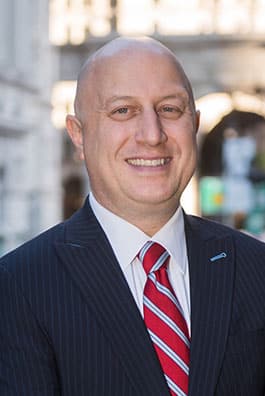
Michael Jaffe
Partner
MOTOR VEHICLE ACCIDENT LITIGATION
Representing injured car accident victims throughout New York City.
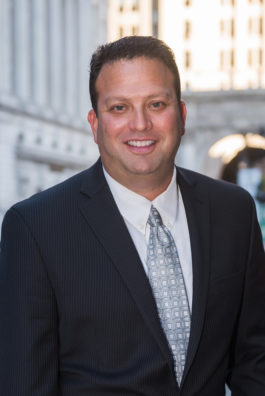
Matthew J. Fein
Partner
MOTOR VEHICLE ACCIDENT LITIGATION
Helping clients pursue compensation after serious motor vehicle accidents.

Eugene Gozenput
Partner
MOTOR VEHICLE ACCIDENT LITIGATION
Advocating for injury victims throughout Manhattan and the five boroughs.
Two T-Bone Crashes Can Expose Occupants to Very Different Forces
Side-impact collisions vary substantially in severity. The speed and angle of impact, vehicle size, amount of intrusion, location of the strike, occupant seating position, rotation and secondary impacts can all affect what happens to the people inside.
Two vehicles can both be involved in what would ordinarily be called T-bone accidents and produce very different injuries.
One important reason is where the impact occurs.
The front and rear of a passenger vehicle contain substantial structure between the point of impact and the occupants. A direct strike into a door can leave considerably less space between the striking vehicle and the person seated beside that door.
Modern vehicles use side-impact structures, airbags and restraint systems to protect occupants, but the forces involved still depend heavily on the individual collision.
Important factors can include:
- the speed of both vehicles;
- the angle at which they meet;
- the size and weight of the striking and struck vehicles;
- whether the driver’s side or passenger side is hit;
- whether contact occurs near an occupied seating position;
- how far the side structure intrudes into the passenger compartment;
- whether the struck vehicle rotates after impact; and
- whether there is a second collision with another vehicle or fixed object.
A person seated on the side that receives the impact may experience a different event from someone seated farther away. Occupants can also be subjected to forces from more than one direction if the vehicle spins, is pushed sideways or strikes something else.
That is why photographs of the exterior damage are useful but do not tell us everything about the occupant’s injuries.
Medical records, diagnostic studies, treatment history and the person’s recovery explain the injury. The vehicle evidence helps us understand the collision that produced it.
The Collision May Continue After the First Side Impact
A T-bone collision does not necessarily end when the vehicles first make contact. The struck vehicle may rotate, cross additional lanes, enter a bike lane or crosswalk, mount a curb, or collide with another vehicle or fixed object. Those later movements can be important to both the accident reconstruction and the injuries involved.
Side impacts can redirect a vehicle abruptly.
A car traveling north may be struck from the side and rotate toward the east or west. A vehicle crossing an intersection may be pushed beyond its intended path. Either vehicle can then make additional contact.
That possibility matters anywhere, but the surrounding environment can make the consequences particularly complicated in New York City.
Another travel lane may be only feet away. So may a bike lane, crosswalk, parked vehicle, median, traffic-signal pole or sidewalk edge. Pedestrians, cyclists, e-bike riders and scooter riders may be occupying spaces immediately adjacent to the initial collision.
When there are multiple impacts, we want to understand the entire sequence.
The initial side impact may explain why the vehicle rotated. The rotation may explain a second collision. The second impact may contribute additional injuries or vehicle damage.
Photographs, video, debris patterns, final vehicle positions and damage to multiple sides of a vehicle can help distinguish those events.
For an injured person, that reconstruction can also help explain why the forces they experienced were more complicated than a single impact photograph suggests.
Why Red-Light Enforcement Has a Direct Connection to T-Bone Crashes in New York City
Red-light violations can place one stream of traffic across the path of another just as the second stream receives permission to proceed. NYC DOT reports that red-light running declined 73 percent and T-bone crashes declined 65 percent at intersections where red-light cameras were installed.
Traffic signals separate movements that would otherwise conflict within an intersection.
When a driver enters after the signal has turned red, the danger is not simply that a traffic rule has been violated. The vehicle may enter the conflict area as traffic from another direction receives permission to move.
That is one way a high-energy side impact occurs.
New York City has used automated red-light enforcement for decades, and the program is undergoing a major expansion. In January 2026, NYC DOT reported that at intersections where red-light cameras had been installed, red-light running declined by 73 percent and T-bone crashes declined by 65 percent. DOT also reported a 49 percent reduction in rear-end collisions at those locations.
State law now authorizes New York City’s program at up to 600 intersections, and DOT said it planned to complete that expansion by the end of 2026.
Those citywide results do not establish what happened in an individual accident.
They do demonstrate the close relationship between signal compliance and the type of crossing conflict that can produce a T-bone collision.
When a crash occurs at a signalized intersection, we therefore want to establish what each driver faced and when each vehicle entered.
Shared Responsibility Depends on What Each Driver Actually Did
A T-bone collision can involve fault by more than one driver. One driver may violate a signal or fail to yield while another is alleged to have been speeding, distracted or otherwise unable to avoid the collision. Those allegations should be tested against the evidence because New York’s current comparative-fault rules can directly affect recovery.
Not every T-bone case reduces neatly to one driver being entirely right and the other entirely wrong.
A driver may enter an intersection improperly while the approaching vehicle is traveling too fast for the conditions. A driver may fail to yield while the other driver is distracted. There may be a dispute about whether someone with the right of way still had enough time to recognize and respond to the developing danger.
The important word is may.
Speed, distraction and avoidability should not be assumed merely because an insurer or another driver raises them. We look for evidence supporting or contradicting those claims.
Current CPLR § 1411 treats claimant fault differently depending on the type of action. Under subsection (a), except where subsection (b) applies, culpable conduct by the claimant does not bar recovery but reduces otherwise recoverable damages in proportion to that conduct.
For a personal injury action subject to Article 51 of the Insurance Law, subsection (b) provides that the claimant’s culpable conduct bars recovery if it is greater than the culpable conduct of the person against whom recovery is sought, or greater than the combined culpable conduct of the persons against whom recovery is sought.
That makes accurate fault analysis especially important in a New York motor vehicle injury case.
The fact that one driver violated a right-of-way rule does not make unsupported allegations against the other driver true. It means we need to determine what each driver actually did.
Some of the Best Evidence May Be Gone Long Before the Case Is Resolved
A T-bone collision often turns on evidence showing what happened before impact, and some of that evidence is temporary. Surveillance can be overwritten, vehicles repaired or salvaged, witnesses become difficult to locate and temporary sight obstructions can disappear.
The intersection may still be there months later.
The evidence from the day of the collision may not be.
A nearby business may routinely overwrite surveillance. A delivery truck that affected visibility may leave minutes after the crash. Construction barriers may move. Parked vehicles change. Damaged vehicles can be repaired, sold or salvaged.
Witnesses who stopped at the scene may become much harder to locate if their information was never preserved.
The evidence worth pursuing depends on the dispute.
If both drivers say they had a green light, recordings of the approaches and information about the traffic-signal sequence may be particularly important.
If the dispute is whether one vehicle stopped before entering, video, witnesses and vehicle movement may matter.
If visibility is at issue, photographs or recordings showing the intersection as it actually appeared at the time of the crash may be more useful than photographs taken weeks later.
If speed or braking becomes an issue, available video, physical evidence and electronic vehicle information may deserve early attention.
Evidence preservation is not about deciding beforehand which driver’s account is correct.
It is about preserving the information that can help answer the question later.
What to Do After a Serious T-Bone Accident in New York City
Get appropriate medical attention, make sure the collision is reported when required, and preserve photographs, witnesses and potential video when safely possible. Describe what you actually remember, and do not guess about a traffic signal, speed, distance or timing you did not observe.
A violent side impact can leave people disoriented, injured and unsure exactly how the other vehicle appeared in front of them.
You do not need to reconstruct the accident at the scene.
Start with your health and immediate safety. If you need emergency medical care, get it.
When your condition and circumstances allow:
- Make sure the collision is reported when required. The responding officers can identify the drivers and vehicles, document the scene, obtain witness information and record statements made at the time.
- Photograph more than the damaged vehicles. If it can be done safely, photographs of the approaches, signal heads, stop or yield signs, lane markings, sight lines and surrounding intersection can preserve context that close-up damage photographs do not.
- Get witness information. Someone waiting at the corner or traveling behind one of the vehicles may have seen a signal indication or the movement that led to the crash.
- Look for possible video sources. Nearby buildings, businesses, dashcams, buses, taxis, rideshare vehicles and other cameras may have recorded one or both approaches.
- Preserve information about temporary conditions. Construction, delivery vehicles, parked trucks or other obstructions may be gone later.
- Tell medical providers what you are experiencing. Accurate medical documentation matters, particularly when symptoms develop or change after the initial emergency.
- Do not fill gaps in your memory with estimates. If you do not know exactly how fast you were traveling, how many feet away the other vehicle was or precisely what its signal displayed, it is entirely appropriate to say you do not know.
A person involved in a serious collision often knows the important basics without knowing every detail.
You may know you were traveling straight through the intersection. You may remember the other vehicle suddenly crossing your path. You may remember braking before impact but have no idea how many feet separated the vehicles.
Other evidence can be used to investigate the details you could not possibly have measured while the collision was happening.
Frequently Asked Questions About T-Bone Accidents in New York City
Who is usually at fault in a T-bone accident?
There is no rule making the vehicle with front-end damage or side damage automatically responsible. Fault depends on how the vehicles reached the point of impact and which right-of-way, signal or other traffic rules applied to their movements.
If my car hit the side of the other car, does that mean the accident was my fault
No. You may physically strike the side of a vehicle that improperly entered or crossed your path. The point of contact is useful evidence, but the events before contact determine why the collision occurred.
What if the other driver says they had the green light too?
That creates a factual question that may be investigated through video, witnesses, signal configuration and timing, surrounding traffic movements and other evidence. In some situations, both drivers can lawfully face green indications while one is making a turn that carries an additional yielding obligation.
Can both drivers be responsible for a T-bone collision?
Yes. More than one driver’s conduct can contribute to a collision. For example, one driver may fail to yield while another is found to have been traveling at an unsafe speed. The evidence has to establish each driver’s conduct before responsibility can be allocated.
What if there were no witnesses?
A case does not depend on having an independent eyewitness. Video, vehicle damage, debris, final positions, traffic controls, roadway geometry, electronic vehicle information and the accounts of the people involved may all contribute to the reconstruction.
What if there is no video of the accident?
Many collisions can be investigated without video. Physical evidence, witnesses, traffic-signal information, photographs, vehicle damage and other records may establish important parts of the sequence. Video is valuable when available, but it is not the only evidence.
Does a police report determine who was at fault?
Not necessarily. A police report can contain valuable contemporaneous information, including statements, witnesses, vehicle positions and citations. But an officer who arrived afterward ordinarily did not personally see the vehicles approach and collide, and additional evidence may provide a fuller picture.
Does a traffic ticket prove the other driver caused the accident?
A citation may be relevant, but it does not replace a complete liability investigation. The circumstances of the violation, the available evidence and the relationship between that conduct and the collision still matter.
What if I did not feel badly hurt until later?
Some symptoms become more apparent after the immediate stress of a collision has passed. Seek appropriate medical evaluation for symptoms you are experiencing and give your medical providers an accurate history of how they developed. Delayed symptoms do not mean they should be ignored.
Who pays my medical bills after a T-bone accident?
New York’s No-Fault system generally provides first-party benefits for qualifying economic losses arising from covered motor vehicle accidents without first requiring proof that another driver caused the crash. The applicable source of benefits depends on the person’s status and the circumstances of the accident.
Does receiving No-Fault benefits mean I cannot bring a claim against the other driver?
No. No-Fault benefits and a liability claim address different issues. For claims between covered persons arising from negligence in the use or operation of a motor vehicle, New York law generally requires a serious injury before non-economic loss such as pain and suffering can be recovered.
What currently qualifies as a serious injury under New York law?
The current definition in Insurance Law § 5102(d) includes death, dismemberment, significant disfigurement, fracture, loss of a fetus, permanent loss of use of a body organ, member, function or system, permanent consequential limitation of use of a body organ or member, and significant limitation of use of a body function or system.
Whether a particular injury meets the statutory definition depends on the medical evidence and circumstances.
Can a passenger bring a claim after a T-bone accident?
An injured passenger may have claims arising from the conduct of one or more drivers. Because the passenger ordinarily was not controlling either vehicle, the liability questions can differ from those involving the drivers themselves.
What if the vehicle that hit me was a taxi, rideshare vehicle, truck or other commercial vehicle?
The basic collision reconstruction remains important, but additional parties, insurance coverage, business records and other evidence may become relevant depending on who owned the vehicle, who employed or engaged the driver, and what the vehicle was doing at the time.
What if the other driver does not have enough insurance?
Available recovery can depend on multiple sources of coverage and the circumstances of the collision. The responsible driver’s liability insurance is one consideration; applicable uninsured or underinsured motorist coverage and other policies may also need to be examined.
What if my car was totaled?
Property damage and personal injury are related to the same collision but present different issues. Before a badly damaged vehicle is released, transferred or salvaged, consider whether additional photographs, inspection or preservation of relevant vehicle information may be necessary.
How much is a T-bone accident case worth?
There is no reliable value based solely on the fact that the collision was a T-bone. The nature and permanence of the injuries, medical treatment, lost income, future limitations, available insurance, responsibility for the collision and other individual facts can materially affect the claim.
How long do I have to bring a T-bone accident claim in New York?
The applicable deadline depends on the claim and the parties involved. Many negligence personal injury claims are subject to a three-year limitations period, but substantially shorter deadlines can apply when a government entity is involved, and other circumstances can change the analysis. The deadline should be identified from the facts of the particular case rather than assumed.
How soon should evidence from a T-bone accident be preserved?
As soon as reasonably practical when important evidence may be temporary. Surveillance may be overwritten, witnesses can become difficult to locate, vehicles can be repaired or salvaged and temporary conditions at the intersection can disappear.
The Impact Tells Us Where the Vehicles Met. We Investigate Why They Were There.
A T-bone collision may begin with a red light, a missed stop sign, an unsafe turn, a failure to yield or a vehicle entering the roadway when it should have waited.
Afterward, the damage shows the physical result.
To understand responsibility, we work backward: where each vehicle came from, what controlled the intersection, who entered the conflict area, what each driver could see and what the available evidence establishes about the seconds before impact.
We also look forward from the collision—at the forces involved, additional impacts, the injuries that resulted and how those injuries affect the person’s life.
If you were seriously injured in a T-bone or side-impact collision in New York City, we are available to talk with you about what happened and what should come next.
Talk To Us For FreeServing Accident Victims Throughout New York City From Our Lower Manhattan Office
Pazer Epstein Jaffe Fein & Gozenput represents injury victims throughout Manhattan, Brooklyn, Queens, the Bronx, and Staten Island from our office at 20 Vesey Street in Lower Manhattan. Conveniently located near multiple major subway lines and transportation hubs, our office is easily accessible to clients across New York City seeking experienced legal representation after a serious accident.
Our Downtown Manhattan Office
Pazer Epstein Jaffe Fein & Gozenput, P.C.
20 Vesey Street, Suite 700
New York, NY 10007
917-983-2343
Our firm is located in downtown Manhattan, just steps from major subway lines serving every borough of New York City. Being based in Lower Manhattan allows us to stay closely connected to the courts, agencies, and neighborhoods where serious personal injury cases are handled, while remaining easy to reach for clients traveling from throughout the city.
Getting to Our Manhattan Office by Subway
Our Lower Manhattan office at 20 Vesey Street is conveniently located near several major subway stations serving Manhattan, Brooklyn, Queens, and the Bronx. Clients visiting our office can easily reach us using the A, C, E, 2, 3, 4, 5, J, and Z lines, with multiple stations located just a short walk away.
Fulton Street Station
A
C
E
2
3
4
5
J
Z
Approx. 2–4 minute walk
Park Place Station
2
3
Approx. 3-5 minute walk
Wall Street Station
2
3
Approx. 5-7 minute walk
Chambers Street Station
J
Z
Approx. 5-7 minute walk