New York City Failure to Yield Accident Lawyer
You were already in the intersection. You were traveling on the through street. You were crossing in the crosswalk. Or another driver pulled into your path when they should have waited.
Failure-to-yield accidents happen in many different ways, but they usually require us to answer the same fundamental question: what was each person doing when their paths came into conflict, and which right-of-way rule applied?
Who had the right of way depends on the movement, traffic controls and timing—not simply on who struck whom.
- Motor Vehicle Accident Case Results
When someone comes to us after a serious car accident, our focus is on helping them recover the compensation they need to move forward.
$7,000,000
verdict for a client who sustained an injury to her neck requiring surgery due to an automobile accident.
$4,950,000
for a woman struck by a bus resulting in brain injury and disability.
$4,650,000
at trial for a client who was a back seat passenger in South Carolina when a bus driver fell asleep and pushed the plaintiff’s vehicle off of the road.
“Failure to Yield” Is Not One Type of Accident
New York has different right-of-way rules for uncontrolled intersections, left turns, stop and yield signs, vehicles entering from driveways or parking areas, traffic signals and pedestrians or cyclists. Determining who should have yielded starts by identifying the movements and traffic controls involved in the particular collision.
A driver can fail to yield without running a red light or blowing through a stop sign.
Two vehicles can meet at an intersection with no traffic controls at all. A driver can stop correctly and then pull into approaching traffic. A vehicle can emerge from a parking garage into a busy street. A left-turning driver can cross in front of an approaching vehicle. A driver making an otherwise permitted turn can enter a crosswalk occupied by a pedestrian.
All of those collisions may be described as failure-to-yield accidents, but New York law does not analyze them under one universal rule.
Article 26 of the New York Vehicle and Traffic Law contains several right-of-way provisions governing different traffic situations. Traffic-signal and pedestrian rules can add further obligations depending on the collision.
That makes the movement itself the logical starting point.
We want to know where each road user came from, where each was going, which traffic controls applied, who entered the area of conflict first, what each person could see, and whether the circumstances required someone to wait.
Only then does “who had the right of way?” become a question that can be answered meaningfully.
Who Is Supposed to Yield? Six Common New York City Situations
Right of way changes with the traffic situation. A vehicle already within an uncontrolled intersection, traffic approaching a stop-controlled driver, vehicles on a roadway being entered from private property, approaching traffic during a left turn, and pedestrians or cyclists in protected movements may all be entitled to proceed while another road user is required to yield.
The easiest way to understand failure to yield is to compare the situations in which the duty arises.
1. Two Vehicles Meet at an Uncontrolled Intersection
No stop sign or traffic light determines the order automatically.
Under Vehicle and Traffic Law § 1140, a driver approaching an intersection must yield to a vehicle that has already entered from another highway. When two vehicles enter from different highways at approximately the same time, the driver on the left generally must yield to the driver on the right.
A dispute about who “got there first” can therefore matter. Video, witnesses and the vehicles’ pre-impact movements may help establish whether one vehicle had already entered or whether both arrived at approximately the same time.
2. A Driver Stops and Then Pulls Into Approaching Traffic
A complete stop does not automatically create the right to proceed.
Under § 1142, a driver who has stopped must yield to a vehicle already within the intersection or approaching closely enough to constitute an immediate hazard while the stopped driver moves across or within it.
The driver may therefore comply fully with the obligation to stop and still cause a collision by proceeding too soon.
Our New York City Stop Sign Accident Lawyer resource examines that situation in greater depth.
3. A Driver Approaches a Yield Sign
A yield sign does not require every approaching vehicle to make a complete stop. It requires the driver to slow to a reasonable speed for the conditions and stop when necessary to yield.
Section 1142 requires the driver to yield to pedestrians legally crossing and to vehicles within the intersection or approaching closely enough to constitute an immediate hazard while the driver moves through it.
The statute contains an additional provision worth understanding: when a driver passes a yield sign without stopping and then collides with a pedestrian in a crosswalk or a vehicle in the intersection, that collision is prima facie evidence of failure to yield.
4. A Vehicle Enters From a Driveway, Parking Garage or Other Private Property
New York City has countless places where vehicles move from private property directly into active traffic: parking garages, lots, loading areas, gas stations, businesses and curb cuts.
Vehicle and Traffic Law § 1143 requires a driver entering or crossing a roadway from somewhere other than another roadway to yield to vehicles approaching on the roadway being entered or crossed.
This means a driver leaving a garage does not gain priority merely because the front of the vehicle has begun moving into the street.
5. A Driver Turns Left Across Approaching Traffic
A left turn creates a different right-of-way conflict because the turning vehicle crosses the path of traffic approaching from the opposite direction.
Under Vehicle and Traffic Law § 1141, a driver intending to turn left within an intersection or into an alley, private road or driveway must yield to approaching traffic that is already within the intersection or close enough to constitute an immediate hazard.
Distance, speed, signal indications, protected arrows and the moment the turning driver commits to the movement can all become important.
We address those collisions in greater depth in our New York City Left-Turn Accident Lawyer resource.
6. A Driver Turns Across a Pedestrian or Cyclist’s Path
Right-of-way disputes are not limited to two motor vehicles.
A driver turning through an intersection may cross a crosswalk or bicycle travel path occupied by another road user. The applicable signal, crosswalk, bicycle facility, direction of travel and turning movement all need to be considered.
New York also imposes a broader duty of care. Vehicle and Traffic Law § 1146 requires drivers to exercise due care to avoid colliding with bicyclists, pedestrians and domestic animals on the roadway and establishes additional consequences when failure to exercise due care causes physical or serious physical injury to a pedestrian or cyclist.
These six situations all involve yielding. They do not involve identical duties.
That is why identifying the movement comes before assigning the label.
Right of Way Depends on Timing, Not Just Location
Where the vehicles were at impact is only part of the analysis. Right of way may depend on who entered first, how close an approaching vehicle was when another driver began moving, and whether the vehicles’ paths had already become an immediate hazard to one another.
After a collision, everyone can see the ending: two damaged vehicles occupying the same area.
The right-of-way question usually developed before that.
At an uncontrolled intersection, § 1140 distinguishes between a vehicle that has already entered and two vehicles entering at approximately the same time. At a stop-controlled intersection, § 1142 asks whether another vehicle was already within the intersection or approaching closely enough to constitute an immediate hazard while the stopped driver moved through it. Section 1141 uses a similar immediate-hazard concept for left turns.
Those rules make timing and distance part of the legal analysis.
Suppose a driver is waiting to enter an avenue. An approaching vehicle is visible down the street. The waiting driver begins moving. The distance between the vehicles closes. Only then does the approaching driver realize that the other vehicle is not going to remain stopped.
A photograph taken after impact cannot tell us that entire sequence.
Video, witness accounts, roadway evidence, vehicle damage and other information may help establish where the vehicles were before they collided and how quickly the conflict developed.
The same principle applies to pedestrians and cyclists. A driver’s claim that someone appeared suddenly should be evaluated against where that person came from, how long they may have been visible, the sight lines at the location and the driver’s movement before entering the conflict area.
Right of way is therefore not simply a label attached to one person after the crash. It arises from the relationship between the road users as the situation develops.
Limited Visibility Does Not Automatically Make It Safe to Proceed
Parked vehicles, delivery trucks, construction, buildings and other obstructions can limit what a driver sees before entering an intersection or roadway. An obstruction may explain why another road user was difficult to see, but the investigation should also determine what precautions the driver took before proceeding without a clear view.
“I never saw them” is an important statement after a failure-to-yield crash.
It is not necessarily the end of the inquiry.
New York City intersections and curb cuts can present difficult sight lines. A delivery truck may occupy the corner. Parked SUVs can conceal smaller vehicles, bicycles or pedestrians. Construction equipment, scaffolding or temporary barriers may alter a familiar view. Buildings can sit close to the roadway.
When visibility is disputed, we want to document the physical environment from the driver’s actual position.
Useful questions include whether the obstruction was temporary or permanent, what could be seen from the original stopping position, whether moving forward cautiously would have provided a better view, and how long the other road user was potentially visible before the driver entered.
Sometimes an obstruction genuinely explains why someone was difficult to see. It may also explain why greater caution was necessary.
A driver who cannot determine whether the path is clear may need to wait, move forward cautiously where lawful, or take another reasonable precaution before entering. Whether that was possible depends on the particular roadway and traffic situation.
This is why photographs and measurements of the intersection can matter as much as photographs of the damaged vehicles. The street itself can help establish what each person could reasonably see before the collision.
How We Establish Who Was Supposed to Yield
There is no single document that proves right of way in every accident. Traffic controls, video, independent witnesses, roadway photographs, vehicle damage, sight lines, final positions and electronic vehicle information can be considered together to reconstruct the movements before impact.
When drivers disagree about right of way, the investigation should not become a contest over who tells the more confident story.
We look for evidence capable of testing both accounts.
Depending on the collision, that may include:
- Traffic controls and roadway markings. Stop signs, yield signs, signal heads, lane arrows, stop lines, crosswalks and bicycle facilities help establish the rules governing each movement.
- Video. Storefronts, apartment buildings, parking garages, buses, taxis, rideshare vehicles, delivery vehicles, dashcams and other sources may capture the collision or the approach leading to it.
- Independent witnesses. Someone waiting for a bus or standing at the corner may have seen which vehicle entered first, whether a driver stopped, or what signal was displayed.
- Photographs and measurements. Images of the entire intersection can document sight lines, obstructions, roadway geometry and the relative positions from which each person approached.
- Vehicle and roadway evidence. Damage patterns, debris, points of impact and final positions can help test whether the physical collision is consistent with the accounts being given.
- Electronic vehicle information. When available and relevant, vehicle data may provide information concerning speed, braking or other events around the collision.
A camera does not need to show the impact to be useful. Footage showing a vehicle approaching or beginning to move may establish timing or position.
A witness does not need to have seen everything. One person may know who entered first while another saw the vehicle leave the stop sign.
Vehicle damage is not a verdict by itself, and electronic data does not answer every question. The value comes from comparing independent pieces of evidence and determining whether they support the same sequence.
That becomes especially important when both drivers insist that they had the right of way.
Why Injured New Yorkers Trust Us
1.
Decades of NYC Personal Injury Experience
For more than 70 years, our firm has represented injured New Yorkers in serious personal injury and motor vehicle accident cases. We understand how insurance companies evaluate claims and how to build cases that withstand scrutiny.
2.
Handling Complex NYC Car Accident Cases
Our attorneys represent victims injured in car accidents, truck collisions, rideshare crashes, pedestrian accidents, bicycle accidents, hit-and-run collisions, and other serious traffic-related incidents throughout New York City.
3.
Downtown Manhattan Office Serving All Five Boroughs
Located in Lower Manhattan, our office is easily accessible from throughout New York City. We represent clients across Manhattan, Brooklyn, Queens, the Bronx, and Staten Island and can move quickly to preserve evidence after a serious crash.
4.
Proven Results In Serious Injury Cases
Our attorneys have secured significant verdicts and settlements in cases involving automobile accidents, pedestrian injuries, truck collisions, bus crashes, and other catastrophic injury matters throughout New York.
5.
No Fee Unless We Recover Compensation
We handle car accident cases on a contingency fee basis. You pay no legal fees unless we recover compensation on your behalf.
Meet Our New York City Car Accident Attorneys
For decades, the attorneys at Pazer Epstein Jaffe Fein & Gozenput have represented individuals and families throughout New York City in serious personal injury and motor vehicle accident cases. Our legal team combines extensive courtroom experience, strategic case preparation, and a commitment to personalized client service to help accident victims pursue the compensation they deserve.
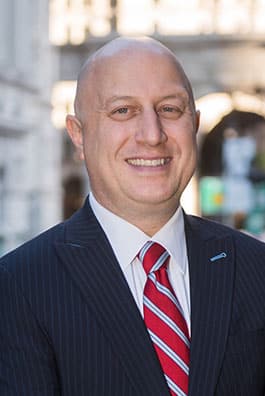
Michael Jaffe
Partner
MOTOR VEHICLE ACCIDENT LITIGATION
Representing injured car accident victims throughout New York City.
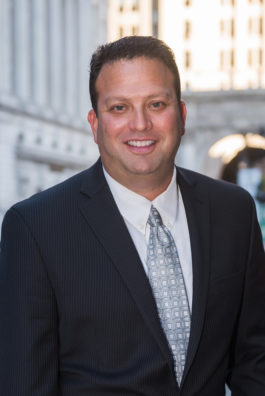
Matthew J. Fein
Partner
MOTOR VEHICLE ACCIDENT LITIGATION
Helping clients pursue compensation after serious motor vehicle accidents.

Eugene Gozenput
Partner
MOTOR VEHICLE ACCIDENT LITIGATION
Advocating for injury victims throughout Manhattan and the five boroughs.
New York City Is Redesigning Intersections to Reduce Dangerous Yielding Conflicts
NYC DOT’s Turn Calming Program changes intersection geometry to reduce turning speeds and improve the way drivers negotiate conflicts with pedestrians, cyclists and other traffic. The program was developed in response to failure-to-yield crashes involving turning vehicles and had reached 1,236 intersections citywide by the end of 2025.
Failure to yield is not only a legal concept. It is also a street-design problem that New York City has been working to address physically.
NYC DOT says its Turn Calming Program grew out of an action plan addressing failure-to-yield crashes caused by left-turning vehicles. As of December 31, 2025, DOT reported that turn-calming treatments had been installed at 1,236 intersections citywide.
Depending on the intersection, those treatments can include hardened centerlines, rubber curbs, bollards, speed bumps, slow-turn wedges and other changes intended to control the path and speed of turning vehicles.
At treated locations, NYC DOT reports:
- pedestrian injuries decreased by 18 percent;
- pedestrian severe injuries decreased by 33 percent;
- median left-turn speeds decreased by 54.3 percent; and
- 85th-percentile left-turn speeds decreased by 59.8 percent.
Those citywide results do not determine fault in an individual collision.
They do help explain why intersection geometry, turning speed and visibility matter when we investigate one. NYC DOT is physically changing intersections because the way a driver approaches and completes a turn can affect whether the driver sees another road user and has time to yield safely.
In an individual case, we still examine the particular intersection and the conditions that existed when the collision occurred.
Having the Right of Way Does Not Mean You Had Time to Avoid the Crash
A driver with the right of way still has a duty to use reasonable care, but whether a collision could reasonably have been avoided depends on when the danger became apparent and what time, distance and safe options remained. Hindsight does not create reaction time that did not exist before impact.
An injured driver may establish that another vehicle was required to yield and still hear a second argument from the insurance company: you should have avoided the crash anyway.
Sometimes that is a legitimate issue to investigate. It should be investigated in real time.
A driver approaching an intersection may initially have every reason to expect another motorist to remain stopped or otherwise obey the applicable right-of-way rule. The situation changes when the other vehicle begins moving into the path of travel and it becomes reasonably apparent that the driver is not going to yield.
The remaining options depend on what happens next.
Braking requires time and distance. Swerving requires somewhere safe to go. Surrounding vehicles, pedestrians, cyclists, curbs, parked cars and roadway geometry can eliminate what may look like an obvious escape path when the collision is reviewed later.
Speed can also matter, but it should be evaluated from evidence rather than assumed merely because the impact was severe.
We therefore examine when the hazard became visible, when it became apparent that the other driver would proceed, how quickly the vehicles were converging and whether there was enough time and space for a reasonable driver to react.
That is a more useful inquiry than simply asking why someone did not swerve.
Shared Responsibility Can Affect a New York Motor Vehicle Injury Claim
A right-of-way violation can be strong evidence of another driver’s responsibility, but other conduct may still matter. Under New York’s current comparative-fault law, claimant fault can reduce recoverable damages and, in personal injury actions subject to Article 51 of the Insurance Law, can bar recovery when the claimant’s culpable conduct exceeds that of the person or combined persons from whom recovery is sought.
Right of way is important, but it does not require us to ignore everything else that happened.
An insurer may allege that the injured driver was speeding, distracted, driving without required lights or otherwise contributed to the collision. Another vehicle may have affected the sequence. In a multi-vehicle crash, more than two people may share responsibility.
Those allegations should be tested against the evidence rather than dismissed or accepted automatically.
Under the current version of CPLR § 1411, claimant culpable conduct generally diminishes recoverable damages in proportion to that conduct. In a personal injury action subject to Article 51 of the Insurance Law, however, claimant culpable conduct bars recovery when it is greater than that of the person—or combined persons—from whom recovery is sought.
That makes accurate fault allocation particularly important in motor vehicle cases.
A driver who failed to yield may still bear substantial responsibility even if another road user also made a mistake. The purpose of the investigation is to determine what each person’s conduct actually contributed to the collision.
Some of the Best Evidence in a Failure-to-Yield Case Is Temporary
Private surveillance can be overwritten, witnesses become difficult to locate, vehicles are repaired, and temporary sight obstructions move. Early preservation is particularly valuable when fault depends on timing, visibility or what a driver could see before proceeding.
The permanent features of an intersection are often easy to examine later.
The temporary ones may be more important.
A stop sign will probably still be there. The delivery truck that blocked the driver’s view may not be. The roadway will remain, but a construction barrier may move overnight. A storefront camera may still be mounted on the building after its recording of the collision has already been overwritten.
Witnesses are temporary evidence too. Someone who watched the crash while waiting for a bus may never stand on that corner again.
When visibility is disputed, we want to document what was blocking the view. When a camera may have captured an approach or turning movement, we want to identify the potential source before footage disappears. When an independent person saw who entered first, obtaining accurate contact information can matter.
Vehicles can also be repaired or salvaged, and roadway debris can be removed.
Early investigation does not mean reaching conclusions before the evidence is known. It means preserving the evidence so the conclusions can be based on something better than memory alone.
What to Do After a Failure-to-Yield Accident in New York City
Take care of your health and immediate safety first. Obtain appropriate medical attention, report the collision when required, and preserve photographs, witness information and potential camera locations when safely possible. Do not guess about speed, distance, timing or fault simply because someone asks for an immediate answer.
When your condition and circumstances permit—or when someone else can safely help—several practical steps can preserve information that may later answer the right-of-way dispute:
- Get appropriate medical care. Tell your medical providers accurately what you are experiencing and follow the care recommended for your injuries.
- Make sure the collision is reported when required. A police response can document the people and vehicles involved, identify witnesses and record information about the scene.
- Photograph the entire traffic environment when it is safe to do so. Useful photographs can include vehicle damage and positions, traffic signals, stop or yield signs, stop lines, crosswalks, lane arrows, bicycle facilities and roadway geometry.
- Document temporary sight obstructions. Parked trucks, construction equipment or other conditions affecting visibility may be gone later.
- Preserve witness information. Someone who saw which person entered first or watched a driver begin moving may have information neither driver can provide.
- Identify possible cameras. Nearby businesses, buildings, garages, buses and other vehicles may have captured the collision or the moments leading to it.
- Describe what you actually remember. Do not manufacture an exact speed, distance or number of seconds if you do not know it.
- Be cautious about detailed insurance statements before the facts are clear. You can be truthful without adopting another person’s version of the collision or estimating facts you did not observe.
If you know that you were already traveling on the through street, say that. If you remember the other vehicle pulling away from a stop sign, say that. If you never saw the other vehicle until it entered your path, that can also be important.
There is nothing wrong with saying that you do not know whether you were 60 feet or 100 feet from the intersection when the other vehicle began moving.
A careful investigation can often recover details that a person experiencing a sudden collision could never reasonably be expected to measure or memorize.
Frequently Asked Questions About New York City Failure-to-Yield Accidents
Is the driver who failed to yield automatically responsible for the accident?
Not automatically in every case. Violating the right-of-way rule applicable to the collision can be important evidence of responsibility, but the complete sequence should be examined, including whether another road user’s conduct also contributed.
Who has the right of way at an intersection with no stop signs or traffic lights?
Under VTL § 1140, a driver approaching an uncontrolled intersection generally must yield to a vehicle that has already entered from another highway. When two vehicles enter from different highways at approximately the same time, the driver on the left generally must yield to the vehicle on the right.
Does stopping at a stop sign give a driver the right of way?
No. Stopping satisfies the obligation to stop. Under VTL § 1142, the driver must still yield to qualifying traffic before proceeding through the intersection.
Do you always have to stop at a yield sign?
No. A driver approaching a yield sign must slow to a speed reasonable for existing conditions and stop when necessary to yield. The driver must yield to pedestrians legally crossing and to vehicles within the intersection or approaching closely enough to constitute an immediate hazard.
Who has the right of way when a car pulls out of a parking garage or driveway?
Under VTL § 1143, a driver entering or crossing a roadway from a place other than another roadway must yield to vehicles approaching on the roadway being entered or crossed. The same rule can apply to parking lots, loading areas and other private entrances.
Can a driver fail to yield even if the traffic light is green?
Yes. A green signal permits certain movements but does not erase every right-of-way obligation. Turning drivers, for example, may still need to yield to traffic or pedestrians lawfully within the intersection or crosswalk.
What if the other driver says they never saw me?
That statement makes visibility important. We would want to determine whether you were visible, for how long, whether something obstructed the driver’s view and what precautions were taken before proceeding.
What if a truck or parked vehicle blocked the driver's view?
An obstruction can explain limited visibility without necessarily establishing that it was safe to proceed. Photographs, measurements, video and the intersection layout may help determine what could be seen from the driver’s position and whether a better view could have been obtained before entering.
What if there is no video of the accident?
A failure-to-yield case does not depend on video alone. Independent witnesses, traffic controls, photographs, vehicle damage, roadway evidence, police observations and available electronic vehicle information may provide other ways to reconstruct what happened.
Does a failure-to-yield ticket prove who caused the accident
A citation can be relevant, but an injury claim should be evaluated from the underlying evidence. We want to establish which right-of-way rule applied, what the road users actually did and how those movements caused the collision.
What if both drivers say they had the right of way?
Conflicting accounts do not necessarily make fault impossible to determine. Traffic controls, video, witnesses, vehicle damage, roadway evidence and the vehicles’ movements before impact can provide information that does not depend entirely on either driver’s recollection.
What if I had the right of way but the insurance company says I should have swerved?
Whether an evasive maneuver was reasonably available depends on when the danger became apparent, the time and distance available, surrounding traffic and whether there was actually somewhere safe to go. The ability to imagine a maneuver afterward does not establish that it was reasonably available before impact.
Can a driver fail to yield to a pedestrian, cyclist or e-bike rider?
Yes. Traffic signals, crosswalk rules, bicycle facilities, turning movements and New York’s due-care requirements can all affect the driver’s obligations. The specific movements and traffic controls should be established before determining right of way.
What if I was partly responsible for the collision?
Shared responsibility can affect recovery. Under the current version of CPLR § 1411, claimant fault generally reduces recoverable damages in proportion to that fault. In a personal injury action subject to Article 51 of the Insurance Law, recovery is barred when the claimant’s culpable conduct is greater than that of the person—or combined persons—from whom recovery is sought.
That makes allegations concerning speeding, distraction, improper movement or other claimant conduct important to investigate carefully.
What if a taxi, Uber, Lyft, bus, truck or delivery vehicle failed to yield?
The applicable right-of-way rules still matter, but a commercial or for-hire vehicle can create additional questions concerning ownership, employment or agency relationships, insurance coverage and available business records. Identifying potentially responsible parties and applicable coverage can be particularly important when injuries are severe.
Who pays my medical expenses after a failure-to-yield accident?
New York’s No-Fault system generally provides first-party benefits for qualifying economic losses arising from a covered motor vehicle accident without requiring you first to establish that another driver caused the collision. Insurance Law § 5102 currently defines basic economic loss as up to $50,000 per person in combined qualifying losses, subject to the statute’s limitations. The applicable source of benefits depends on your status and the circumstances of the accident.
Can I recover compensation for pain and suffering?
Potentially. For claims between covered persons arising from negligence in the use or operation of a motor vehicle, Insurance Law § 5104 generally requires a serious injury before non-economic loss such as pain and suffering can be recovered.
The current definition of serious injury in § 5102(d) includes death, dismemberment, significant disfigurement, fracture, loss of a fetus, permanent loss of use, permanent consequential limitation and significant limitation of use as specified in the statute.
Whether an injury satisfies that definition depends on the medical evidence and circumstances of the individual case.
How much is a failure-to-yield accident claim worth?
There is no standard settlement value. Injuries, medical evidence, lost income, future limitations, fault allocation, available insurance and the strength of the liability evidence can all affect the value of an individual claim.
How quickly should a serious failure-to-yield accident be investigated?
Prompt investigation can be particularly valuable when fault is disputed or evidence is temporary. Video may be overwritten, witnesses become difficult to locate, vehicles may be repaired and temporary visibility conditions can disappear.
Right of Way Depends on What Happened Before the Collision
A driver may insist that they stopped. They may say they never saw you. Both drivers may believe they were entitled to proceed.
Those disagreements do not have to be resolved by choosing whichever account sounds more convincing.
We investigate serious failure-to-yield accidents throughout New York City by identifying the right-of-way rule that applied and examining the traffic controls, movements, timing, visibility, witnesses, video and physical evidence that can establish what happened.
If you were seriously injured because another driver entered when they should have waited, we are available to speak with you about the collision and what should come next.
Talk To Us For FreeServing Accident Victims Throughout New York City From Our Lower Manhattan Office
Pazer Epstein Jaffe Fein & Gozenput represents injury victims throughout Manhattan, Brooklyn, Queens, the Bronx, and Staten Island from our office at 20 Vesey Street in Lower Manhattan. Conveniently located near multiple major subway lines and transportation hubs, our office is easily accessible to clients across New York City seeking experienced legal representation after a serious accident.
Our Downtown Manhattan Office
Pazer Epstein Jaffe Fein & Gozenput, P.C.
20 Vesey Street, Suite 700
New York, NY 10007
917-983-2343
Our firm is located in downtown Manhattan, just steps from major subway lines serving every borough of New York City. Being based in Lower Manhattan allows us to stay closely connected to the courts, agencies, and neighborhoods where serious personal injury cases are handled, while remaining easy to reach for clients traveling from throughout the city.
Getting to Our Manhattan Office by Subway
Our Lower Manhattan office at 20 Vesey Street is conveniently located near several major subway stations serving Manhattan, Brooklyn, Queens, and the Bronx. Clients visiting our office can easily reach us using the A, C, E, 2, 3, 4, 5, J, and Z lines, with multiple stations located just a short walk away.
Fulton Street Station
A
C
E
2
3
4
5
J
Z
Approx. 2–4 minute walk
Park Place Station
2
3
Approx. 3-5 minute walk
Wall Street Station
2
3
Approx. 5-7 minute walk
Chambers Street Station
J
Z
Approx. 5-7 minute walk