New York City Intersection Accident Lawyer
An intersection brings different paths into the same small area. Vehicles travel straight, turn left and right, enter from side streets, and cross paths with pedestrians, cyclists, e-bikes and scooters.
Traffic signals, signs, crosswalks, lane markings and right-of-way rules are supposed to keep those movements from conflicting.
When a serious collision occurs, we work to understand which movements came together, what controlled them, when each road user entered the conflict area, and what each person could see before the crash.
- Motor Vehicle Accident Case Results
When someone comes to us after a serious car accident, our focus is on helping them recover the compensation they need to move forward.
$7,000,000
verdict for a client who sustained an injury to her neck requiring surgery due to an automobile accident.
$4,950,000
for a woman struck by a bus resulting in brain injury and disability.
$4,650,000
at trial for a client who was a back seat passenger in South Carolina when a bus driver fell asleep and pushed the plaintiff’s vehicle off of the road.
An Intersection Is a Place Where Different Paths Have to Share the Same Space
Intersections are designed to manage movements that would otherwise conflict. Traffic signals, stop and yield signs, turning rules, crosswalks and right-of-way laws determine when different road users may enter the same area. After a collision, identifying the movements that came into conflict is often the best place to begin.
Before asking who had the right of way, it helps to understand what everyone was doing.
One driver may have been traveling straight while another crossed from a side street. A vehicle may have been turning left across opposing traffic. A driver turning right may have crossed the path of a pedestrian, cyclist or e-bike rider continuing beside traffic. A vehicle may have entered from a parking garage near the corner.
Each movement creates a path through the intersection. Where two paths cross, there is a potential conflict.
The intersection’s traffic controls and right-of-way rules are supposed to prevent both road users from occupying that conflict area at the wrong time.
That is why an intersection accident is rarely explained by the final position of the vehicles alone. We need to know where each road user came from, where they were going, and how their paths came together.
Common conflicts include:
- through traffic crossing another stream of traffic;
- a left-turning vehicle crossing opposing traffic;
- a vehicle entering from a stop- or yield-controlled street;
- a right- or left-turning vehicle crossing a pedestrian’s path;
- a turning vehicle crossing the path of a cyclist, e-bike or scooter rider continuing through the intersection;
- a vehicle entering from a driveway, alley or parking garage; and
- two vehicles entering an uncontrolled intersection from different streets.
Those situations can produce very different collisions. They also involve different legal obligations.
The first step is therefore not to attach a label such as “T-bone,” “failure to yield” or “red-light crash.” It is to reconstruct the paths.
Movement, Control and Timing Usually Explain the Right of Way
Right of way at an intersection depends on more than where a vehicle was located when the collision occurred. We identify what each road user was doing, what signal, sign or rule controlled that movement, and when each person entered or approached the area where their paths crossed.
People often describe an intersection accident by saying, “I had the right of way.”
That may be completely accurate. We still want to understand why.
Three questions usually provide a useful framework.
What movement was each road user making?
Was the vehicle traveling straight, turning left, turning right or entering from another street? Was a pedestrian crossing? Was a cyclist or e-bike rider continuing through beside traffic?
The movement tells us which paths were capable of conflicting.
What controlled those movements?
Some intersections use ordinary red, yellow and green traffic signals. Others have protected turn arrows, stop signs, yield signs or combinations of controls. At an uncontrolled intersection, statutory right-of-way rules may determine which driver should proceed first.
New York law does not impose one universal right-of-way rule on every intersection.
Vehicle and Traffic Law § 1140 addresses vehicles approaching or entering an intersection from different highways. VTL § 1141 governs left turns across opposing traffic. VTL § 1142 establishes obligations at stop and yield signs. VTL § 1111 governs traffic-control signal indications.
A vehicle entering the roadway from a driveway, alley or parking garage presents another situation, governed by VTL § 1143.
When did each road user enter the conflict area?
Timing can determine how the rule applies.
At an uncontrolled intersection, a vehicle that has already entered from a different highway may have priority over one still approaching. If two vehicles enter from different highways at approximately the same time, § 1140 generally requires the driver on the left to yield to the driver on the right, subject to other applicable rules.
At a stop sign, stopping is only the first obligation. The driver must then determine whether traffic is already in the intersection or approaching closely enough to create an immediate hazard.
A driver waiting to turn left may be permitted to make the turn but still be required to yield to approaching traffic.
Movement tells us where the conflict came from. Control tells us which rules applied. Timing helps us understand how those rules operated in the seconds before the collision.
Having a Green Light Does Not Answer Every Question About an Intersection Crash
A green signal is powerful evidence of a driver’s right to proceed, but it does not make every movement through the intersection identical. A turning driver may still have yielding obligations, and traffic or pedestrians lawfully within the intersection can retain rights that must be respected.
Signal disputes are common after intersection collisions.
Sometimes the dispute is straightforward: both drivers say the other entered against a red light.
In other cases, both people may truthfully remember seeing green.
Under § 1111, traffic facing a steady circular green may generally proceed straight or turn unless another restriction applies, but turning traffic must yield to other traffic and pedestrians lawfully within the intersection or adjacent crosswalk.
That distinction matters.
A driver traveling straight may have a green light while an opposing driver also has a circular green and intends to turn left. The turning driver does not acquire priority over an approaching immediate hazard merely because the signal is green.
Protected turn arrows create a different situation and should be identified accurately rather than assumed.
Signal timing also matters when a light changes while a vehicle or pedestrian is already lawfully within the intersection. Looking at the color displayed after the collision does not necessarily establish what each road user faced when they entered.
When both drivers insist they had the green light, the investigation may extend beyond their memories to the signal configuration, video, witness observations, surrounding traffic and other evidence capable of establishing the sequence.
Stopping at a Stop Sign Does Not End the Right-of-Way Analysis
A driver can come to a complete stop and still cause an intersection collision by proceeding when traffic is too close. New York’s stop-sign rule requires the driver to stop and then yield to vehicles already in the intersection or approaching closely enough to constitute an immediate hazard.
This distinction is important because people sometimes treat the stop itself as proof that the driver complied with the traffic control.
It is only part of the required movement.
Section 1142 requires a driver approaching a stop sign to stop as required by law and then yield before proceeding when qualifying traffic is already in the intersection or approaching closely enough to create an immediate hazard.
A driver can therefore say, quite truthfully, “I stopped,” while leaving unanswered the question that caused the collision:
Was it safe to go?
The same general problem appears at yield signs. A driver has to account for pedestrians lawfully crossing and for vehicles already in or approaching the intersection closely enough to create an immediate hazard.
That is why evidence showing the vehicles before entry can be more useful than evidence showing only the impact.
A camera that establishes where the approaching vehicle was when the stopped driver began moving may tell us more than a close-up photograph of the damaged cars afterward.
For a deeper discussion of this particular sequence, see our New York City Stop Sign Accident Lawyer resource.
When the Drivers Remember the Intersection Differently, We Look for Independent Evidence
An intersection collision does not necessarily have to be resolved by choosing one driver’s memory over another’s. Video, witnesses, traffic controls, vehicle damage, roadway evidence, signal information and electronic vehicle data can establish different parts of the sequence.
Two people can experience the same collision from very different positions.
One driver may be watching a traffic signal. Another may be looking for an opening to turn. A pedestrian may have been watching the approaching vehicle rather than the signal. Someone waiting on the corner may have seen a vehicle enter from a direction neither driver was watching.
After a violent collision, memories can also be incomplete.
The investigation therefore looks for evidence capable of answering particular questions rather than expecting one source to explain everything.
- Video may show vehicle approaches, signal indications, turning movements, pedestrian activity or surrounding traffic even when the collision itself occurs outside the frame.
- Witnesses may have seen a signal, stop, turn or entry into the intersection from a perspective the drivers did not have.
- Traffic-control information can establish the signals, signs and permitted movements governing each approach.
- Vehicle damage can help establish orientation, angle and relative position at impact.
- Debris and final positions may help identify the collision area and post-impact movement.
- Roadway geometry can establish lane configuration, sight lines, crosswalks, bike facilities and the paths available to each road user.
- Electronic vehicle information, when available and relevant, may provide information about speed, braking, throttle or other events around the collision.
- The police investigation can preserve identities, statements, observations, citations and other information recorded shortly after the crash.
A police report is useful without necessarily being conclusive. The responding officer ordinarily arrives after the collision and may be reconstructing the event from statements and physical evidence just as everyone else is.
Likewise, the absence of a perfect surveillance recording does not mean the sequence cannot be established.
One source may tell us when a vehicle entered. Another may establish the traffic control. Physical evidence may show where the vehicles met. Together, those pieces can produce a much clearer picture than any one person’s recollection.
Why Injured New Yorkers Trust Us
1.
Decades of NYC Personal Injury Experience
For more than 70 years, our firm has represented injured New Yorkers in serious personal injury and motor vehicle accident cases. We understand how insurance companies evaluate claims and how to build cases that withstand scrutiny.
2.
Handling Complex NYC Car Accident Cases
Our attorneys represent victims injured in car accidents, truck collisions, rideshare crashes, pedestrian accidents, bicycle accidents, hit-and-run collisions, and other serious traffic-related incidents throughout New York City.
3.
Downtown Manhattan Office Serving All Five Boroughs
Located in Lower Manhattan, our office is easily accessible from throughout New York City. We represent clients across Manhattan, Brooklyn, Queens, the Bronx, and Staten Island and can move quickly to preserve evidence after a serious crash.
4.
Proven Results In Serious Injury Cases
Our attorneys have secured significant verdicts and settlements in cases involving automobile accidents, pedestrian injuries, truck collisions, bus crashes, and other catastrophic injury matters throughout New York.
5.
No Fee Unless We Recover Compensation
We handle car accident cases on a contingency fee basis. You pay no legal fees unless we recover compensation on your behalf.
Meet Our New York City Car Accident Attorneys
For decades, the attorneys at Pazer Epstein Jaffe Fein & Gozenput have represented individuals and families throughout New York City in serious personal injury and motor vehicle accident cases. Our legal team combines extensive courtroom experience, strategic case preparation, and a commitment to personalized client service to help accident victims pursue the compensation they deserve.
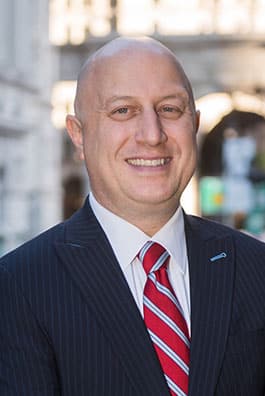
Michael Jaffe
Partner
MOTOR VEHICLE ACCIDENT LITIGATION
Representing injured car accident victims throughout New York City.
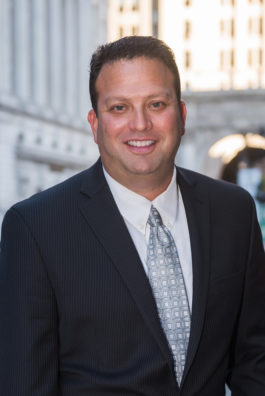
Matthew J. Fein
Partner
MOTOR VEHICLE ACCIDENT LITIGATION
Helping clients pursue compensation after serious motor vehicle accidents.

Eugene Gozenput
Partner
MOTOR VEHICLE ACCIDENT LITIGATION
Advocating for injury victims throughout Manhattan and the five boroughs.
What a Driver Could Actually See May Be as Important as the Traffic Control
A signal or sign tells a driver what movement is permitted or required, but the driver still has to observe the intersection. Parked trucks, construction, street geometry, lighting and other vehicles can affect sight lines, and the investigation should consider the view from the road user’s actual position.
An intersection can look perfectly open when photographed from a sidewalk and very different from behind the wheel.
A delivery truck near the corner can block cross traffic. A large SUV may obscure a motorcycle behind or beside it. Construction equipment or barriers can limit the view down a street. Building lines, medians, curbside activity and the angle of an approach can affect when another road user becomes visible.
Those conditions should be evaluated from the position that mattered.
If the question is what a driver could see while waiting at a stop sign, photographs from the middle of the intersection do not answer it. We want to understand the sight line from where that driver actually stopped and from the positions the vehicle occupied as it began moving.
The same applies to pedestrians, cyclists, e-bike riders, scooter riders and motorcyclists.
A smaller road user may be temporarily concealed by a larger vehicle. That is different from being visible but overlooked.
And limited visibility does not necessarily make it safe to proceed.
If a driver cannot determine whether cross traffic is approaching because the view is blocked, the obstruction itself may require additional caution. The circumstances may call for waiting, moving cautiously to obtain a better view where lawful, or otherwise accounting for the fact that the driver cannot yet confirm the path is clear.
We therefore ask more than whether something obstructed the view.
We ask what could be seen, when it became visible, and what the driver did with the information available at that time.
A Turning Driver May Have Several Conflicts to Watch at Once
A driver turning through a New York City intersection may need to monitor vehicle traffic while also accounting for pedestrians, cyclists, e-bike riders and scooter riders whose paths cross the turn. Looking for one conflict does not eliminate the obligation to observe another.
Turning at a busy city intersection requires attention in more than one direction.
A driver preparing to turn left may be watching opposing cars for a safe gap while pedestrians begin crossing the street the vehicle intends to enter. A driver turning right may be looking left for traffic while a cyclist or e-bike rider continues forward beside the vehicle. A scooter or motorcycle may be traveling in the roadway among larger vehicles.
The driver can be looking without necessarily looking at the road user who is about to occupy the same space.
That distinction matters.
New York law separately requires drivers to exercise due care to avoid colliding with bicyclists and pedestrians. VTL § 1146 is part of the broader set of rules that can apply when different road users meet at an intersection.
But the factual investigation begins before assigning a statutory label.
Where was the pedestrian or rider?
Which direction were they traveling?
What signal or traffic control applied?
Was the person visible?
Was another vehicle blocking the view?
When did the turning vehicle begin moving across the person’s path?
Could the driver have detected the conflict before committing to the turn?
Those questions are particularly important in New York City because an intersection is rarely occupied only by two passenger cars. The traffic environment itself has to be reconstructed.
Sometimes the Intersection Itself Deserves a Closer Look
Most intersection collisions primarily involve the conduct of the road users involved, but physical or traffic-control conditions can sometimes contribute. A malfunctioning signal, obscured sign, construction configuration, poor sight line or confusing lane arrangement should be investigated when there is evidence that it affected the collision.
Not every difficult intersection creates a legal claim against the entity responsible for the roadway.
But when the facts point to a physical or traffic-control problem, it should not be ignored.
Examples can include a traffic signal that was not functioning properly, a sign hidden from view, temporary construction that materially changed the normal traffic pattern, markings that were missing or difficult to see, or a physical configuration that affected visibility.
The first question is whether the condition actually contributed to what happened.
A driver saying an intersection was “confusing” is not enough by itself. Photographs, video, construction records, signal information, prior reports and other evidence may be needed to establish the condition and its relationship to the collision.
The second question is who was responsible for it.
That can become especially important when a city, state, public authority or other governmental entity may be involved. Claims involving public entities can present notice requirements, shorter deadlines and legal issues that do not apply to an ordinary claim between private motorists.
For that reason, a suspected roadway or traffic-control issue should be identified early enough to determine whether it genuinely belongs in the investigation and what procedures apply.
New York City Is Redesigning Intersections to Improve Visibility and Reduce Conflicts
New York City increasingly uses physical street design to address intersection risk, including hardened daylighting and other treatments intended to improve visibility and reduce dangerous conflicts. In September 2026, the city announced a goal of installing hardened daylighting or better treatments at a minimum of 1,000 intersections each year.
Intersection safety is not only an enforcement issue.
Street geometry affects what people can see, how quickly vehicles turn, where pedestrians wait, and how different paths come together.
New York City has increasingly used physical treatments to address those factors. Daylighting, for example, removes or restricts parking near corners to improve visibility between drivers and people approaching or entering the intersection. Hardened treatments can use physical materials to reinforce that clear space and change how vehicles negotiate the corner.
In September 2026, New York City’s Vision Zero Reimagined plan committed the city to installing hardened daylighting or better treatments at a minimum of 1,000 intersections each year as part of a broader expansion of safety-focused street design.
That effort reflects an important principle: the design of an intersection can influence the opportunity road users have to see one another and avoid a conflict.
For an individual accident, the existence or absence of a particular treatment does not establish fault. What matters is the intersection that actually existed when the collision occurred—its sight lines, controls, lane configuration, temporary conditions and the movements being made through it.
The Intersection Can Change Before Anyone Comes Back to Investigate It
Some of the most useful intersection evidence is temporary. Surveillance can be overwritten, delivery vehicles and parked cars move, construction barriers are repositioned, debris is removed and witnesses become harder to locate. Preserving the conditions that existed at the time of the collision can be important when liability is disputed.
Returning to the intersection a week later can answer some questions.
It can show the width of the streets, location of signals, lane configuration and permanent roadway features.
It may not show what mattered on the day of the collision.
A delivery truck that blocked part of the view may have left within minutes. Construction barriers can be moved. Parked vehicles change throughout the day. Temporary signs disappear. Debris and broken vehicle parts are cleared from the roadway.
Nearby surveillance may also be overwritten before anyone realizes it captured useful information.
That makes early preservation particularly valuable when the dispute concerns a changing condition.
If visibility is questioned, photographs or recordings from the time of the crash may establish an obstruction that no longer exists.
If both drivers claim a green light, video or signal information may help establish the sequence.
If the collision occurred during construction, photographs and records may show a temporary traffic pattern that was removed afterward.
Witness information deserves the same attention. A person who stopped for five minutes after the crash may be impossible to identify later unless their name and contact information were preserved.
The permanent intersection can be inspected later.
The temporary intersection cannot always be recreated.
What to Do After a Serious Intersection Accident in New York City
Take care of your immediate medical needs, make sure the collision is reported when required, and preserve photographs, witness information and possible video when safely possible. Describe what you actually observed without guessing about signals, speed, distance or events you did not see.
A person who has just been injured in an intersection collision does not need to solve the right-of-way dispute at the scene.
Your first concern is your health and immediate safety.
When your condition and circumstances permit:
- Get appropriate medical care. Tell your medical providers what you are experiencing and give them an accurate account of the collision.
- Make sure the accident is reported when required. Responding officers can identify the drivers and vehicles, record witness information and document conditions they observe at the scene.
- Photograph the intersection as well as the vehicles. When it can be done safely, capture signal heads, stop or yield signs, crosswalks, lane markings, bike facilities, approaches and anything affecting visibility.
- Preserve witness information. Someone standing at the corner or traveling behind one of the vehicles may have seen the movement or signal that becomes disputed later.
- Identify possible cameras. Nearby buildings, businesses, buses, taxis, rideshare vehicles, dashcams and other sources may have recorded part of the sequence.
- Document temporary conditions. Construction, delivery trucks, parked vehicles or temporary barriers may not be present when someone returns later.
- Do not guess. If you know your light was green but did not see the other driver’s signal, say that. If you do not know your exact speed or distance from the intersection, an estimate invented after the fact is not helpful.
There is nothing unusual about remembering only part of a fast-moving collision.
You may know that you entered on green without knowing when the other vehicle began moving. You may remember a car appearing from your right without knowing whether it stopped first. You may know that you were already in the crosswalk without having seen where the turning driver was looking.
Those missing details can be investigated through other evidence.
Frequently Asked Questions About New York City Intersection Accidents
Intersection crashes often produce immediate disputes about traffic lights, right of way, turning vehicles, video footage, pedestrians, and who entered first. The answers below address some of the questions that commonly arise after a serious New York City intersection collision.
Who is at fault in an intersection accident?
Fault depends on the movements involved, the traffic controls or right-of-way rules that applied, the timing of each road user’s entry and the conduct of the people involved. There is no single rule that determines responsibility for every intersection collision.
What if both drivers say they had the green light?
That dispute can often be investigated rather than resolved solely from competing statements. Video, witnesses, signal configuration and timing, pedestrian movements and surrounding traffic may help establish what each driver faced.
For a deeper discussion of signal disputes, see our New York City Red-Light Accident Lawyer resource.
Does having a green light mean I automatically had the right of way?
A green light is highly important, but the permitted movement still matters. A driver turning on a circular green may have to yield to opposing traffic or pedestrians lawfully within the intersection. Traffic already lawfully in the intersection can also affect the analysis.
Who has the right of way at an uncontrolled intersection?
Under VTL § 1140, a driver approaching an intersection generally must yield to a vehicle that has already entered from a different highway. When two vehicles enter from different highways at approximately the same time, the driver on the left generally yields to the vehicle on the right, subject to other applicable provisions.
Can a driver cause an accident even after making a complete stop at a stop sign?
Yes. Stopping and yielding are separate obligations. After stopping, the driver still has to yield when another vehicle is already in the intersection or approaching closely enough to constitute an immediate hazard.
Our Stop Sign Accident Lawyer page examines that distinction in detail.
Who has the right of way when a driver turns left?
New York generally requires a left-turning driver to yield to opposing traffic already within the intersection or close enough to constitute an immediate hazard. The signal indication and other circumstances can also matter.
See our Left-Turn Accident Lawyer page for the full analysis.
What if the accident was a T-bone collision?
A T-bone describes how the vehicles made contact, not who caused the crash. The investigation still has to establish how each vehicle reached the point of impact and which movement had the right of way.
Our T-Bone Accident Lawyer resource explains how side-impact geometry can be used as evidence without treating it as the liability conclusion.
What if another driver simply failed to yield?
The first step is identifying which yielding rule applied. The obligation may arise from a stop sign, yield sign, left turn, uncontrolled intersection, driveway entry or another movement.
See our Failure-to-Yield Accident Lawyer page for a more detailed explanation.
Can an intersection accident be proven without video?
Yes. Video can be extremely useful, but it is only one form of evidence. Witnesses, traffic controls, vehicle damage, roadway evidence, photographs, signal information, final positions and available electronic vehicle information may also help reconstruct the collision.
Does the police report decide who was responsible?
No. A police report can preserve important information, including statements, witnesses, citations and scene observations, but an officer who arrived afterward ordinarily did not personally witness the collision. Other evidence may confirm, clarify or contradict parts of the report.
What if a parked truck or construction equipment blocked the view?
A sight obstruction can be highly relevant. The investigation should determine what each road user could actually see from their position, when the other person became visible and whether additional caution was required because the view was limited.
Can a malfunctioning traffic signal affect an intersection accident claim?
Potentially. The malfunction has to be established and connected to the collision. If a governmental entity or public authority may be responsible, special notice requirements and shorter deadlines can also become important.
What if I was walking through the crosswalk when a driver turned into me?
The pedestrian signal, vehicle signal, direction of the turn, when you entered the crosswalk and what the driver could see may all matter. Drivers also have statutory obligations to exercise due care to avoid colliding with pedestrians.
What if I was riding a bicycle, e-bike or scooter through the intersection?
The applicable rules depend on the road user, movement and circumstances, but the investigation still needs to account for the path you were actually traveling. Turning drivers may cross the path of cyclists, e-bike riders and scooter riders continuing through or beside vehicle traffic, and visibility can become a central issue.
Can both drivers share responsibility for an intersection accident?
Yes. More than one person’s conduct can contribute to a collision. Current New York comparative-fault law makes accurate allocation particularly important in motor vehicle personal injury cases.
Under CPLR § 1411, claimant fault generally reduces recovery proportionally where subsection (a) applies. In a personal injury action subject to Article 51 of the Insurance Law, subsection (b) bars recovery when the claimant’s culpable conduct is greater than that of the person—or combined persons—against whom recovery is sought.
Who pays my medical bills after an intersection accident?
New York’s No-Fault system generally provides first-party benefits for qualifying economic losses arising from covered motor vehicle accidents without first requiring proof that another driver caused the collision. Which insurer or benefit source applies depends on the person’s status and circumstances.
Can I recover compensation for pain and suffering?
For negligence claims between covered persons arising from the use or operation of a motor vehicle, New York generally requires a serious injury before non-economic loss such as pain and suffering can be recovered. Whether an injury satisfies the current statutory definition depends on the medical evidence and circumstances.
How long do I have to bring an intersection accident claim?
The deadline depends on the claim and the parties involved. Many negligence personal injury actions are subject to a three-year limitations period, but much shorter deadlines can apply to claims involving governmental entities, and other circumstances can alter the applicable period. The deadline should be determined from the particular facts rather than assumed.
How soon should an intersection accident be investigated?
As soon as reasonably practical when important evidence may be temporary. Surveillance can be overwritten, witnesses become difficult to locate, vehicles are repaired, and temporary construction or sight obstructions may disappear.
To Understand an Intersection Crash, We Reconstruct the Paths That Came Together
A serious intersection collision may ultimately be described as a red-light crash, a left-turn accident, a failure-to-yield collision, a stop-sign crash or a T-bone.
Before applying those labels, we want to understand the event itself.
Where was each road user going? What controlled each movement? When did they enter the area where their paths crossed? What could they see? Did the intersection’s physical conditions affect those decisions?
The answers may come from several different sources of evidence, and they do not depend on an injured person remembering every second perfectly.
If you were seriously injured in an intersection accident in New York City, we are available to talk with you about what happened and what should come next.
Talk To Us For FreeServing Accident Victims Throughout New York City From Our Lower Manhattan Office
Pazer Epstein Jaffe Fein & Gozenput represents injury victims throughout Manhattan, Brooklyn, Queens, the Bronx, and Staten Island from our office at 20 Vesey Street in Lower Manhattan. Conveniently located near multiple major subway lines and transportation hubs, our office is easily accessible to clients across New York City seeking experienced legal representation after a serious accident.
Our Downtown Manhattan Office
Pazer Epstein Jaffe Fein & Gozenput, P.C.
20 Vesey Street, Suite 700
New York, NY 10007
917-983-2343
Our firm is located in downtown Manhattan, just steps from major subway lines serving every borough of New York City. Being based in Lower Manhattan allows us to stay closely connected to the courts, agencies, and neighborhoods where serious personal injury cases are handled, while remaining easy to reach for clients traveling from throughout the city.
Getting to Our Manhattan Office by Subway
Our Lower Manhattan office at 20 Vesey Street is conveniently located near several major subway stations serving Manhattan, Brooklyn, Queens, and the Bronx. Clients visiting our office can easily reach us using the A, C, E, 2, 3, 4, 5, J, and Z lines, with multiple stations located just a short walk away.
Fulton Street Station
A
C
E
2
3
4
5
J
Z
Approx. 2–4 minute walk
Park Place Station
2
3
Approx. 3-5 minute walk
Wall Street Station
2
3
Approx. 5-7 minute walk
Chambers Street Station
J
Z
Approx. 5-7 minute walk