New York City Red-Light Accident Lawyer
If both drivers claim they had a green light, the case does not automatically become an unresolvable contest between two stories. Video, independent witnesses, vehicle movement, impact evidence, signal operation, surrounding cameras, driver statements, and other evidence may help establish who entered the intersection against the signal.
You should not have to prove the color of a traffic light from memory alone.
- Motor Vehicle Accident Case Results
When someone comes to us after a serious car accident, our focus is on helping them recover the compensation they need to move forward.
$7,000,000
verdict for a client who sustained an injury to her neck requiring surgery due to an automobile accident.
$4,950,000
for a woman struck by a bus resulting in brain injury and disability.
$4,650,000
at trial for a client who was a back seat passenger in South Carolina when a bus driver fell asleep and pushed the plaintiff’s vehicle off of the road.
You Had the Green Light. Now the Other Driver Says They Did Too.
When both drivers claim they had a green light, the case does not automatically become an unresolvable contest between two memories. Video, independent witnesses, vehicle movements, signal operation, physical evidence and other information may help establish which vehicle entered the intersection against the signal.
When both drivers claim they had a green light, the case does not automatically become an unresolvable contest between two memories. Video, independent witnesses, vehicle movements, signal operation, physical evidence and other information may help establish which vehicle entered the intersection against the signal.
This is one of the most frustrating things that can happen after a serious intersection collision.
You remember seeing green. You entered the intersection expecting cross traffic to remain stopped. Another vehicle came through from the side and hit you.
Later, you learn that the other driver says their light was green too.
We do not assume that the case has become impossible because two people remember the signal differently. We look for evidence that can test both accounts.
That evidence may come from the intersection itself, surrounding buildings, other vehicles, independent witnesses or the physical collision. Sometimes a camera captures the signal directly. Sometimes it does not. A recording may instead show when cross traffic began moving, how a vehicle approached the intersection, whether it slowed before entering, or other facts that help establish the sequence.
A 2026 Manhattan case provides a useful example of why the evidence has to be evaluated carefully.
In Rosenfeld v. BM Islam, an e-scooter rider alleged that a taxi ran a red light at 51st Street and Lexington Avenue. Video footage existed. But the Appellate Division, First Department found that the video did not resolve liability because the traffic signal facing the taxi was not visible and the collision itself was not clearly depicted.
The lesson is not that video is unhelpful. It is that the existence of video and what the video actually proves are two different questions.
When the signal is disputed, we may look for:
- video showing either traffic signal or either vehicle’s approach;
- independent witnesses who saw the signal or watched the vehicles enter;
- the movement of surrounding traffic before and after the collision;
- photographs and video showing where the vehicles came to rest;
- damage patterns and points of impact;
- driver statements made at or after the scene;
- police observations and witness information;
- electronic vehicle information when it is available and relevant; and
- other evidence that helps establish the timing and sequence of the crash.
No single item is required in every case. The objective is to determine what the available evidence can reliably tell us rather than reducing the case to one driver’s word against another’s.
Green, Yellow and Red Mean Different Things Under New York Law
New York law permits a driver facing a steady green signal to proceed, subject to yielding to traffic already lawfully within the intersection or adjacent crosswalk. A steady yellow signal warns that the green movement is ending but still permits a vehicle to enter. A steady red signal generally requires the driver to stop and remain stopped until an indication to proceed is shown.
People often describe a collision by saying, “The light was changing.”
Legally, that description is incomplete. The color of the signal when the vehicle entered the intersection matters.
New York Vehicle and Traffic Law § 1111 establishes different rules for green, yellow and red indications:
- Steady green: A driver may proceed straight or make an otherwise permitted turn, while yielding to traffic already lawfully within the intersection or an adjacent crosswalk.
- Steady yellow: A driver may enter the intersection, but the signal warns that the green movement is ending or that red will immediately follow.
- Steady red: The driver generally must stop at the required location and remain stopped until an indication to proceed is shown.
That distinction is particularly important when someone says a driver “ran the light.”
A vehicle that entered while facing yellow did not enter against a red signal merely because the light turned red while the vehicle was already in the intersection. Conversely, a driver who approaches during yellow but does not cross into the intersection until after the signal becomes red presents a very different situation.
We therefore want to know when the vehicle actually entered—not simply what color the signal displayed after the collision.
A Red Arrow Controls the Movement It Points To
Section 1111 separately addresses red arrows. A driver facing a steady red arrow may not enter the intersection to make the movement indicated by that arrow unless another signal displayed at the same time permits a different movement.
This can matter in turning collisions where one driver insists that the intersection generally had a green indication but the particular turn being attempted was controlled by an arrow.
Right on Red Is Different in New York City
Drivers who learned to drive elsewhere can bring the wrong assumption into a New York City intersection.
New York’s general right-on-red rule expressly excludes cities with populations of one million or more unless local law authorizes the movement. In New York City, drivers should not assume that a right turn on red is permitted simply because it would ordinarily be allowed elsewhere in the state.
That NYC-specific rule can become important when a driver enters against a red signal while turning and collides with a pedestrian, cyclist, e-bike rider or vehicle that is lawfully moving through the intersection.
The Few Seconds Before the Collision Often Explain What Happened
The impact is only the end of a red-light crash. The seconds before it may show whether a driver slowed for a changing signal, accelerated toward the intersection, entered after red, began an illegal turn, or created a danger that another road user had little or no time to avoid.
A photograph of two damaged vehicles in an intersection tells us where they eventually met. It may tell us very little about how they got there.
For that, we look backward.
Suppose one driver approaches with green while a vehicle on the cross street approaches the end of its signal cycle. Did that vehicle begin slowing? Did it maintain speed? Did the driver accelerate toward the intersection? When did the vehicle cross the stop line? Had traffic in the other direction already begun moving?
At the same time, we examine what the driver with the green signal could reasonably perceive.
Buildings, parked vehicles, buses and other traffic can restrict sight lines. A driver may enter on green with no reason to believe that cross traffic will continue through a red signal. If another vehicle suddenly appears from behind an obstruction or enters at speed, the driver with the right of way may have only moments to respond.
Having a green light does not relieve a driver of every obligation to use reasonable care. Section 1111 itself requires traffic proceeding on green to yield to traffic already lawfully within the intersection or adjacent crosswalk.
But reasonable care is judged from what was actually happening—not from the clarity available after the collision.
We want to know when the danger became apparent and what options still existed at that moment. Could the driver brake safely? Was there room to steer away without striking someone else? Was the other vehicle visible soon enough for any evasive maneuver to matter?
That analysis is especially important when an insurer argues that an injured driver “should have avoided” a vehicle that entered against the signal.
Red-Light Crashes Do Not All Happen the Same Way
A red-light collision can involve perpendicular traffic, a driver entering after a signal change, an illegal turn, a pedestrian or cyclist in the crosswalk, or a multi-vehicle sequence caused by the first impact. Identifying the movement that violated the signal helps determine what evidence matters.
The familiar red-light crash involves two vehicles approaching from perpendicular streets: one enters on green while another enters against red.
That is only one configuration.
Common red-light collision patterns include:
- Entering after the signal has turned red. Cross traffic may already be moving when the violating vehicle enters, creating the potential for a severe side-impact collision.
- Trying to make the end of a signal cycle. The important distinction is whether the vehicle actually entered during yellow or crossed into the intersection only after red appeared.
- Turning against a red arrow. The driver makes a movement specifically prohibited by the arrow controlling that turn.
- Making an unauthorized right turn on red. This is particularly important in New York City, where drivers cannot simply rely on the general right-on-red rule that applies elsewhere.
- Striking a pedestrian, cyclist or e-bike rider. A person may already be crossing or moving lawfully through the intersection when the driver enters against red.
- Causing a secondary or multi-vehicle collision. The red-light runner may strike one vehicle and push it into another, or cause another driver to make an emergency maneuver that leads to a separate impact.
The person who violated the signal does not necessarily have to be the vehicle that physically struck you.
If a driver enters against red, hits another vehicle and sends that vehicle into you, we trace the collision sequence back to the movement that started it. The same analysis applies when a driver swerves to avoid the red-light runner and collides with another vehicle, cyclist or pedestrian.
That distinction becomes particularly important when several drivers and insurance companies are involved.
A Camera Near the Intersection Does Not Necessarily Mean Your Crash Was Recorded
New York City’s red-light cameras are automated enforcement systems at selected intersections. They are not the same as every traffic, security or private camera visible on a city street, and the presence of a camera does not guarantee that it captured or retained useful footage of a collision.
After an intersection crash, people understandably notice cameras.
If there is one mounted near the traffic signal, the immediate reaction is often relief: there must be a recording.
There may be. But first we need to identify what kind of camera it is and what it was designed to capture.
New York City’s automated red-light-camera program operates under Vehicle and Traffic Law § 1111-a. The current law authorizes photo violation-monitoring devices at up to 600 intersections in the city.
Those enforcement cameras should not be confused with every other camera near an intersection. A camera may belong to NYC DOT, a private building, a store, a parking facility or another entity. It may monitor traffic conditions or building security. Its field of view may cover only one approach. It may capture a vehicle without capturing the signal. And recordings may be retained for very different periods of time.
The Rosenfeld case illustrates another important point: even when a collision is captured on video, the recording may not answer the particular question in dispute.
That is why we do not ask only whether a camera exists.
We ask what it recorded, from what angle, during what period, and what the recording can actually establish when considered with the rest of the evidence.
Why Injured New Yorkers Trust Us
1.
Decades of NYC Personal Injury Experience
For more than 70 years, our firm has represented injured New Yorkers in serious personal injury and motor vehicle accident cases. We understand how insurance companies evaluate claims and how to build cases that withstand scrutiny.
2.
Handling Complex NYC Car Accident Cases
Our attorneys represent victims injured in car accidents, truck collisions, rideshare crashes, pedestrian accidents, bicycle accidents, hit-and-run collisions, and other serious traffic-related incidents throughout New York City.
3.
Downtown Manhattan Office Serving All Five Boroughs
Located in Lower Manhattan, our office is easily accessible from throughout New York City. We represent clients across Manhattan, Brooklyn, Queens, the Bronx, and Staten Island and can move quickly to preserve evidence after a serious crash.
4.
Proven Results In Serious Injury Cases
Our attorneys have secured significant verdicts and settlements in cases involving automobile accidents, pedestrian injuries, truck collisions, bus crashes, and other catastrophic injury matters throughout New York.
5.
No Fee Unless We Recover Compensation
We handle car accident cases on a contingency fee basis. You pay no legal fees unless we recover compensation on your behalf.
Meet Our New York City Car Accident Attorneys
For decades, the attorneys at Pazer Epstein Jaffe Fein & Gozenput have represented individuals and families throughout New York City in serious personal injury and motor vehicle accident cases. Our legal team combines extensive courtroom experience, strategic case preparation, and a commitment to personalized client service to help accident victims pursue the compensation they deserve.

Michael Jaffe
Partner
MOTOR VEHICLE ACCIDENT LITIGATION
Representing injured car accident victims throughout New York City.
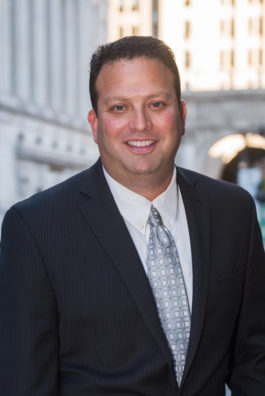
Matthew J. Fein
Partner
MOTOR VEHICLE ACCIDENT LITIGATION
Helping clients pursue compensation after serious motor vehicle accidents.

Eugene Gozenput
Partner
MOTOR VEHICLE ACCIDENT LITIGATION
Advocating for injury victims throughout Manhattan and the five boroughs.
New York City Is Expanding Red-Light Camera Enforcement
New York City is expanding its red-light-camera program from the former limit of 150 intersections toward the 600 intersections now authorized by state law. NYC DOT reports substantial reductions in red-light running and certain collision types at camera-equipped intersections.
New York City has used automated red-light enforcement for decades, but the program is undergoing a significant expansion.
State law now authorizes the city to operate red-light photo enforcement at as many as 600 intersections, four times the former 150-intersection limit. In January 2026, NYC DOT announced that it had begun activating cameras at additional locations and planned to reach all 600 authorized intersections by the end of the year.
DOT reported that at intersections where red-light cameras had been installed:
- red-light running declined 73 percent;
- T-bone crashes declined 65 percent; and
- rear-end collisions declined 49 percent.
By July 2026, NYC DOT reported that red-light violations at camera locations had fallen 80 percent since the program began.
Those statistics do not tell us who was responsible for an individual collision, and we do not use citywide data as a substitute for investigating what happened at a particular intersection.
They do provide meaningful context. New York City has devoted substantial enforcement resources to red-light running because entering an intersection against the signal can create a conflict at the same moment another direction of traffic is being told that it may proceed.
For an injured person, however, the important evidence remains local and specific: what happened at this intersection, during this signal cycle, in the seconds before this collision.
Pedestrians, Cyclists and E-Bike Riders Can Be Especially Exposed to Red-Light Drivers
A red-light collision does not require two cars. A pedestrian may be crossing with the signal, or a cyclist or e-bike rider may already be moving through the intersection when a driver enters against red. The investigation should establish the signal indications and movements that applied to everyone involved.
A driver entering against red may be looking primarily for motor vehicles while failing to account for someone already in the crosswalk or moving through another part of the intersection.
For a pedestrian, there is no vehicle structure to absorb the impact. Cyclists and e-bike riders are similarly exposed, and their movements may be harder for a driver to notice when the driver’s attention is focused on trying to complete a turn or get through a changing signal.
These cases require attention to more than the signal facing the motorist.
We may need to establish the pedestrian-control indication, the location of the crosswalk, the direction in which a cyclist or e-bike rider was traveling, whether a turn arrow controlled the driver’s movement, what each person could see, and when each person entered the area of conflict.
We do not assume that the traffic signal facing one participant tells us everything about the rights and duties of everyone else. We reconstruct the movements and identify the traffic controls that actually governed them.
Evidence From a Red-Light Collision Can Disappear Quickly
Video may be overwritten, witnesses become harder to locate, vehicles can be repaired or salvaged, and temporary roadway or visibility conditions can change. Early investigation can be especially important when drivers disagree about which signal they faced.
A person injured in a serious crash may spend the first days dealing with emergency care, doctors, pain, transportation problems and family concerns.
Meanwhile, evidence can change.
Private surveillance may be overwritten. A witness who stopped at the scene may become difficult to locate. A damaged vehicle may be repaired, moved to storage or salvaged. Construction equipment can disappear. Temporary sight obstructions change. A dashcam recording may eventually be lost.
In a disputed red-light case, useful evidence may also exist somewhere that is not obvious from the point of impact.
A camera half a block down the driver’s approach may show whether the vehicle slowed. A bus stopped near the intersection may have recorded surrounding traffic. A building camera that never captured the crash may still show vehicles beginning to move after their signal changed. A pedestrian waiting at a crosswalk may have watched the entire sequence.
This is why identifying potential evidence early can matter.
Prompt investigation does not mean deciding in advance what the evidence will prove. It means preserving the available information so that it can still be evaluated after the injured person has had time to begin recovering.
What to Do After Being Hit by a Driver Who Ran a Red Light
Take care of your health first. Obtain appropriate medical attention, make sure the collision is reported when required, preserve photographs and witness information when safely possible, and identify potential cameras near the intersection. Describe what you actually remember without guessing about signal timing, speed or anything you did not see.
You do not need to solve the accident from the ambulance, emergency room or side of the street.
Your immediate priority is your health. After that, there are several practical things that can help preserve information about what happened:
- Get appropriate medical care. Tell your medical providers accurately what you are experiencing and follow the care recommended for your injuries.
- Make sure the collision is reported when required. A police response can document the people and vehicles involved, identify witnesses and preserve information about the scene.
- Photograph the intersection when it is safe and reasonably possible. Useful photographs may include traffic signals, lane markings, stop lines, crosswalks, vehicle positions, debris, sight obstructions and nearby buildings.
- Identify witnesses and potential cameras. Contact information for someone who saw the collision or a photograph showing where a camera was located can become important later.
- Say what you actually remember. If you saw green, say that. If you saw the other vehicle enter against red, say that. If you did not see the other driver’s signal, do not say that you did.
- Do not guess about details simply because someone asks. Exact speed, distance, signal timing and reaction time can be difficult to estimate accurately after a violent collision.
- Be careful with detailed insurance statements before the facts are clear. You can be truthful without adopting another person’s description of the crash or estimating facts you do not know.
There is nothing inconsistent about saying, “I don’t know what their light showed. I know mine was green.”
Those are two different facts.
The investigation exists to answer questions you were not in a position to observe while trying to drive safely through the intersection.
Frequently Asked Questions About New York City Red-Light Accidents
Who is responsible when a driver runs a red light?
A driver who unlawfully enters an intersection against a red signal may bear responsibility for the collision, but liability should be determined from the complete facts. The signal violation can be important evidence, while the investigation may also consider the movements of other road users and whether anyone else contributed to causing the crash.
Do I have to prove that my light was green?
If the signal is disputed, establishing what each driver faced can be central to determining how the collision occurred. Your testimony is evidence, but it does not have to stand alone. Video, witnesses, surrounding traffic movements, physical evidence and other information may help establish the signal sequence.
What if both drivers say they had the green light?
That does not necessarily make the case impossible to prove. We look for independent evidence capable of testing both accounts rather than simply choosing which driver sounds more convincing.
Is entering an intersection on a yellow light the same as running a red light?
No. Under VTL § 1111, traffic facing a steady circular yellow signal may enter the intersection. Yellow warns that the green movement is ending or red will immediately follow. The important question is when the vehicle entered the intersection.
Can you turn right on red in New York City?
Not as a general rule. New York’s statewide right-on-red provision expressly excludes cities with populations of one million or more unless local law authorizes the movement. Drivers in New York City should not assume that a right turn on red is permitted merely because that rule applies elsewhere.
What if there was a red-light camera at the intersection?
We would want to identify the system and determine what information may be available. A red-light enforcement camera is not the same as every traffic or security camera, and its presence does not guarantee that a useful recording of the entire collision exists.
What if there was no red-light camera?
That does not prevent a case from being investigated. Nearby businesses, buildings, vehicles and private security systems may have recorded useful portions of the event. Witnesses, physical evidence and the movement of surrounding traffic can also help establish what occurred.
What if the video doesn't show the traffic light?
It may still be useful. Video can show when vehicles entered, whether a driver slowed or accelerated, how surrounding traffic was moving, and other facts relevant to the sequence. The 2026 First Department decision in Rosenfeld v. BM Islam also illustrates why video must be evaluated for what it actually proves rather than assumed to resolve liability merely because a recording exists.
What if the police report doesn't say who ran the red light?
That is not necessarily unusual or fatal to the claim. The responding officer often arrives after the collision. The report may still preserve useful statements, witness information, vehicle positions and observations while other evidence addresses the signal dispute.
The insurance company says I should have avoided the collision. Can I still have a claim?
Potentially. Whether you had a reasonable opportunity to avoid the crash depends on when the danger became apparent and what time and safe space remained to react.
Under the current version of CPLR § 1411, claimant fault generally reduces damages in proportion to that fault. In a personal injury action subject to Article 51 of the Insurance Law, however, recovery is barred when the claimant’s culpable conduct is greater than that of the person—or the combined persons—from whom recovery is sought.
For that reason, attempts to shift responsibility to an injured driver should be evaluated from evidence rather than accepted as an assumption.
What if a red-light driver hits another vehicle and that vehicle hits me?
You can be injured by a red-light collision without being directly struck by the driver who violated the signal. We would trace the sequence backward to determine what caused the initial collision and how it led to the impact that injured you.
Can a pedestrian be injured by a red-light driver even if the vehicle was turning?
Yes. A driver making a turn can enter an area occupied by a pedestrian who is lawfully crossing. The driver’s signal or arrow, pedestrian-control indication, crosswalk, sight lines and movements of everyone involved may all be relevant.
What if I was riding a bicycle or e-bike?
The analysis depends on where and how you were traveling, the traffic controls governing your movement and the driver’s movement, and when each person entered the intersection. We establish those facts before drawing conclusions about right of way or fault.
Who pays my medical expenses after a red-light accident?
New York’s No-Fault system generally provides first-party benefits for qualifying economic losses arising from a covered motor vehicle accident without requiring you first to prove that another driver caused the crash. Insurance Law § 5102 currently defines basic economic loss as up to $50,000 per person in combined qualifying losses, subject to the statute’s limitations. The applicable source of benefits depends on your status and the circumstances of the accident.
Can I recover compensation for pain and suffering?
Potentially. For claims between covered persons arising from the use or operation of a motor vehicle, Insurance Law § 5104 generally requires a serious injury before non-economic loss such as pain and suffering can be recovered.
The current definition of serious injury in § 5102(d) includes death, dismemberment, significant disfigurement, fracture, loss of a fetus, permanent loss of use, permanent consequential limitation and significant limitation of use as specified in the statute.
Whether an injury satisfies the statutory definition depends on the medical evidence and the facts of the individual case.
How soon should a red-light accident be investigated?
As soon as reasonably practical when evidence may be temporary. Video can be overwritten, witnesses become harder to locate, vehicles may be repaired or salvaged, and temporary conditions at the intersection can change.
You Do Not Have to Prove the Color of a Traffic Light From Memory Alone
You may remember seeing green. You may have seen the other vehicle enter against red. Or you may never have seen the other vehicle until it was already in front of you.
Those circumstances affect how we investigate the collision. They do not change the purpose of the investigation: to establish what happened from evidence rather than asking an injured person to remember every second perfectly.
We investigate serious red-light collisions throughout New York City by examining the signal, vehicle movements, timing, video, witnesses and physical evidence that can explain how the crash occurred. We also address efforts to shift responsibility to our client when the facts do not support them.
If you were seriously injured at a signal-controlled intersection, we are available to speak with you about what happened and what should come next.
Talk To Us For FreeServing Accident Victims Throughout New York City From Our Lower Manhattan Office
Pazer Epstein Jaffe Fein & Gozenput represents injury victims throughout Manhattan, Brooklyn, Queens, the Bronx, and Staten Island from our office at 20 Vesey Street in Lower Manhattan. Conveniently located near multiple major subway lines and transportation hubs, our office is easily accessible to clients across New York City seeking experienced legal representation after a serious accident.
Our Downtown Manhattan Office
Pazer Epstein Jaffe Fein & Gozenput, P.C.
20 Vesey Street, Suite 700
New York, NY 10007
917-983-2343
Our firm is located in downtown Manhattan, just steps from major subway lines serving every borough of New York City. Being based in Lower Manhattan allows us to stay closely connected to the courts, agencies, and neighborhoods where serious personal injury cases are handled, while remaining easy to reach for clients traveling from throughout the city.
Getting to Our Manhattan Office by Subway
Our Lower Manhattan office at 20 Vesey Street is conveniently located near several major subway stations serving Manhattan, Brooklyn, Queens, and the Bronx. Clients visiting our office can easily reach us using the A, C, E, 2, 3, 4, 5, J, and Z lines, with multiple stations located just a short walk away.
Fulton Street Station
A
C
E
2
3
4
5
J
Z
Approx. 2–4 minute walk
Park Place Station
2
3
Approx. 3-5 minute walk
Wall Street Station
2
3
Approx. 5-7 minute walk
Chambers Street Station
J
Z
Approx. 5-7 minute walk