New York City Stop Sign Accident Lawyer
You didn’t have a stop sign. They did. But they pulled into your path anyway.
If you were seriously injured in a New York City stop sign accident, we look closely at what happened before the collision: where the other driver stopped, what they could see, whether they had enough time to let you pass, and why they entered the intersection when they did.
Stopping at the sign is only part of the driver’s responsibility. They still have to yield when it isn’t safe to go.
- Motor Vehicle Accident Case Results
When someone comes to us after a serious car accident, our focus is on helping them recover the compensation they need to move forward.
$7,000,000
verdict for a client who sustained an injury to her neck requiring surgery due to an automobile accident.
$4,950,000
for a woman struck by a bus resulting in brain injury and disability.
$4,650,000
at trial for a client who was a back seat passenger in South Carolina when a bus driver fell asleep and pushed the plaintiff’s vehicle off of the road.
Stopping and Yielding Are Not the Same Thing
A driver who stops at a stop sign can still be responsible for the collision that follows. New York law requires the driver to make the required stop and then yield to a vehicle already in the intersection or approaching closely enough to constitute an immediate hazard.
One of the first things we often hear after a stop-sign accident is that the other driver says they stopped. Sometimes that is disputed. Sometimes everyone agrees that they did.
It may not resolve the most important question.
New York law imposes two related duties at a stop-controlled intersection. Under Vehicle and Traffic Law § 1172, the driver must first stop at the required location. Under Vehicle and Traffic Law § 1142, the driver must then yield to a vehicle that is already in the intersection or approaching closely enough to constitute an immediate hazard while the stopped driver is moving across or within the intersection.
The distinction is straightforward:
Stopping concerns whether the vehicle came to a halt at the place required by law.
Yielding concerns whether the driver waited until the vehicle could enter and cross the intersection safely.
A driver can satisfy the first duty and violate the second.
We see several ways that can happen. A driver may stop, see approaching traffic and incorrectly decide there is enough time to cross. Another driver may look in one direction, wait several seconds, and proceed without checking again. A driver whose view is obstructed may begin entering the intersection before obtaining a clear enough view to know whether traffic is coming.
In each situation, the vehicle may have come to a complete stop. The collision occurs because of the decision made afterward.
What If You Were Driving on the Street Without the Stop Sign?
If you were approaching on the through street, the law generally does not require you to stop merely because another road entering the intersection is stop-controlled. The driver facing the stop sign has the obligation to yield when your vehicle is already in the intersection or approaching closely enough to present an immediate hazard.
You still have a duty to use reasonable care. Having the right of way does not permit a driver to ignore a danger that has become apparent.
There is, however, an important difference between seeing a vehicle waiting at a stop sign and having reason to know that the driver is about to pull into your path. A driver with the right of way is generally entitled to expect that other motorists will obey traffic laws requiring them to yield. New York courts have also recognized that a driver who has only seconds to react to a vehicle that unexpectedly fails to yield is not necessarily at fault simply because the collision could not be avoided.
That is why timing matters. We want to know when the other vehicle began moving, when it became apparent that the driver was going to enter, how far away you were at that moment, and what opportunity you realistically had to brake, steer away, or otherwise avoid the collision.
Those facts tell us far more than asking, after everything has happened, why you did not somehow prevent it.
What Counts as Stopping at a Stop Sign in New York?
New York law requires a driver to stop at a clearly marked stop line. If there is no stop line, the driver must stop before entering the near-side crosswalk or, if there is no crosswalk, at the point nearest the intersecting roadway where the driver has a view of approaching traffic before entering.
Some stop-sign accidents involve no real dispute about the violation. The driver approaches the sign and simply continues into the intersection.
Others are less obvious.
A driver may slow almost to a stop but continue rolling forward. The vehicle may stop only after passing the stop line. It may stop in the crosswalk or after its front end has already entered the intersecting roadway. These details can affect both what the driver was legally required to do and what the driver could see before proceeding.
Section 1172 establishes where the stop is supposed to occur. When a clearly marked stop line is present, the driver must stop there. If there is no stop line, the statute requires the driver to stop before entering the crosswalk on the near side of the intersection. Where neither exists, the driver must stop at the point nearest the intersecting roadway where there is a view of approaching traffic before entering.
A rolling stop does not satisfy that requirement simply because the vehicle became very slow.
Where the vehicle stopped can also matter for reasons beyond the technical violation. If the driver passed the stop line before stopping, was the vehicle already interfering with the crosswalk? Had it entered an area used by cyclists? Did moving farther forward improve the driver’s view of the through street, or did the driver proceed without ever obtaining an adequate view?
We do not look at the stop sign in isolation. We look at the driver’s entire approach to the intersection and what happened between the required stop and the collision.
Visibility Is Often Central to a New York City Stop-Sign Accident
Parked vehicles, delivery trucks, construction, buildings and the design of the intersection can limit what drivers see. When visibility is disputed, we examine the sight lines from both approaches and determine when each driver could reasonably have seen the other.
Stop-controlled intersections in New York City do not always provide a clean view of approaching traffic.
A parked SUV near the corner can conceal a smaller vehicle. A delivery truck can block most of a side street. Construction equipment or temporary barriers can alter a familiar sight line. Buildings can sit close to the roadway, and traffic, cyclists and pedestrians may all be moving through a relatively small area at the same time.
When a driver says, “I stopped, but I couldn’t see anything coming,” we take that statement seriously. It may help explain how the collision happened. It does not necessarily establish that it was safe to enter.
“I couldn’t see anything coming” is not the same thing as “nothing was coming.”
The location of the stop becomes particularly important in these cases. We may examine what the driver could see from the stop line, what became visible as the vehicle moved forward, whether the driver paused again before entering the travel lane, and whether the obstruction itself was temporary or permanent.
We also examine the view from the other vehicle. A person traveling on the through street may have been unable to see the stop-controlled vehicle until it moved beyond a parked truck or row of cars. By then, the distance between the vehicles may have been very short.
Why New York City Pays Particular Attention to Intersection Visibility
NYC DOT reported in 2025 that roughly half of all traffic fatalities in the city occur at intersections. The agency uses several street-design treatments intended to improve visibility and reduce conflicts among drivers, pedestrians and cyclists.
One of those treatments is daylighting—the removal of parking and other visual obstacles near an intersection. NYC DOT’s own research is more nuanced than simply saying that all daylighting makes an intersection safer. Its study found a statistically significant pedestrian-safety benefit from hardened daylighting, where physical infrastructure such as barriers, planters or bollards prevents vehicles from occupying the cleared area. Sign-only daylighting did not show the same statistically significant benefit across the locations studied.
That distinction is useful because it reflects what we see in accident investigations: visibility is highly dependent on the particular intersection and the conditions that existed when the collision occurred.
Street-design data does not establish fault in an individual case. Photographs, video, measurements and an inspection of the actual intersection can help us determine what these particular drivers could see and when they could see it.
Stop-Sign Accidents Do Not All Happen the Same Way
Some drivers never stop. Others roll through, stop beyond the proper location, make a complete stop and misjudge approaching traffic, or enter before an obstructed view has cleared. Identifying the driver’s actual movement is more useful than simply describing the collision as a “stop-sign accident.”
When we investigate one of these crashes, we want to understand the movement that created the conflict.
Common stop-sign crash patterns include:
- Driving through without stopping. The stop-controlled vehicle enters while through traffic is approaching, often leaving the other driver very little warning.
- Making a rolling stop. The driver slows substantially but continues moving while checking for traffic and deciding whether to proceed.
- Stopping beyond the proper location. The vehicle may already be in a crosswalk, bicycle path or portion of the intersection before it comes to rest.
- Stopping and then misjudging the gap. The driver sees an approaching vehicle but incorrectly believes there is enough time to enter or cross.
- Proceeding with an obstructed view. The driver stops but begins entering before obtaining enough visibility to determine whether traffic is approaching.
- Starting a multi-vehicle sequence. The stop-controlled vehicle may cause another driver to brake or swerve, leading to a collision involving vehicles or people beyond the first point of conflict.
These distinctions matter because they lead us toward different evidence. A rolling stop may be visible on a storefront camera. A gap-judgment case may depend more heavily on distances, timing and the movement of both vehicles. An obstructed-view case may require careful documentation of the intersection itself.
The Vehicle That Hits You May Not Be the Vehicle That Started the Crash
A stop-sign violation can set off a sequence involving several road users.
A driver may enter from a side street, strike one vehicle and push it into another. A through driver may make an emergency maneuver to avoid the vehicle coming from the stop sign and collide with a parked car, cyclist, pedestrian or another moving vehicle. A first impact may be followed by one or more secondary impacts.
In those cases, we reconstruct the sequence rather than assuming that the vehicle that physically struck an injured person necessarily caused the danger in the first place.
That distinction becomes especially important when several drivers or insurers are involved.
How We Determine What Happened at a Stop-Controlled Intersection
A stop-sign accident does not have to depend entirely on two drivers giving different accounts. Video, witnesses, photographs, vehicle damage, collision geometry, driver statements and other evidence can help establish whether the driver stopped, where the stop occurred, what each driver could see and how the vehicles moved before impact.
People sometimes assume that a stop-sign case becomes impossible if nobody captured the precise moment when the other vehicle crossed the stop line.
That has not been our experience.
A good investigation is usually built from the available evidence as a whole. Some evidence may tell us whether the driver stopped. Other evidence may tell us what happened after the stop. Still more may help us determine whether a driver’s account is consistent with the physical collision.
Evidence we may look for includes:
- surveillance video from nearby businesses, residences or buildings;
- dashcam or other vehicle-mounted video;
- independent witnesses who saw either vehicle approach or enter the intersection;
- photographs showing the vehicles, roadway, stop line, crosswalk and sight obstructions;
- vehicle damage and points of impact;
- debris, tire marks and final vehicle positions;
- statements made by the drivers after the collision;
- police documentation and information identifying witnesses;
- measurements of the intersection and relevant sight lines; and
- electronic vehicle information when it is available, relevant and appropriate to the investigation.
No single item on that list is required in every case. The purpose is to assemble the evidence that actually exists and determine what it can reliably tell us.
Video Does Not Need to Show the Entire Crash to Be Useful
The most useful recording is not always a perfect view of the collision.
A storefront camera may show the stop-controlled vehicle approaching the intersection and whether its movement ever ceased. A building camera farther down the street may show the through vehicle immediately before impact. A dashcam may establish traffic conditions, relative positions or how suddenly the other vehicle appeared.
Several cameras showing different portions of the sequence can sometimes be more informative than one distant view of the impact.
Witnesses May Have Seen Different Parts of the Accident
The driver waiting behind the stop-controlled vehicle may have had the best view of whether it stopped. A pedestrian may have seen the vehicle enter the intersection but not the eventual impact. Another motorist may be able to describe the through vehicle’s movement or traffic conditions immediately before the crash.
A witness does not need to have seen everything to provide useful information.
What If the Other Driver Says You Were Speeding?
Speed is frequently raised after a driver pulls out from a stop sign and is struck by a vehicle on the through street. Sometimes there is evidence that speed contributed to the accident. Sometimes the allegation appears only after the collision.
We do not assume either answer.
Speed can be relevant to how quickly a vehicle reached the intersection, whether it constituted an immediate hazard under § 1142, and whether either driver had a reasonable opportunity to avoid the crash. Depending on the case, video, witness observations, physical evidence and electronic vehicle information may help evaluate the issue.
An accusation that you were speeding should be investigated like any other disputed fact.
Why Injured New Yorkers Trust Us
1.
Decades of NYC Personal Injury Experience
For more than 70 years, our firm has represented injured New Yorkers in serious personal injury and motor vehicle accident cases. We understand how insurance companies evaluate claims and how to build cases that withstand scrutiny.
2.
Handling Complex NYC Car Accident Cases
Our attorneys represent victims injured in car accidents, truck collisions, rideshare crashes, pedestrian accidents, bicycle accidents, hit-and-run collisions, and other serious traffic-related incidents throughout New York City.
3.
Downtown Manhattan Office Serving All Five Boroughs
Located in Lower Manhattan, our office is easily accessible from throughout New York City. We represent clients across Manhattan, Brooklyn, Queens, the Bronx, and Staten Island and can move quickly to preserve evidence after a serious crash.
4.
Proven Results In Serious Injury Cases
Our attorneys have secured significant verdicts and settlements in cases involving automobile accidents, pedestrian injuries, truck collisions, bus crashes, and other catastrophic injury matters throughout New York.
5.
No Fee Unless We Recover Compensation
We handle car accident cases on a contingency fee basis. You pay no legal fees unless we recover compensation on your behalf.
Meet Our New York City Car Accident Attorneys
For decades, the attorneys at Pazer Epstein Jaffe Fein & Gozenput have represented individuals and families throughout New York City in serious personal injury and motor vehicle accident cases. Our legal team combines extensive courtroom experience, strategic case preparation, and a commitment to personalized client service to help accident victims pursue the compensation they deserve.

Michael Jaffe
Partner
MOTOR VEHICLE ACCIDENT LITIGATION
Representing injured car accident victims throughout New York City.
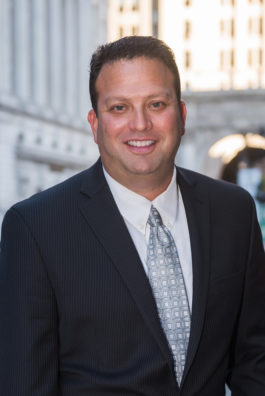
Matthew J. Fein
Partner
MOTOR VEHICLE ACCIDENT LITIGATION
Helping clients pursue compensation after serious motor vehicle accidents.

Eugene Gozenput
Partner
MOTOR VEHICLE ACCIDENT LITIGATION
Advocating for injury victims throughout Manhattan and the five boroughs.
Frequently Asked Questions About New York City Stop Sign Accidents
A stop sign accident can look simple until the drivers start disagreeing about who stopped, who had the right of way, who could see whom, and whether somebody should have avoided the crash. These are some of the questions that matter most after you’ve been injured.
If the other driver stopped, can they still be at fault?
Short answer: Yes.
Stopping and yielding are separate responsibilities. Under VTL § 1142, after stopping, the driver must yield to vehicles already in the intersection or approaching closely enough to constitute an immediate hazard.
I didn't have a stop sign. Did I have the right of way?
Short answer: The driver facing the stop sign generally must yield to qualifying traffic on the intersecting roadway.
You still have a duty to use reasonable care, particularly once another vehicle creates an apparent danger. But you are not ordinarily required to treat every stop-controlled vehicle as though it is about to violate the right-of-way rules.
What is a rolling stop?
Short answer: A rolling stop occurs when a driver slows substantially but continues moving instead of making the stop required by law.
VTL § 1172 requires a stop at the prescribed location before the driver proceeds subject to the right-of-way requirements of § 1142.
Where is a driver supposed to stop?
Short answer: At the marked stop line when one exists.
If there is no stop line, VTL § 1172 specifies stopping before the near-side crosswalk or, if there is no crosswalk, at the point nearest the intersecting roadway where the driver has a view of approaching traffic before entering.
What if the other driver says they stopped and looked both ways?
Short answer: Looking does not resolve whether it was safe to proceed.
If your vehicle was already in the intersection or approaching closely enough to constitute an immediate hazard, § 1142 may have required the driver to continue yielding.
What if parked cars blocked the other driver's view?
Short answer: An obstructed view can explain the collision, but it does not automatically excuse entering without knowing whether traffic is approaching.
Sight lines, the driver’s stopping position, how far the vehicle moved forward, intersection geometry, and what became visible from different positions may all matter.
What if parked cars blocked my view of them?
Short answer: That can be important when determining whether you had a reasonable opportunity to avoid the collision.
The investigation should examine when the other vehicle became visible and how much time and distance you actually had to react.
How can I prove the driver never stopped?
Short answer: Video and witnesses can be especially useful, but they aren’t the only evidence.
Vehicle movement, physical evidence, driver statements, collision geometry, photographs, dashcams, nearby surveillance, and other information may contribute to the reconstruction.
What if there is no video?
Short answer: No video does not mean no case.
Witnesses, physical evidence, vehicle damage, photographs, statements, police observations, electronic information where available, and the layout of the intersection may still help establish what happened.
What if both drivers had stop signs?
Short answer: Then the sequence and applicable right-of-way rules become particularly important.
The investigation may need to determine who arrived first, which vehicle entered first, each driver’s intended movement, whether anyone was turning, and what each driver could observe.
What if the other driver says I was speeding?
Short answer: The accusation should be tested against evidence.
Speed can matter to closing distance, right-of-way, avoidance, and comparative fault, but an unsupported claim of speeding does not automatically excuse a driver’s failure to yield after a stop.
What if I didn't have time to brake?
Short answer: Whether you could reasonably avoid the collision depends on when the danger became apparent and how much time and distance remained.
The analysis may include vehicle speeds, sight lines, road conditions, braking, intersection geometry, and when the stop-controlled vehicle entered your path.
What if the police report doesn't say who was at fault?
Short answer: An inconclusive police report does not necessarily prevent liability from being established.
The officer may not have witnessed the crash. The report can preserve useful statements, observations, witness information, diagrams, and enforcement details while other evidence answers questions the report cannot.
What if the driver didn't get a ticket?
Short answer: No ticket does not prove the driver stopped or properly yielded.
Traffic enforcement and civil responsibility are related but separate issues, and the responding officer may not have personally observed the violation.
What if I was a pedestrian in the crosswalk?
Short answer: The driver’s responsibility does not end after checking for cars.
The driver’s movement, your position in the crossing, visibility, applicable traffic controls, crosswalk conditions, and the driver’s duty toward pedestrians should all be examined.
What if I was riding a bicycle or e-bike?
Short answer: The investigation needs to determine which traffic controls applied to you and the driver, where each of you was traveling, and who was required to yield.
Different movements can create different right-of-way questions, so the fact that one person was riding rather than driving does not eliminate the need to reconstruct the collision.
What if the stop sign was missing or blocked?
Short answer: The condition and visibility of the sign can become an important part of the investigation.
Photographs, prior reports, maintenance information, roadway markings, sight lines, and the driver’s familiarity with the intersection may become relevant depending on the circumstances.
Can I be partly blamed for a stop sign accident?
Short answer: Potentially, depending on the evidence and the type of claim.
Under the current version of CPLR § 1411, claimant fault generally reduces damages in proportion to fault, but in personal injury actions subject to Article 51 of the Insurance Law, recovery is barred when the claimant’s culpable conduct is greater than that of the person or combined persons against whom recovery is sought.
That makes unsupported attempts to shift responsibility after a motor vehicle crash particularly important to investigate carefully.
Who pays my medical bills after a stop sign accident?
Short answer: New York’s No-Fault system generally provides first-party benefits for qualifying economic losses after covered motor vehicle accidents without first requiring you to prove that another driver caused the crash.
Insurance Law § 5102 defines basic economic loss, including up to $50,000 per person in combined qualifying losses subject to statutory limitations. Which insurer provides benefits depends on the circumstances and your status in the collision.
Can I recover for pain and suffering?
Short answer: Potentially, but New York’s No-Fault law restricts recovery of non-economic loss in covered motor vehicle cases unless the injured person sustained a serious injury.
The current definition of serious injury appears in Insurance Law § 5102(d), while § 5104 governs the limitation on recovery between covered persons.
How quickly should a stop sign accident be investigated?
Short answer: Promptly when evidence may disappear or conditions may change.
Private surveillance can be overwritten, witnesses become harder to locate, vehicles can be repaired or salvaged, signs can be fixed, construction moves, parked vehicles leave, and other temporary sight obstructions can disappear.
The Stop Sign Was Only the First Decision.
Did the driver stop?
Where did they stop?
What could they see?
What should they have yielded to?
Why did they enter?
And once they did, did you have any realistic chance to avoid them?
Those answers can explain much more than whether someone’s wheels stopped moving.
We investigate serious stop sign accidents throughout New York City to reconstruct what happened at the intersection, preserve evidence, examine attempts to shift blame, and help injured people understand what comes next.
Talk To Us For FreeServing Accident Victims Throughout New York City From Our Lower Manhattan Office
Pazer Epstein Jaffe Fein & Gozenput represents injury victims throughout Manhattan, Brooklyn, Queens, the Bronx, and Staten Island from our office at 20 Vesey Street in Lower Manhattan. Conveniently located near multiple major subway lines and transportation hubs, our office is easily accessible to clients across New York City seeking experienced legal representation after a serious accident.
Our Downtown Manhattan Office
Pazer Epstein Jaffe Fein & Gozenput, P.C.
20 Vesey Street, Suite 700
New York, NY 10007
917-983-2343
Our firm is located in downtown Manhattan, just steps from major subway lines serving every borough of New York City. Being based in Lower Manhattan allows us to stay closely connected to the courts, agencies, and neighborhoods where serious personal injury cases are handled, while remaining easy to reach for clients traveling from throughout the city.
Getting to Our Manhattan Office by Subway
Our Lower Manhattan office at 20 Vesey Street is conveniently located near several major subway stations serving Manhattan, Brooklyn, Queens, and the Bronx. Clients visiting our office can easily reach us using the A, C, E, 2, 3, 4, 5, J, and Z lines, with multiple stations located just a short walk away.
Fulton Street Station
A
C
E
2
3
4
5
J
Z
Approx. 2–4 minute walk
Park Place Station
2
3
Approx. 3-5 minute walk
Wall Street Station
2
3
Approx. 5-7 minute walk
Chambers Street Station
J
Z
Approx. 5-7 minute walk