New York City Highway Accident Lawyer
A highway crash can unfold in seconds but begin much earlier—with traffic compressing ahead, a vehicle entering from a ramp, an unsafe lane change or a driver failing to recognize a developing hazard. Understanding what happened often requires looking beyond the final impact to reconstruct how the vehicles reached it and who had the opportunity to prevent the collision.
- Motor Vehicle Accident Case Results
When someone comes to us after a serious car accident, our focus is on helping them recover the compensation they need to move forward.
$7,000,000
verdict for a client who sustained an injury to her neck requiring surgery due to an automobile accident.
$4,950,000
for a woman struck by a bus resulting in brain injury and disability.
$4,650,000
at trial for a client who was a back seat passenger in South Carolina when a bus driver fell asleep and pushed the plaintiff’s vehicle off of the road.
A Highway Accident Often Begins Before the First Impact
Highway crashes often develop through a sequence of events rather than one isolated mistake. Traffic speed, following distance, lane position, merging vehicles, congestion, visibility and the actions of drivers farther ahead can all help explain why the collision occurred.
When someone tells me they were injured in a highway accident, one of the first things I want to understand is what traffic was doing before anyone hit anything.
Was traffic moving normally and then slowing rapidly? Had vehicles already begun braking? Was another driver entering from a ramp? Was someone trying to reach an exit from the wrong lane? Did a truck or SUV block the view of stopped traffic ahead? Had an earlier collision already created a hazard?
Those questions matter because the last impact is not necessarily the event that explains the crash.
A driver may strike the vehicle directly in front because that driver was following too closely. Another may be pushed forward after being hit from behind. A third may change lanes to avoid stopped traffic and collide with a vehicle already occupying the adjacent lane. By the time everyone comes to rest, the final positions of the vehicles may look very different from the traffic pattern that existed seconds earlier.
New York law recognizes that drivers have to respond to the conditions actually confronting them. Vehicle and Traffic Law § 1180 requires drivers to travel at a speed that is reasonable and prudent under existing conditions and potential hazards. Vehicle and Traffic Law § 1129 separately prohibits following another vehicle more closely than is reasonable and prudent, taking into account speed, traffic and highway conditions.
That is why a highway accident investigation should not begin and end with the question, “Who hit whom?”
We want to understand what was developing on the roadway, when each driver could reasonably have recognized it and what options remained before the collision became unavoidable.
New York City's Highway Network Creates Very Different Driving Environments
A highway accident in New York City may occur on a dense urban expressway, a parkway, an elevated or depressed roadway, or a route carrying heavy commercial traffic between boroughs and regional crossings. The particular road matters because its geometry, traffic patterns, entrances, exits and vehicle restrictions can shape how a crash develops.
There is no single New York City highway driving experience.
The Cross Bronx Expressway carries traffic across the Bronx between the George Washington Bridge and the Throgs Neck Bridge approach. The Major Deegan runs north from the Robert F. Kennedy Bridge area toward Westchester County. The Brooklyn-Queens Expressway moves through two boroughs while connecting major bridges, tunnels and local street networks. The Van Wyck carries traffic through Queens toward JFK Airport. The Staten Island Expressway connects the Verrazzano-Narrows Bridge approach with the Goethals Bridge approach.
Manhattan has its own limited-access corridors, including the FDR Drive and Harlem River Drive on the east side and the Henry Hudson Parkway farther west and north. The city’s roadway classifications are not always as intuitive as their names: NYC identifies the FDR Drive among its highways while treating the West Side Highway/Joe DiMaggio Highway as a street for city highway-service purposes.
Brooklyn and Queens drivers also encounter the Belt Parkway, Jackie Robinson Parkway, Grand Central Parkway, Cross Island Parkway and other routes with their own geometry and traffic patterns. Commercial vehicles add another distinction. NYC DOT states that trucks and other commercial vehicles are not permitted on New York City parkways, while expressways such as the BQE carry substantial commercial traffic.
These are not simply geographic names to attach to an accident report. They can tell us something about the traffic environment in which the collision occurred.
The BQE Shows How Traffic Volume and Commercial Traffic Can Converge
NYC’s own description of the city-owned BQE Central section between Atlantic Avenue and Sands Street illustrates the scale involved. According to the city, approximately 130,000 vehicles use that section each day, including about 13,000 truck trips. The city also says the roadway carries more than twice the traffic volume for which it was originally designed.
That does not mean traffic volume itself establishes fault in an individual crash. It does explain why a collision on a heavily traveled urban expressway may involve congestion, trucks, closely spaced vehicles, entrance and exit movements, and secondary impacts all within a relatively small area.
The Cross Bronx Presents Another Kind of Highway Environment
New York City’s Reimagine the Cross Bronx study found that many sections of the highway experience injury crashes at more than twice statewide average rates.
Again, a corridor-wide statistic cannot tell us who caused a particular collision. What it can do is provide context for a roadway where dense traffic, regional travel, commercial vehicles and complicated connections repeatedly place drivers into demanding traffic conditions.
When we investigate a highway accident, knowing exactly where it occurred is therefore more useful than simply knowing that it happened “on the highway.” The roadway, direction of travel, nearest entrance or exit, lane and surrounding traffic pattern can all become important.
Sudden Traffic Compression Can Turn Ordinary Highway Driving Into an Emergency
Highway traffic does not have to be moving at high speed when a serious collision begins. A line of vehicles can go from steady movement to heavy braking or a complete stop in seconds, leaving every following driver responsible for recognizing the change and responding safely.
Anyone who regularly drives in New York City has experienced it: traffic is moving, perhaps surprisingly well, and then the brake lights begin several vehicles ahead.
The reason may be ordinary congestion. It may be an entrance ramp feeding traffic into an already crowded roadway, a lane closure, construction, a disabled vehicle or a collision that has just occurred beyond the driver’s view.
What happens next depends heavily on spacing and attention.
A driver who has maintained enough distance may be able to slow normally. A driver following too closely may have little room left. Someone looking at a phone or otherwise distracted may not begin braking until the vehicle ahead has nearly stopped. A truck may recognize the hazard but require considerably more distance to reduce speed because of its size and weight.
The resulting collision can begin as a straightforward rear-end impact and become much more complicated as vehicles are pushed into one another or drivers attempt evasive maneuvers.
This is one reason highway accident cases benefit from looking farther ahead in the traffic stream. The important event may not be the vehicle immediately in front of the injured person. It may be the event that caused the entire line of traffic to react.
For a deeper discussion of liability when one vehicle strikes another from behind, see our New York City Rear-End Accident Lawyer page.
Merging and Changing Lanes Require More Than Finding an Open Space
A driver entering another lane has to determine that the movement can be made safely. On a busy highway, that judgment can depend on speed differences, blind spots, closing distance and whether another vehicle is already occupying or entering the same space.
Merging looks simple when viewed on a diagram. Real highway traffic rarely behaves that neatly.
A vehicle entering from a ramp may be accelerating while through traffic is slowing. A driver approaching an exit may cross one or more lanes. Two vehicles may simultaneously attempt to occupy the same opening. A passenger car can disappear beside a larger truck. A motorcycle can be visible in one mirror and then move into an area the driver fails to check before changing lanes.
New York law addresses these movements directly. Under Vehicle and Traffic Law § 1128, a vehicle traveling on a roadway divided into marked lanes must remain as nearly as practicable within a single lane and cannot leave that lane until the driver has first determined that the movement can be made safely.
Vehicle and Traffic Law § 1163 also addresses movement right or left on a roadway, requiring that the movement be made with reasonable safety and that an appropriate signal be given.
When a highway collision occurs during a merge or lane change, the physical contact alone may not answer what happened. We may need to determine where the vehicles were positioned before contact, which vehicle was established in the lane, whether either driver was simultaneously changing lanes, how fast the vehicles were closing on one another and what each driver could reasonably see.
Damage location can help. So can video, witness accounts, vehicle data and the roadway itself.
A scrape beginning near the front of one vehicle may suggest a different sequence than damage concentrated near the rear quarter of another. But damage patterns should be considered with the rest of the evidence rather than treated as an automatic answer.
The Crash May Have Started Several Vehicles Ahead of You
In a multi-vehicle highway collision, the vehicle that struck you may not be the vehicle whose conduct began the sequence. Reconstructing the order of impacts can help distinguish a driver who caused a collision from someone whose vehicle was pushed forward after being hit.
Highway crashes can become confusing almost immediately.
You may remember one impact and then another. You may know that your vehicle was pushed forward but not know which collision happened first. Someone behind you may insist that another vehicle pushed them into you. Drivers farther back may have seen the traffic begin to stop before you did.
None of that is unusual after a violent multi-vehicle collision.
Suppose traffic on the Cross Bronx slows abruptly. Vehicle A stops. Vehicle B stops behind it. Vehicle C strikes B and pushes B into A. A moment later, Vehicle D strikes C and causes another round of impacts.
From Vehicle A’s perspective, it may feel like two rear-end collisions. From Vehicle B’s perspective, the first contact may have come entirely from behind. Vehicle C may claim it had already stopped before Vehicle D arrived. Each driver’s description can contain part of the truth without explaining the entire sequence.
Now add another lane.
A driver sees the collision developing and moves left. Another vehicle is already there. Those vehicles make contact, one spins and a second sequence begins.
That is why we try to reconstruct the crash chronologically.
Vehicle Damage Can Help Establish the Order of Impacts
The location and nature of damage may help distinguish a vehicle that struck something under its own momentum from one that was struck and pushed forward. Front and rear damage, crush patterns and the relative severity of impacts can become pieces of that analysis.
But damage should not be interpreted in isolation. Vehicle size, angle, speed and subsequent impacts can complicate what appears obvious from photographs.
Drivers Farther Away May Have Seen More Than the People Who Were Hit
A driver directly involved in the collision may see almost nothing before impact. Someone several vehicles behind or traveling in an adjacent lane may have watched the sequence develop.
Independent witnesses can sometimes describe which vehicle failed to stop, whether traffic had already been stationary, whether someone changed lanes immediately before impact or whether an earlier crash created the hazard.
Video Can Turn a Collection of Memories Into a Timeline
Dash cameras, commercial vehicle cameras and other available video may show when brake lights appeared, how traffic compressed, whether a vehicle changed lanes and how much time separated successive impacts.
That can be especially valuable because a multi-impact collision is a terrible environment for precise human memory. The injured person may be thrown forward, backward or sideways while airbags deploy and vehicles continue moving around them.
Electronic Vehicle Information May Add Another Layer
Depending on the vehicle and circumstances, electronically stored information may help address speed, braking or other aspects of vehicle operation. Commercial vehicles may also generate records that do not exist in an ordinary passenger-car case.
Not every collision requires every form of evidence. The point is to identify what can reliably answer the disputed questions in that particular crash.
When several vehicles are involved, the investigation should account for the possibility that responsibility does not stop with the vehicle that happened to make contact with yours.
Why Injured New Yorkers Trust Us
1.
Decades of NYC Personal Injury Experience
For more than 70 years, our firm has represented injured New Yorkers in serious personal injury and motor vehicle accident cases. We understand how insurance companies evaluate claims and how to build cases that withstand scrutiny.
2.
Handling Complex NYC Car Accident Cases
Our attorneys represent victims injured in car accidents, truck collisions, rideshare crashes, pedestrian accidents, bicycle accidents, hit-and-run collisions, and other serious traffic-related incidents throughout New York City.
3.
Downtown Manhattan Office Serving All Five Boroughs
Located in Lower Manhattan, our office is easily accessible from throughout New York City. We represent clients across Manhattan, Brooklyn, Queens, the Bronx, and Staten Island and can move quickly to preserve evidence after a serious crash.
4.
Proven Results In Serious Injury Cases
Our attorneys have secured significant verdicts and settlements in cases involving automobile accidents, pedestrian injuries, truck collisions, bus crashes, and other catastrophic injury matters throughout New York.
5.
No Fee Unless We Recover Compensation
We handle car accident cases on a contingency fee basis. You pay no legal fees unless we recover compensation on your behalf.
Meet Our New York City Car Accident Attorneys
For decades, the attorneys at Pazer Epstein Jaffe Fein & Gozenput have represented individuals and families throughout New York City in serious personal injury and motor vehicle accident cases. Our legal team combines extensive courtroom experience, strategic case preparation, and a commitment to personalized client service to help accident victims pursue the compensation they deserve.

Michael Jaffe
Partner
MOTOR VEHICLE ACCIDENT LITIGATION
Representing injured car accident victims throughout New York City.
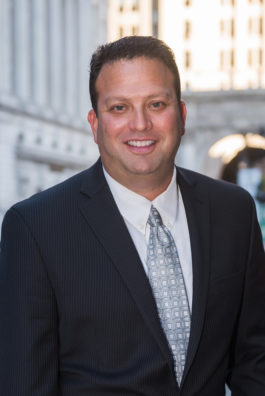
Matthew J. Fein
Partner
MOTOR VEHICLE ACCIDENT LITIGATION
Helping clients pursue compensation after serious motor vehicle accidents.

Eugene Gozenput
Partner
MOTOR VEHICLE ACCIDENT LITIGATION
Advocating for injury victims throughout Manhattan and the five boroughs.
Highway Accident Evidence Can Disappear Long Before the Case Is Resolved
Vehicles are moved, debris is cleared, traffic resumes and temporary conditions change. Evidence from cameras, commercial vehicles, witnesses and the vehicles themselves may be more useful when it is identified early rather than reconstructed months later from memory alone.
A New York City highway cannot remain frozen as a crash scene for very long.
Emergency responders need access. Injured people need medical care. Disabled vehicles have to be moved. Debris has to be cleared. Thousands of other drivers may be waiting behind the collision.
That practical reality makes early evidence preservation particularly important.
Depending on the accident, useful evidence may include:
- photographs and video from the scene;
- dash-camera footage;
- commercial vehicle camera footage;
- available traffic or roadway video;
- witness contact information and statements;
- police and emergency-response records;
- vehicle damage and post-crash inspections;
- electronically stored vehicle information where relevant and available;
- commercial driver and carrier records;
- tow and recovery records;
- construction or lane-closure information; and
- records concerning roadway conditions when those conditions may have contributed to the crash.
The evidence we pursue depends on the dispute.
If two drivers disagree about a lane change, video and vehicle damage may be especially important. If a truck could not stop before striking a line of traffic, vehicle condition, driver records and commercial evidence may matter. If a temporary lane configuration contributed to the collision, the investigation may need to look beyond the drivers themselves.
The goal is not to collect every conceivable document. It is to preserve the evidence capable of answering the questions the crash actually presents.
A Disabled Vehicle Can Turn a Highway Shoulder Into a Dangerous Place
A collision does not necessarily end when the vehicles stop moving. A disabled vehicle in or near a travel lane can expose occupants, other motorists and emergency responders to a second impact, particularly where approaching drivers have limited time to recognize the hazard.
One of the frightening realities of a highway crash is that the danger may continue after the initial impact.
A vehicle may be disabled partly within a travel lane. Another may come to rest against a barrier with little room for occupants to exit. People may step onto the roadway while traffic continues passing nearby. A curve, hill, darkness, weather or congestion can reduce the time available for approaching drivers to recognize what has happened.
New York State DOT promotes a “Steer It, Clear It” approach for collisions on major roadways. When occupants are unhurt and the vehicle can be driven, the agency advises moving it out of the travel lane to help prevent a secondary collision and waiting in a safer location for emergency services.
That advice has an important qualification built into it: the people involved must be unhurt and the vehicle must be capable of being moved safely.
After a serious collision, an injured person should not put themselves at greater risk merely to move a damaged vehicle. Emergency circumstances differ, and immediate safety comes first.
Secondary impacts also create another liability question. If someone is injured after the first collision while a vehicle is disabled on the roadway, the investigation may need to examine both how the original crash occurred and whether a later driver responded reasonably to a hazard that was already present.
Trucks and Commercial Vehicles Change the Highway Equation
Large commercial vehicles can introduce different stopping distances, blind spots, vehicle dynamics and sources of evidence into a highway accident. The investigation may also extend beyond the driver to the carrier, vehicle owner, employer or other businesses involved in the vehicle’s operation.
New York City’s expressways are part of a much larger regional transportation network. Trucks move through the city toward bridges, tunnels, warehouses, businesses and destinations well beyond the five boroughs.
The BQE illustrates how closely passenger and commercial traffic can interact. The city’s current BQE Central planning materials estimate approximately 13,000 truck trips each day through the Atlantic Avenue-to-Sands Street section alone.
A large commercial vehicle behaves differently from a passenger car. Its size can affect visibility around it. Its weight affects braking and stopping. Its length changes the space required for lane movements. A passenger vehicle traveling beside it may occupy an area the truck driver fails to observe before moving laterally.
The legal investigation may also be broader.
Depending on the facts, questions can involve the driver, motor carrier, vehicle owner, maintenance, employment relationships and commercial records. Some vehicles may have onboard cameras, electronic systems or company records capable of providing information about the trip and the events surrounding the collision.
Parkways create a distinctly New York complication. NYC DOT states that commercial vehicles are not permitted on city parkways, including routes such as the Belt Parkway, Grand Central Parkway, Cross Island Parkway and Jackie Robinson Parkway.
If a commercial vehicle is involved where it should not have been traveling in the first place, that fact may become part of the investigation, although it does not automatically answer every question about why the collision occurred.
We examine truck crashes in much greater depth on our New York City Truck Accident Lawyer page.
Construction Can Change a Familiar Highway Overnight
Highway construction can temporarily change lanes, shoulders, traffic speeds, merge points and sight lines. When a crash occurs in a work zone, the investigation may need to consider driver behavior together with the temporary traffic configuration and the work being performed.
A driver may know a highway well and still encounter a very different roadway during construction.
A lane that normally continues may end. Traffic may be shifted laterally. Shoulders may narrow or disappear. Concrete barriers can reduce recovery space. Construction vehicles may enter or leave the roadway. Signs, pavement markings and temporary traffic-control devices may direct drivers through a pattern that did not exist the week before.
New York law expressly recognizes highway work areas as conditions requiring driver attention. Vehicle and Traffic Law § 1180 requires an appropriate reduced speed when highway construction or maintenance creates a special hazard, and New York also authorizes reduced work-area speed limits.
When a collision occurs in a construction zone, we do not assume that the presence of construction means the contractor or government caused the crash. A driver may simply have been speeding, distracted or following too closely.
But neither should the temporary roadway configuration be ignored when the evidence suggests it contributed to what happened.
Relevant questions can include how traffic was being routed, whether lanes had shifted, what warnings drivers received, whether barriers affected visibility, whether construction vehicles were entering traffic and which public or private entities were responsible for the work and traffic-control measures.
Those questions will receive their own deeper treatment on the Construction Zone Accident page we’re building as part of this New York City motor vehicle accident resource.
Sometimes the Roadway Deserves Investigation Too
Most highway accidents are primarily about the conduct of drivers, but not every case should be reduced automatically to one driver versus another. Road surface conditions, debris, drainage, barriers, signs, lane markings and other roadway conditions may warrant investigation when the facts point in that direction.
Drivers have a responsibility to respond reasonably to roadway conditions. But there are accidents in which the condition of the highway itself becomes part of the story.
A large piece of debris may force a sudden evasive movement. Standing water can affect vehicle control. A damaged road surface may be particularly dangerous to a motorcycle. Missing or confusing temporary markings can complicate a lane shift. A barrier or work-zone configuration may affect sight distance or available recovery space.
NYC’s own highway maintenance system recognizes that these roads develop physical conditions requiring attention. The city accepts reports involving potholes, cave-ins, rough or deteriorated highway surfaces, debris and other highway conditions.
That does not mean the existence of a defect automatically creates a viable claim against a government agency or anyone else. Claims involving public roadways can raise additional questions about responsibility, notice, jurisdiction and procedural requirements.
It does mean that when the physical condition of the road appears to have contributed to a serious collision, preserving evidence of that condition can be important.
Roadway conditions change. Debris is removed. Potholes are repaired. Construction progresses. Lane markings are repainted. A photograph taken shortly after the crash may therefore show something that no longer exists when someone returns weeks later.
Serious Highway Injuries Can Trigger New York's No-Fault and Serious-Injury Rules
For people injured in covered New York motor vehicle accidents, No-Fault insurance and the statutory serious-injury threshold can affect which losses are paid regardless of fault and when non-economic damages may be pursued against another covered person.
The fact that a crash occurred on a highway does not create a separate insurance system. The same New York No-Fault framework that applies to other covered motor vehicle accidents can apply here.
Under Insurance Law § 5102, basic economic loss can include up to $50,000 per person in combined qualifying expenses and losses, subject to the statute and applicable rules.
The statute also defines “serious injury” to include death, dismemberment, significant disfigurement, fracture, loss of a fetus, permanent loss of use of a body organ, member, function or system, permanent consequential limitation of use of a body organ or member, and significant limitation of use of a body function or system.
Under Insurance Law § 5104, a covered person generally cannot recover non-economic loss from another covered person for negligence arising from the use or operation of a motor vehicle unless the injured person sustained a serious injury.
Highway collisions can produce fractures, traumatic brain injuries, spinal injuries, internal injuries and other significant trauma, particularly where higher speeds, large vehicles or multiple impacts are involved. But the seriousness of a claim should be established through the actual medical evidence rather than assumptions based solely on where the collision occurred.
What If More Than One Driver Was Responsible for a New York Highway Accident?
Highway accidents can involve fault by more than one driver. A motorist may follow too closely while another makes an unsafe lane change, or several drivers may contribute independently to a chain-reaction collision. New York’s current comparative-fault rules determine how an injured person’s own share of responsibility can affect recovery.
Multi-vehicle highway crashes do not always produce a single responsible driver.
One driver may cause traffic to react by making an unsafe lane change. Another may be following too closely to stop. A third may be distracted and collide with vehicles that had already slowed safely.
Those actions can overlap without being identical.
The injured person’s own conduct may also become disputed. New York changed its comparative-fault law in 2026, so older descriptions of the state as applying the same “pure comparative negligence” rule to every personal injury case are no longer accurate.
Under CPLR § 1411(a), except where subsection (b) applies, culpable conduct attributable to the claimant does not bar recovery; damages are reduced in proportion to the claimant’s culpable conduct.
For personal injury actions subject to Article 51 of the Insurance Law, § 1411(b) now provides that claimant culpable conduct bars recovery when it is greater than the culpable conduct of the person against whom recovery is sought or greater than the combined culpable conduct of the persons against whom recovery is sought.
That makes careful allocation of responsibility especially important in a highway collision involving several drivers. The investigation should determine what each participant actually did rather than treating the crash as though everyone in the chain played the same role.
What Should You Do After a Highway Accident in New York City?
Your immediate priorities are safety and medical care. Once those needs are addressed, preserving information about the vehicles, location, witnesses and changing roadway conditions can help protect evidence that may be difficult to recover later.
The aftermath of a highway collision can be dangerous and disorienting. Traffic may still be moving nearby, vehicles may be disabled in active lanes and injuries are not always immediately obvious.
What is safe and possible will depend on the circumstances, but several priorities are generally worth keeping in mind:
- Protect yourself from additional traffic if you can do so safely. If you are unhurt and the vehicle is drivable, New York State DOT advises moving it from the travel lane to reduce the risk of another collision. Do not put yourself in greater danger attempting to move a vehicle when injuries or conditions make that unsafe.
- Call 911 when emergency assistance is needed. Serious highway collisions may require police, fire and medical response, particularly when vehicles are blocking lanes or someone is injured.
- Get appropriate medical attention. The force of a collision can produce injuries that are not fully apparent at the scene.
- Identify the exact location. If possible, note the highway, direction of travel, nearest exit or entrance, and where the vehicles came to rest. “The BQE” or “the Cross Bronx” may cover miles of roadway and numerous interchanges.
- Photograph what you safely can. Vehicle positions, damage, debris, lane markings, barriers, signs, construction and roadway conditions may change quickly.
- Get witness information. Drivers or passengers who were not directly involved may have seen the sequence more clearly than the people who were hit.
- Preserve available video. If your vehicle has a dash camera, protect the recording from being overwritten. Other potentially relevant video should be identified as early as reasonably possible.
- Be careful about reconstructing uncertain details from memory. It is perfectly reasonable not to know which of several impacts came first. A complicated crash should be reconstructed from evidence rather than filled in with guesses.
If the collision involved several vehicles, a commercial truck, a construction area, a disputed lane change or a serious injury, there may be considerably more to investigate than appears in the initial exchange of information at the scene.
Frequently Asked Questions About New York City Highway Accidents
Highway collisions often raise questions about lane changes, chain reactions, commercial vehicles, insurance and evidence that disappears quickly after traffic begins moving again. These answers address some of the issues that commonly arise after a serious highway accident in New York City.
What highways are included in New York City highway accident cases?
New York City has an extensive network of expressways, highways and parkways, including the Cross Bronx Expressway, Brooklyn-Queens Expressway, Major Deegan Expressway, Van Wyck Expressway, Staten Island Expressway, Belt Parkway, Grand Central Parkway, Cross Island Parkway, Jackie Robinson Parkway, FDR Drive and others.
The exact roadway matters because traffic patterns, vehicle restrictions, entrances, exits and roadway design differ considerably across the city’s highway network.
Who is at fault in a highway rear-end accident?
Fault depends on how the collision occurred. New York law requires drivers to maintain a reasonable and prudent following distance based on vehicle speed, traffic and highway conditions.
In a multi-vehicle collision, however, a vehicle may be pushed into another after being struck from behind. Determining the sequence of impacts can therefore be essential before deciding which driver caused a particular collision.
Who has the right of way when merging onto a highway in New York?
The answer depends on the roadway configuration and the movements of the vehicles involved. New York Vehicle and Traffic Law § 1128 provides that a vehicle should remain within its lane and should not move from that lane until the driver has first determined that the movement can be made safely.
A merge accident should be evaluated from the actual lane configuration, vehicle positions, speed, visibility and movements rather than from a blanket assumption about either driver.
What if I was hit more than once in a chain-reaction highway accident?
Multiple impacts are common in serious highway pileups and can make the sequence difficult to remember.
Vehicle damage, witness accounts, video, police records and other available evidence may help establish which impact occurred first, whether a vehicle was pushed forward and whether more than one driver’s conduct contributed to the collision.
Can more than one driver be responsible for the same highway accident?
Yes. One driver’s unsafe lane change, another driver’s inadequate following distance and a third driver’s distraction can all contribute to the same sequence.
Responsibility should be evaluated separately for each driver rather than assuming that every vehicle involved in a multi-car collision played the same role.
What if a truck caused my highway accident?
A truck accident may require investigation beyond the conduct of the driver. Depending on the circumstances, the motor carrier, vehicle owner, employer, maintenance history and commercial records may also become relevant.
Large trucks also have different stopping, visibility and maneuvering characteristics that can be important when reconstructing a highway collision.
Can a roadway condition contribute to a highway accident?
Yes. Debris, standing water, deteriorated pavement, construction, temporary lane configurations, barriers, signs or other roadway conditions can sometimes contribute to a collision.
That does not automatically establish liability against a government agency, contractor or other party. Responsibility, notice, jurisdiction and other legal requirements must be evaluated from the particular facts.
What happens if I was partly responsible for a highway accident?
For a personal injury action subject to Article 51 of New York’s Insurance Law, current CPLR § 1411 provides that an injured person’s culpable conduct bars recovery if it is greater than the culpable conduct of the person against whom recovery is sought, or greater than the combined culpable conduct of the persons against whom recovery is sought.
When recovery is not barred, the injured person’s share of responsibility can reduce the damages recoverable. The applicable analysis depends on the particular claim and allocation of fault.
Does New York No-Fault insurance apply to highway accidents?
New York’s No-Fault system generally applies to covered motor vehicle accidents regardless of whether the collision occurred on a highway or a local street.
The rules governing first-party benefits, serious injury and claims against another driver depend on the people and vehicles involved and the particular circumstances of the accident.
Should I move my car after a highway accident?
Safety comes first. New York State DOT advises that when occupants are unhurt and a vehicle can be driven, moving it out of an active travel lane can help prevent a secondary collision.
If you are injured, the vehicle cannot be moved safely or leaving the vehicle would expose you to additional traffic danger, the circumstances may require a different response. Call 911 when emergency assistance is needed.
What evidence is useful after a highway accident?
Useful evidence can include scene photographs, vehicle damage, dash-camera or other available video, witness information, police records, roadway conditions, commercial vehicle records and electronically stored vehicle information where relevant.
Which evidence matters most depends on what is disputed. A lane-change case may require different evidence from a chain-reaction collision or a crash involving a commercial truck.
Why does the exact highway location matter after a crash?
The highway, direction of travel, nearest entrance or exit, lane and surrounding roadway configuration can help identify how traffic was moving and what evidence may exist.
New York City’s major highways can run for miles through multiple neighborhoods and interchanges, so a precise location is considerably more useful than simply saying the accident happened on the BQE, Cross Bronx or another major roadway.
How long do I have to file a highway accident lawsuit in New York?
The deadline depends on the parties and legal claims involved. Many negligence personal injury actions are subject to a three-year limitations period, but shorter deadlines and additional procedural requirements can apply in cases involving government entities and certain other defendants.
The applicable deadline should be determined from the facts of the particular accident rather than assumed from the general rule.
Talk to a New York City Highway Accident Lawyer About What Happened
A highway accident can involve more than the vehicle that struck you. Traffic conditions, lane movements, earlier impacts, commercial vehicles, construction and roadway conditions may all help explain how the collision began and who had an opportunity to prevent it.
At Pazer Epstein Jaffe Fein & Gozenput, P.C., we investigate the sequence of events, preserve available evidence, identify the parties who may be responsible and determine what insurance coverage and other sources of recovery may apply.
If you were injured in a highway accident in New York City, contact us for a free consultation. Tell us what you remember. We can help investigate the rest.
Talk To Us For FreeServing Accident Victims Throughout New York City From Our Lower Manhattan Office
Pazer Epstein Jaffe Fein & Gozenput represents injury victims throughout Manhattan, Brooklyn, Queens, the Bronx, and Staten Island from our office at 20 Vesey Street in Lower Manhattan. Conveniently located near multiple major subway lines and transportation hubs, our office is easily accessible to clients across New York City seeking experienced legal representation after a serious accident.
Our Downtown Manhattan Office
Pazer Epstein Jaffe Fein & Gozenput, P.C.
20 Vesey Street, Suite 700
New York, NY 10007
917-983-2343
Our firm is located in downtown Manhattan, just steps from major subway lines serving every borough of New York City. Being based in Lower Manhattan allows us to stay closely connected to the courts, agencies, and neighborhoods where serious personal injury cases are handled, while remaining easy to reach for clients traveling from throughout the city.
Getting to Our Manhattan Office by Subway
Our Lower Manhattan office at 20 Vesey Street is conveniently located near several major subway stations serving Manhattan, Brooklyn, Queens, and the Bronx. Clients visiting our office can easily reach us using the A, C, E, 2, 3, 4, 5, J, and Z lines, with multiple stations located just a short walk away.
Fulton Street Station
A
C
E
2
3
4
5
J
Z
Approx. 2–4 minute walk
Park Place Station
2
3
Approx. 3-5 minute walk
Wall Street Station
2
3
Approx. 5-7 minute walk
Chambers Street Station
J
Z
Approx. 5-7 minute walk