New York City Multi-Vehicle & Chain-Reaction Accident Lawyer
A multi-vehicle accident can leave you certain that you were hit but unsure how the crash actually began. In a chain reaction, one driver may start the collision, another may contribute to it, and a vehicle that was already stopped may be pushed into yours. Determining responsibility requires reconstructing the sequence of events and the role each vehicle played.
- Motor Vehicle Accident Case Results
When someone comes to us after a serious car accident, our focus is on helping them recover the compensation they need to move forward.
$7,000,000
verdict for a client who sustained an injury to her neck requiring surgery due to an automobile accident.
$4,950,000
for a woman struck by a bus resulting in brain injury and disability.
$4,650,000
at trial for a client who was a back seat passenger in South Carolina when a bus driver fell asleep and pushed the plaintiff’s vehicle off of the road.
Understanding a Multi-Vehicle Accident Starts With the Sequence of Impacts
When several vehicles collide, their final positions rarely tell the whole story. The investigation needs to establish what traffic was doing beforehand, which contact occurred first, whether any vehicles had already stopped, and how the force of one impact affected the vehicles around it.
A chain-reaction accident may look straightforward after everyone comes to rest. There may be a line of damaged vehicles, each with front or rear damage, and several drivers who know which vehicle made contact with theirs. The difficult part is determining how those contacts occurred.
Consider three vehicles stopped in traffic. A fourth vehicle approaches from behind, fails to stop and strikes the third vehicle hard enough to push it into the second, which is then pushed into the first. All four vehicles have made contact, but the first three drivers may have been sitting still before the collision began.
Change the sequence and the analysis changes with it. The third vehicle may have already struck the second before being hit from behind. Two impacts may have occurred so close together that the occupants disagree about which came first. A driver may have braked in time but then been propelled forward. Another may have tried to avoid the initial collision by changing lanes and caused a separate impact alongside it.
These distinctions are recognized in New York law. Vehicle and Traffic Law § 1129 requires drivers to maintain a following distance that is reasonable and prudent in light of speed, traffic and highway conditions. New York courts generally treat a rear-end collision with a stopped or stopping vehicle as evidence requiring the rear driver to provide a nonnegligent explanation. Courts also recognize that a middle vehicle may have such an explanation when it was properly stopped and was struck from behind with enough force to propel it into the vehicle ahead.
That is why it can be misleading to identify responsibility simply by looking at which car has front-end damage. A vehicle can make physical contact without its driver having caused that contact.
Recent New York cases also illustrate why the number and sequence of impacts matter. When the drivers give materially different accounts of whether a middle vehicle struck the lead vehicle before or only after being hit from behind, that disagreement can become central to determining fault.
A careful investigation therefore reconstructs the collision in time. It establishes the movement of the vehicles before the first impact, the order in which contact occurred and whether each later collision was the unavoidable consequence of an earlier impact or resulted from another driver’s independent conduct.
Chain-Reaction Accidents Can Develop in Several Different Ways
A multi-vehicle accident does not have to be a line of cars rear-ending one another. These crashes can begin with stopped traffic, a lane change, an intersection collision, a disabled vehicle, a truck, or a vehicle that loses control and creates a new hazard for surrounding drivers.
The classic chain collision occurs when traffic slows or stops and a driver farther back fails to react in time. The initial impact pushes vehicles forward into one another. That pattern is common, but it represents only one way several vehicles can become involved in the same accident.
At an intersection, two vehicles may collide at an angle and one can be deflected into a third vehicle that was stopped or traveling on another approach. A driver making an unsafe left turn may cause an approaching vehicle to swerve, producing a collision in an adjacent lane even if the turning vehicle itself is never struck. A red-light collision can send one vehicle across an intersection and into traffic that had no involvement in the original right-of-way dispute.
Those situations connect naturally with the issues discussed on our New York City Intersection Accident Lawyer, Left-Turn Accident Lawyer and Red-Light Accident Lawyer pages.
Highway crashes can develop differently. Traffic may compress quickly around congestion, a merge, construction, a disabled vehicle or an earlier accident. One vehicle hits another, surrounding drivers brake or change lanes, and the original collision becomes an obstacle for vehicles approaching at highway speed. Our New York City Highway Accident Lawyer page examines those highway-specific conditions in greater depth.
A 2026 New York appellate case provides a useful real-world example. Four vehicles were traveling in the middle lane of the Cross Bronx Expressway when the lead truck stopped to avoid a disabled vehicle from an earlier accident. The vehicles behind it then became involved in successive impacts. The case illustrates how one roadway event can produce several distinct driver responses and collisions.
Multi-vehicle accidents can also involve a vehicle spinning across lanes, striking a median or barrier and rebounding into traffic, or becoming disabled in a place where approaching drivers have little time to react. What matters is not whether the crash fits a particular label. The investigation has to account for the event that created the danger and what each driver did after that danger became apparent.
Several Drivers May Contribute to the Same Multi-Vehicle Crash
Some chain-reaction accidents can be traced primarily to one driver. Others involve separate mistakes by several drivers. The evidence needs to show what each driver did and whether that conduct contributed to the collision or injuries.
A multi-vehicle accident does not become a shared-fault case merely because several vehicles were involved. If a driver crashes into a line of properly stopped vehicles and the impact pushes them together, the evidence may point overwhelmingly toward the driver who arrived from behind. The drivers who were pushed into one another do not become negligent simply because their vehicles made contact.
Other accidents develop through several independent acts.
A driver may change lanes without enough room and force surrounding traffic to brake. The driver immediately behind may be following too closely and collide with the vehicle ahead. Another driver farther back may have had enough distance to stop but fail to recognize the developing crash because of distraction. Those actions occurred within the same sequence, but each needs to be evaluated on its own facts.
The same principle applies when an initial collision creates a new hazard. A driver who caused the first crash may bear responsibility for setting the sequence in motion, while a later driver may also bear responsibility if there was sufficient time and distance to recognize the obstruction and avoid a secondary collision.
New York traffic law provides different rules for different conduct. Following distance may implicate VTL § 1129. Unsafe movement between lanes may implicate VTL § 1128. Speed must be reasonable and prudent for existing conditions under VTL § 1180. Intersection, turning and traffic-control rules can become important when the sequence begins somewhere other than a straight roadway.
The purpose of reconstructing the accident is to determine which of those rules actually correspond to what happened. A five-vehicle crash should not become five interchangeable allegations of negligence. Each driver occupied a particular position, made particular decisions and had a particular amount of time to respond.
The Best Evidence Often Comes From More Than the Drivers' Memories
People involved in a violent chain-reaction crash may remember different parts of the event. Vehicle damage, independent witnesses, photographs, video, electronic information and other records can help establish a sequence that no single person was in a position to observe completely.
It is entirely possible for several people to experience the same chain-reaction accident and remember it differently. One occupant may feel a severe impact from behind followed almost immediately by another impact from the front. A driver farther back may see brake lights and several vehicles moving at once. Someone traveling in an adjacent lane may have the clearest view of how the collision actually began.
Those differences make corroborating evidence particularly valuable.
Vehicle Damage Can Help Reconstruct Movement
The location and character of damage can help establish which parts of the vehicles made contact and from what general direction. A vehicle with damage at both ends may have been pushed forward after a rear impact, may have struck the vehicle ahead before being rear-ended, or may have experienced several impacts during the same sequence.
Damage alone does not always resolve the issue. Vehicle size, angle, braking, speed and subsequent collisions can affect the resulting patterns. Photographs and inspections are most useful when considered alongside the other evidence.
Independent Witnesses May Have Seen the Beginning of the Crash
The person who was hit may have had no view at all of the vehicle that started the collision several cars behind. An uninvolved motorist in another lane may have watched the traffic stop and seen the approaching vehicle fail to slow. At an intersection, a pedestrian or driver waiting on another approach may have seen the traffic signal or turning movement that preceded the first impact.
Obtaining witness information early can be important because people who leave the scene may become difficult to identify later.
Video Can Establish Timing and Movement
Dash-camera footage can sometimes show traffic conditions before the first impact rather than merely its aftermath. Depending on the location and vehicles involved, other potentially relevant video may exist as well. Commercial vehicles may have onboard camera systems, and surrounding businesses or properties may have cameras with a view of the roadway.
Video can be particularly useful when the dispute involves seconds: whether traffic had been stopped for some time, whether a lane change had been completed, or whether a later driver had an opportunity to react after the first collision.
Electronic and Commercial Records May Answer Different Questions
Depending on the vehicle and circumstances, electronically stored vehicle information may be relevant to speed, braking or other aspects of operation. When a truck, bus, delivery vehicle or other commercial vehicle is involved, additional company records or onboard systems may exist.
Not every multi-vehicle accident requires accident reconstruction experts, electronic downloads or an exhaustive search for every conceivable record. The investigation should be proportionate to the questions in dispute. What matters is identifying evidence capable of reliably establishing how this particular crash unfolded.
A Police Crash Report May Be the Starting Point Rather Than the Final Word
Police records can preserve important information about the vehicles, drivers, witnesses and reported circumstances. In a complicated chain collision, however, additional evidence may be necessary when the drivers disagree about the order of impacts or when the crash developed outside an officer’s view.
Police responding to a multi-vehicle accident may arrive to find damaged vehicles spread across several lanes, injured occupants receiving medical attention, traffic backing up around the scene and drivers giving different descriptions of events that lasted only seconds. Some vehicles may already have been moved for safety or to restore traffic flow.
The resulting crash report can be extremely useful. It may identify the drivers and owners, record the location, document information obtained at the scene and preserve the names of witnesses. It can also provide an early account of how the collision was reported.
A report prepared after the event cannot always establish every disputed fact, particularly when no officer witnessed the collision. If one driver says a middle vehicle had already hit the car ahead and another says the middle vehicle was stopped until it was pushed forward, the underlying evidence still matters.
That distinction is not theoretical. In a July 2026 New York appellate decision arising from a three-vehicle collision on the eastbound Long Island Expressway, deposition testimony provided conflicting accounts about the number and sequence of impacts. Those differences were significant enough to leave factual questions about how the accident occurred and whether the middle driver was at fault.
For an injured person, the practical point is straightforward: keep the police report, but do not assume that a diagram, vehicle number or brief narrative necessarily resolves a complicated chain-reaction accident. The report should be considered together with the physical evidence, photographs, witnesses, video and other reliable information.
Why Injured New Yorkers Trust Us
1.
Decades of NYC Personal Injury Experience
For more than 70 years, our firm has represented injured New Yorkers in serious personal injury and motor vehicle accident cases. We understand how insurance companies evaluate claims and how to build cases that withstand scrutiny.
2.
Handling Complex NYC Car Accident Cases
Our attorneys represent victims injured in car accidents, truck collisions, rideshare crashes, pedestrian accidents, bicycle accidents, hit-and-run collisions, and other serious traffic-related incidents throughout New York City.
3.
Downtown Manhattan Office Serving All Five Boroughs
Located in Lower Manhattan, our office is easily accessible from throughout New York City. We represent clients across Manhattan, Brooklyn, Queens, the Bronx, and Staten Island and can move quickly to preserve evidence after a serious crash.
4.
Proven Results In Serious Injury Cases
Our attorneys have secured significant verdicts and settlements in cases involving automobile accidents, pedestrian injuries, truck collisions, bus crashes, and other catastrophic injury matters throughout New York.
5.
No Fee Unless We Recover Compensation
We handle car accident cases on a contingency fee basis. You pay no legal fees unless we recover compensation on your behalf.
Meet Our New York City Car Accident Attorneys
For decades, the attorneys at Pazer Epstein Jaffe Fein & Gozenput have represented individuals and families throughout New York City in serious personal injury and motor vehicle accident cases. Our legal team combines extensive courtroom experience, strategic case preparation, and a commitment to personalized client service to help accident victims pursue the compensation they deserve.

Michael Jaffe
Partner
MOTOR VEHICLE ACCIDENT LITIGATION
Representing injured car accident victims throughout New York City.
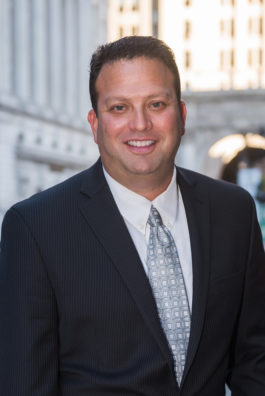
Matthew J. Fein
Partner
MOTOR VEHICLE ACCIDENT LITIGATION
Helping clients pursue compensation after serious motor vehicle accidents.

Eugene Gozenput
Partner
MOTOR VEHICLE ACCIDENT LITIGATION
Advocating for injury victims throughout Manhattan and the five boroughs.
Trucks, Buses and Other Commercial Vehicles Can Make the Investigation Broader
When a commercial vehicle is part of a chain-reaction accident, questions about responsibility may extend beyond the driver. Ownership, employment, maintenance, company records, onboard systems and insurance coverage can all become relevant depending on the vehicle and circumstances.
A commercial vehicle can change both the physical dynamics of a multi-vehicle accident and the investigation that follows.
A large truck striking stopped traffic can transfer substantial force through several smaller vehicles. Its size may affect what nearby motorists could see before the crash, and its braking and maneuvering characteristics differ from those of a passenger car. These issues receive more detailed treatment on our New York City Truck Accident Lawyer page.
Commercial involvement can also expand the number of people and businesses whose roles need to be understood. The driver may be an employee or contractor. The vehicle may belong to another company. Maintenance may have been performed by someone else. Depending on the facts, company records, onboard cameras, electronic systems, dispatch information or other commercial records may provide evidence that would not ordinarily exist in a collision involving privately owned passenger vehicles.
The same need for careful identification applies to other working vehicles. A delivery vehicle, for example, may be operated as part of a business rather than simply as private transportation. Our New York City Delivery Vehicle Accident Lawyer page examines some of the issues that can arise when a delivery vehicle causes an accident.
Commercial involvement does not automatically make the company liable, and the presence of a larger vehicle does not establish that its driver caused the crash. It means the investigation should identify who owned and operated the vehicle, what relationships existed among the people and businesses involved, and what evidence or insurance may follow from those relationships.
Multiple Impacts Can Complicate the Medical Picture as Well as the Liability Case
A person in a chain-reaction collision may be struck from more than one direction and experience several rapid changes in movement. Medical records help document the injuries, symptoms and treatment that followed without requiring the injured person to determine which fraction of the crash caused each condition.
The human body does not experience a chain-reaction accident as a sequence neatly divided into separate legal events.
An occupant may first be struck from behind, then experience another force when the vehicle is pushed forward, and perhaps be hit again when another vehicle enters the collision. A vehicle can rotate or be deflected sideways, changing the direction of the forces on the people inside it. Airbags may deploy while additional movement is still occurring.
Afterward, an injured person may know that the neck, back, shoulder, knee or head hurts without having any realistic way to say whether the injury occurred during the first impact or the second. That is not something the person should be expected to diagnose at the roadside.
Medical evaluation documents what symptoms appeared, what injuries were diagnosed, what treatment was recommended and how the condition developed afterward. When the cause or extent of an injury is disputed, treating physicians and, where appropriate, other qualified medical experts can address questions that cannot reliably be answered from the injured person’s impression of the crash.
For covered New York motor vehicle accidents, the state’s No-Fault framework also remains relevant regardless of how many vehicles were involved. Insurance Law § 5102 currently defines basic economic loss as up to $50,000 per person in combined qualifying losses, subject to the statute and applicable rules. The same statute defines the categories of “serious injury” that can become important when an injured covered person seeks non-economic damages from another covered person.
A multi-vehicle accident can make fault complicated. It should not make an injured person feel responsible for medically reconstructing the collision before seeking care.
Responsibility and Insurance Coverage Have to Be Evaluated Together
A serious multi-vehicle accident may involve several drivers, vehicle owners, businesses and insurance policies. Identifying those policies is important, but coverage generally follows legally responsible people and entities rather than every vehicle that happened to be involved.
When several vehicles are damaged and several people are injured, it is natural to assume that several insurance policies will somehow combine to pay the claims. The reality requires a more careful analysis.
The first task is to identify the people and entities whose conduct may have contributed to the accident. The second is to determine what insurance coverage or other sources of recovery are associated with them.
If one negligent driver causes a collision that pushes three properly stopped vehicles together, the existence of insurance on those stopped vehicles does not make their drivers responsible for the injuries. If two or three drivers independently contributed to the accident, several liability policies may become relevant. A commercial vehicle can introduce different coverage and potentially additional responsible parties. A vehicle operated in the course of employment can raise questions that would not exist in an ordinary privately owned car accident.
Coverage can become especially important when the injuries are serious and one responsible driver does not carry enough liability insurance to address the losses. Depending on the circumstances and the applicable policy, uninsured or underinsured motorist coverage may also need to be examined.
This is one reason we do not separate the liability investigation from the insurance investigation for long. Knowing that a driver contributed to the crash is important. Knowing what coverage exists for the consequences of that conduct is part of understanding the practical value of the claim.
New York's 2026 Comparative-Fault Change Makes Accurate Fault Allocation Especially Important
New York changed its comparative-fault law for certain motor vehicle personal injury cases in 2026. When responsibility is disputed among an injured person and several other drivers, the percentage attributed to each participant can now have consequences beyond simply reducing the amount of damages.
Multi-vehicle accidents have always required careful attention to each driver’s role, but a significant 2026 change to New York law makes it especially important not to rely on outdated explanations of comparative negligence.
Under CPLR § 1411(a), the general rule remains that culpable conduct attributable to an injured claimant does not bar recovery and instead reduces recoverable damages in proportion to that conduct.
The Legislature added a different rule in subsection (b) for personal injury actions subject to Article 51 of the Insurance Law. In those cases, a claimant’s culpable conduct bars recovery if it is greater than the culpable conduct of the person against whom recovery is sought or greater than the combined culpable conduct of the persons against whom recovery is sought.
A chain-reaction collision can make that allocation unusually fact-sensitive. One driver may have initiated the emergency, another may have failed to maintain sufficient distance, and another may have had time to avoid a secondary collision. The injured person may also face an allegation of fault that has to be evaluated against the evidence.
This does not mean every multi-vehicle case will become a complicated percentage exercise. A stopped driver who was simply struck and pushed into another vehicle may have little or no culpable conduct to allocate. It does mean that when fault is genuinely shared or disputed, accurately identifying the conduct of each participant has become even more consequential under current New York law.
What to Do After a Multi-Vehicle Accident in New York City
Your first priorities are getting out of immediate danger when possible and obtaining appropriate medical care. Once those needs are addressed, preserving information about all of the vehicles, witnesses and surrounding scene can help establish a collision sequence you may not have been able to see yourself.
A multi-vehicle accident can be an unusually confusing scene. Several drivers may be exchanging information, emergency responders may be moving between vehicles, traffic may still be passing nearby, and you may have experienced more than one impact without understanding exactly what happened.
You do not need to reconstruct the collision while standing beside the road. There are more useful things to concentrate on if your condition and the circumstances allow:
- Protect yourself from additional traffic. A disabled vehicle or an existing crash can become the site of a secondary collision. Follow emergency instructions and move to a safer location when that can be done without increasing the danger.
- Get medical attention when you need it. Multiple impacts can make it difficult to assess injuries in the immediate confusion of the scene. Describe your symptoms accurately rather than trying to determine which impact caused them.
- Identify all of the vehicles involved. The vehicle that physically struck yours may be only one part of the sequence. If possible, obtain identifying and insurance information for the other involved drivers rather than assuming they will be irrelevant.
- Photograph the broader accident scene when it is safe to do so. Damage to your own vehicle matters, but so can the positions and damage of the other vehicles, debris, lanes, traffic controls, construction and surrounding roadway conditions.
- Obtain witness information. An uninvolved driver, passenger, pedestrian or nearby worker may have seen the beginning of the crash more clearly than anyone inside the vehicles that were hit.
- Protect video that may already exist. Save dash-camera footage so it is not overwritten. If you know that another vehicle or nearby location recorded the collision, make note of it so preservation can be considered promptly.
- Do not fill gaps in your memory with guesses. If you felt two impacts but do not know which occurred first, say exactly that. The physical and independent evidence may answer the question later.
New York also imposes a separate written accident-reporting requirement in certain crashes. Under Vehicle and Traffic Law § 605, a motor vehicle operator generally must report an accident to the Commissioner within 10 days when someone is killed or injured or when damage to the property of any one person exceeds $1,000.
Finally, do not assume that every deadline arising from a multi-vehicle accident is the same. CPLR § 214 establishes a three-year limitations period for many personal injury actions, but different and sometimes much shorter requirements can apply depending on the defendants and claims involved. A crash involving a government vehicle or public entity, for example, can raise procedural requirements that should be identified much earlier.
The more complicated the collision, the more useful it is to preserve the available evidence before vehicles are repaired, recordings disappear and independent witnesses become difficult to locate.
Frequently Asked Questions About Multi-Vehicle and Chain-Reaction Accidents in New York City
After a chain-reaction accident, the questions people ask are often less about abstract traffic rules and more about the confusing parts of what they just experienced: being pushed into another car, feeling several impacts, hearing different versions from other drivers, or not knowing who actually started the crash. These answers address some of those practical concerns.
I was stopped and the car behind me pushed me into another vehicle. Can I still be blamed for hitting the car in front?
Making contact with the vehicle ahead does not automatically mean you caused that collision. New York courts recognize that a driver who was properly stopped may have a nonnegligent explanation when a rear impact propelled that driver’s vehicle forward.
The evidence still matters. Driver testimony, vehicle damage, witnesses and video may help establish whether you had already stopped before you were hit from behind.
What if the drivers disagree about how many impacts occurred?
That can be a significant issue in a chain-reaction case. A driver may say there was one impact that pushed several vehicles together, while another remembers a vehicle making contact before the rear collision occurred.
New York courts have treated conflicting accounts about the number and sequence of impacts as potentially important factual disputes. Physical evidence, witnesses, video and other records can help determine which account is better supported.
Is the last driver in a chain-reaction accident automatically responsible?
No automatic rule can replace the facts of the collision. A rear driver who strikes stopped traffic may bear substantial responsibility, but another driver may have contributed through an unsafe lane change, an earlier collision or other negligent conduct.
The investigation should establish what occurred before the first impact and whether any later driver independently contributed to the sequence.
I was hit more than once. How do I know which impact caused my injuries?
You may not be able to know that yourself, and you should not guess. Several impacts can occur within seconds and subject the body to forces from different directions.
Medical records document your symptoms, diagnoses and treatment. When causation is disputed, physicians and other qualified experts can address medical questions that cannot reliably be answered from your memory of the individual impacts.
What if I only know which car hit me and not how the pileup started?
That is common. Your position inside the crash may have prevented you from seeing what happened several vehicles behind or ahead of you.
The investigation can look to the other vehicles, independent witnesses, photographs, video, police records and other available evidence to reconstruct events you had no opportunity to observe.
Can more than one driver be responsible for a chain-reaction accident?
Yes. One driver may create the initial danger while another contributes by following too closely, driving too fast for conditions, making an unsafe lane movement or failing to respond reasonably to a collision that had already occurred.
Each driver’s conduct should be evaluated separately. Several vehicles being involved does not mean that all of their drivers share fault.
What if the multi-vehicle crash happened because traffic suddenly stopped?
A sudden slowdown does not by itself determine fault. New York law requires drivers to maintain a reasonable and prudent following distance in light of speed, traffic and highway conditions.
The circumstances of the slowdown still matter, including how long traffic had been slowing or stopped, the available distance, visibility and whether another event created an unavoidable emergency.
Can dash-camera footage help prove who started a chain-reaction crash?
It can. Dash-camera footage may show traffic conditions before the first impact, when vehicles began braking, lane movements and the timing of successive collisions.
If you have dash-camera footage, preserve the original recording promptly so it is not automatically overwritten or lost.
Does the police report decide who was at fault?
A police crash report can be important evidence and may preserve valuable information about the vehicles, drivers, witnesses and reported circumstances. It does not necessarily resolve every disputed issue in a complicated multi-vehicle accident.
When drivers disagree about the order of impacts or other important facts, the report should be considered together with the remaining evidence.
What happens if a truck or commercial vehicle was part of the pileup?
The investigation may include issues that do not arise in an ordinary passenger-car collision. Depending on the circumstances, the vehicle owner, motor carrier, employer, maintenance history, company records, onboard systems and commercial insurance may all require examination.
The truck or commercial driver is not automatically responsible merely because a larger vehicle was involved. The evidence must establish the role that vehicle played in the crash.
Can several insurance policies apply to one multi-vehicle accident?
Potentially. If several drivers or other parties bear legal responsibility, more than one liability policy may become relevant. Commercial vehicles and employment relationships can create additional coverage questions.
A vehicle’s presence in the collision does not by itself make its liability insurance available. Coverage analysis should follow the evidence concerning responsibility.
What if one of the responsible drivers does not have enough insurance?
Additional coverage may need to be investigated. Depending on the circumstances and applicable insurance policies, uninsured or underinsured motorist coverage can become relevant when a responsible driver has no insurance or insufficient coverage for the losses involved.
The available coverage depends on the vehicles, policies and facts of the particular accident.
Do I have to file an MV-104 after a multi-vehicle accident?
New York generally requires a motor vehicle operator to file a written accident report with the DMV within 10 days when the crash causes injury or death or more than $1,000 in damage to the property of any one person.
That requirement is separate from exchanging information at the scene or reporting the accident to an insurance company.
How long do I have to bring a multi-vehicle accident claim in New York?
Many New York negligence actions for personal injury are subject to a three-year statute of limitations, but that is not a universal deadline for every claim arising from a motor vehicle accident.
Government entities and certain other defendants can involve different procedures and shorter deadlines. The applicable requirements should be determined from the parties and facts of the particular collision.
Talk to a New York City Multi-Vehicle Accident Lawyer
You do not need to know which impact happened first, why another vehicle hit yours or which driver ultimately bears responsibility before speaking with an attorney. Those are questions the evidence can help answer.
At Pazer Epstein Jaffe Fein & Gozenput, P.C., we investigate the full sequence of a multi-vehicle accident, including the conduct of the drivers involved, available physical and electronic evidence, potential responsible parties and the insurance coverage that may apply.
If you were injured in a multi-vehicle or chain-reaction accident in New York City, contact us for a free consultation. We can listen to what you experienced and determine what needs to be investigated next.
Talk To Us For FreeServing Accident Victims Throughout New York City From Our Lower Manhattan Office
Pazer Epstein Jaffe Fein & Gozenput represents injury victims throughout Manhattan, Brooklyn, Queens, the Bronx, and Staten Island from our office at 20 Vesey Street in Lower Manhattan. Conveniently located near multiple major subway lines and transportation hubs, our office is easily accessible to clients across New York City seeking experienced legal representation after a serious accident.
Our Downtown Manhattan Office
Pazer Epstein Jaffe Fein & Gozenput, P.C.
20 Vesey Street, Suite 700
New York, NY 10007
917-983-2343
Our firm is located in downtown Manhattan, just steps from major subway lines serving every borough of New York City. Being based in Lower Manhattan allows us to stay closely connected to the courts, agencies, and neighborhoods where serious personal injury cases are handled, while remaining easy to reach for clients traveling from throughout the city.
Getting to Our Manhattan Office by Subway
Our Lower Manhattan office at 20 Vesey Street is conveniently located near several major subway stations serving Manhattan, Brooklyn, Queens, and the Bronx. Clients visiting our office can easily reach us using the A, C, E, 2, 3, 4, 5, J, and Z lines, with multiple stations located just a short walk away.
Fulton Street Station
A
C
E
2
3
4
5
J
Z
Approx. 2–4 minute walk
Park Place Station
2
3
Approx. 3-5 minute walk
Wall Street Station
2
3
Approx. 5-7 minute walk
Chambers Street Station
J
Z
Approx. 5-7 minute walk