Manhattan Slip & Trip Fall Lawyer
Our Downtown Manhattan Office
Pazer Epstein Jaffe Fein & Gozenput, P.C.
20 Vesey Street, Suite 700
New York, NY 10007
917-983-2343
Our firm is located in downtown Manhattan, just steps from major subway lines serving every borough of New York City. Being based in Lower Manhattan allows us to stay closely connected to the courts, agencies, and neighborhoods where serious personal injury cases are handled, while remaining easy to reach for clients traveling from throughout the city.
Getting to Our Manhattan Office by Subway
Below are the most convenient subway stations for reaching our Manhattan office, along with approximate walking times.
Fulton Street Station
A
C
E
2
3
4
5
J
Z
Approx. 2–4 minute walk
Park Place Station
2
3
Approx. 3-5 minute walk
Wall Street Station
2
3
Approx. 5-7 minute walk
Chambers Street Station
J
Z
Approx. 5-7 minute walk
- Motor Vehicle Accident Case Results
When someone comes to us after a serious car accident, our focus is on helping them recover the compensation they need to move forward.
$7,000,000
verdict for a client who sustained an injury to her neck requiring surgery due to an automobile accident.
$4,950,000
for a woman struck by a bus resulting in brain injury and disability.
$4,650,000
at trial for a client who was a back seat passenger in South Carolina when a bus driver fell asleep and pushed the plaintiff’s vehicle off of the road.
When a Fall Isn’t Just Bad Luck
A fall in Manhattan rarely happens in isolation.
It happens in motion — while commuting, entering a building, navigating a crowded retail space, or moving through an environment designed for constant use.
People don’t just “slip.”
They transition from one surface to another.
They step into an entryway from the sidewalk.
They move through lighting changes, crowded corridors, or uneven thresholds.
And in a moment where safety is expected, the environment fails them.
These incidents are often dismissed as accidents.
But many occur because of how spaces are maintained, used, and managed in a city where foot traffic is constant and turnover is high.
How Slip & Trip Falls Actually Happen in Manhattan
Falls in NYC are rarely caused by a single obvious hazard.
They often occur because of the interaction between:
-
surface conditions
-
pedestrian movement
-
environmental design
For example:
A lobby floor may appear dry but becomes slick during heavy foot traffic when tracked-in moisture accumulates.
An entryway may transition abruptly from outdoor concrete to polished tile.
A retail aisle may change from textured flooring to smooth material without visual cues.
In dense urban environments, hazards are often:
-
temporary
-
layered
-
tied to how spaces are used
This makes falls part of the broader category of premises liability incidents.
The Three Types of Fall Hazards
Understanding how falls occur can help clarify why responsibility is sometimes complex.
Structural Hazards
These are tied to the built environment:
-
uneven surfaces
-
broken flooring
-
defective stairways
-
poor drainage systems
They tend to persist over time.
Transient Hazards
These arise from temporary conditions:
-
spills
-
tracked-in moisture
-
debris
-
recently cleaned surfaces
They are often linked to maintenance timing.
Operational Hazards
These stem from how a space is used or managed:
-
cleaning during peak foot traffic
-
blocked visibility
-
inadequate lighting during transitions
-
improper warning practices
In Manhattan, operational hazards are common because spaces must accommodate constant use — including heavy delivery activity.
Why Urban Movement Matters
In less dense areas, hazards may be static.
In Manhattan, they are dynamic.
Foot traffic affects:
-
moisture accumulation
-
surface wear
-
visibility
-
expectation of safety
For example:
A floor that is safe during low use may become hazardous during peak commuter flow.
A stairwell that is safe in daylight may become dangerous under reduced lighting.
The law considers not just the condition itself — but whether it created a foreseeable risk in context.
Falls in shared walkways can also occur in environments connected to pedestrian incidents or areas where movement overlaps with bicycle accidents.
What To Do After a Slip or Trip Fall
After a fall, the situation may feel confusing.
If possible:
-
Seek medical attention
-
Document the surrounding conditions
-
Note lighting and surface differences
-
Look for witnesses
Because NYC environments often include:
-
surveillance cameras
-
maintenance logs
-
cleaning schedules
early attention may help preserve useful information.
How Recovery May Still Be Possible
People often assume:
“If I fell, it must be my fault.”
But recovery may still be possible when:
-
a hazard existed
-
maintenance was insufficient
-
design created risk
-
operations contributed
New York’s comparative negligence framework means that recovery does not depend on perfection.
It depends on understanding what contributed to the incident.
Slip & Fall Isn’t Just About Spills
In Manhattan, falls often involve:
-
uneven transitions
-
worn surfaces
-
lighting differences
-
congestion
These are tied to how environments are used.
Responsibility may relate to:
-
maintenance
-
design
-
operational decisions
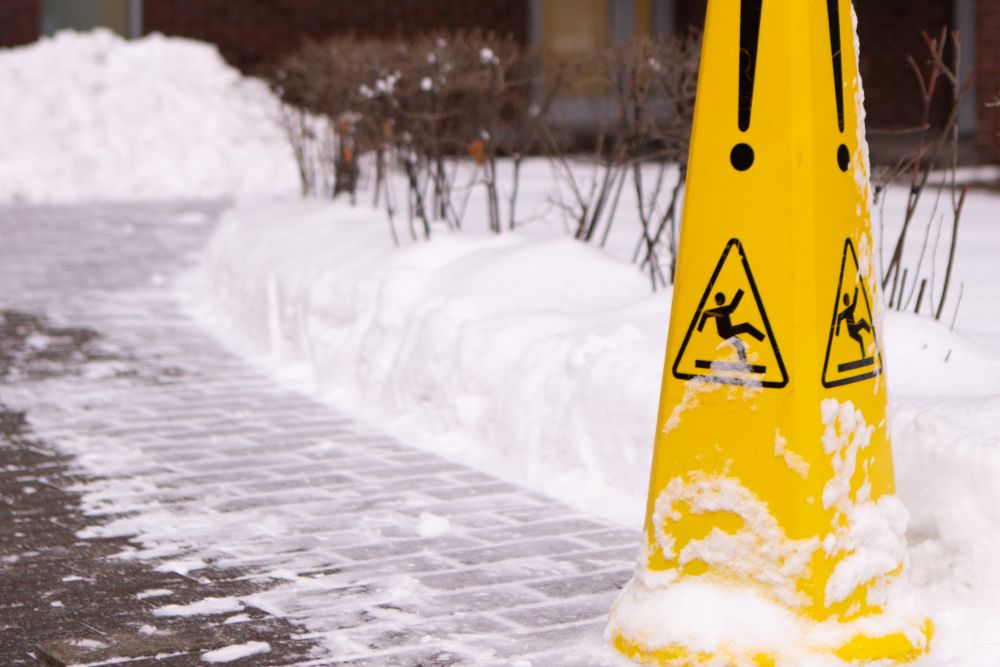

Winter Conditions: A Related But Distinct Risk
Falls caused by snow or ice involve additional considerations tied to weather and removal practices.
For more on those winter-specific risks, see our snow & ice slip and fall accidents page.
The Real-Life Impact
A fall can disrupt:
-
commuting
-
mobility
-
daily routines
In a city where movement is essential, even temporary limitations can affect work and independence.
How We Help
Slip and trip fall incidents often require understanding:
-
how the environment functioned
-
what maintenance occurred
-
what expectations existed
We assist clients by:
-
guiding medical care access
-
preserving early documentation
-
reviewing operational factors
-
clarifying recovery pathways
Our role is to bring clarity to a situation that may initially feel uncertain.
Frequently Asked Questions After Getting Injured in a Slip & Trip Fall Accident
What if the surface looked safe before I stepped on it?
That can happen. Some hazards are not immediately visible and may only become dangerous under certain conditions.
What if I was distracted or in a hurry when I fell?
Many people are moving quickly in Manhattan. A moment of distraction does not automatically eliminate recovery options.
What if there was no warning sign?
The absence of clear warnings may be relevant depending on the circumstances of the environment.
What if I didn’t realize how serious my injuries were right away?
Some injuries become more noticeable over time. Early medical attention can still be important.
What if I fell in a crowded area?
Crowded environments may affect visibility and movement, which can influence how an incident is evaluated.
Does lighting matter in fall cases?
Visibility conditions, including lighting, may play a role in understanding what occurred.
What if I slipped transitioning from one surface to another?
Surface changes can sometimes create unexpected hazards depending on design and maintenance.
Do I need to act quickly after a fall?
Early documentation may help preserve useful information about the environment and conditions.
What if I’m unsure what caused my fall?
Falls can involve multiple contributing factors. Understanding the surrounding conditions can help clarify what happened.
Visiting Our Manhattan Office
Traveling after an injury may not be easy.
Our office is accessible by nearby subway lines and located in an area that allows practical access by car or for-hire transport.
Talk To Us For Free